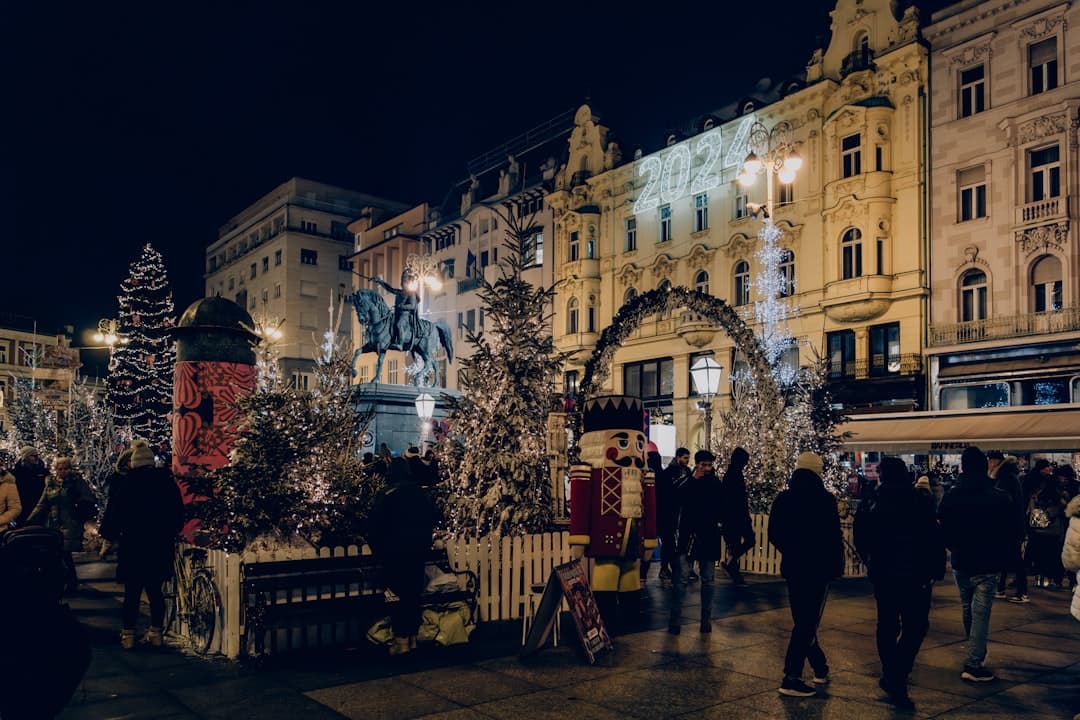
Crowds gathered around a lit Christmas tree and a festive tram on Ban Jelačić Square during Advent in Zagreb.
Back to Get Inspired
CultureZagreb

Advent in Zagreb: Croatia's Award-Winning Christmas Market

Around twenty-five linked markets, an ice park on the central royal square, and Croatian street food worth lingering for — Zagreb's winter season is the city's busiest by design.

Zagreb, Croatia

Why Advent in Zagreb Became Croatia's Winter Headline Act

Two decades ago Advent in Zagreb was a string of stalls around the cathedral. It is now the country's busiest tourism event outside summer, and the data backs that up: Zagreb logged 245,352 overnight stays during the 2024 Advent season against 100,198 in 2014, a figure the city estimates is worth over 100 million euros in direct visitor spending. The three-year run as Europe's Best Christmas Market — 2016, 2017 and 2018 — pushed the city onto the same shortlist as Vienna and Strasbourg, and the operation has scaled to match.

What sets the event apart from the larger German-speaking markets is geography. Zagreb's Lower Town was laid out in the late nineteenth century as a horseshoe of green squares known as the Green Horseshoe, and Advent uses every one of them. You walk from Ban Jelačić Square to Zrinjevac in five minutes, on to King Tomislav Square in another five, and to Strossmayer Square in five more. The markets are different in character but never more than a short stroll apart, so you can drift between mulled wine on a colonnaded promenade and an ice rink under century-old plane trees without checking a map.

The season runs longer than most northern equivalents. Stalls open at the end of November and stay up until 7 January to honour the Orthodox Christmas calendar that part of Croatia's diaspora keeps. That gives you a six-week window, and visiting outside the peak between 15 December and New Year's Eve will spare you the densest crowds.

Quick Facts

Dates 2025/26

29 November 2025 to 7 January 2026, with reduced hours on 24, 25 and 26 December, 1 January and 6 January.

Standard hours

11:00–23:00 Sunday to Thursday, 11:00–01:00 Friday and Saturday.

Award history

Voted Best Christmas Market in Europe by European Best Destinations in 2016, 2017 and 2018 — the maximum three-time win.

Scale

Roughly twenty-five linked markets across the squares, parks and promenades of the Lower Town.

Nearest airport

Franjo Tuđman Airport (ZAG), 17 km south-east, 30 minutes by shuttle bus.

Best base

The Lower Town (Donji grad), within ten minutes' walk of every major market square.
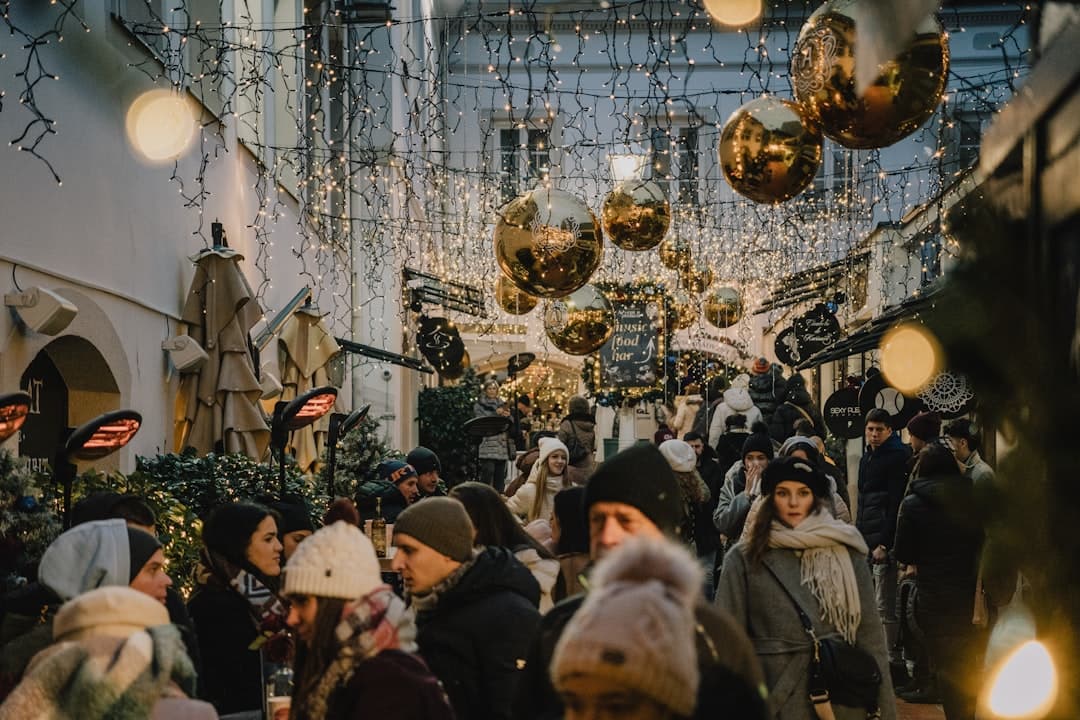
Crowds wandering through Zagreb's Advent under canopies of giant golden baubles and fairy lights.
Square by Square

The Markets, Square by Square

Advent in Zagreb is not one market but a constellation of them, each square keeping its own character. The Lower Town walk is the spine of the event — from Ban Jelačić in the north, south through Zrinjevac, King Tomislav and Strossmayer — with separate pockets on the funicular street and up in the Upper Town.

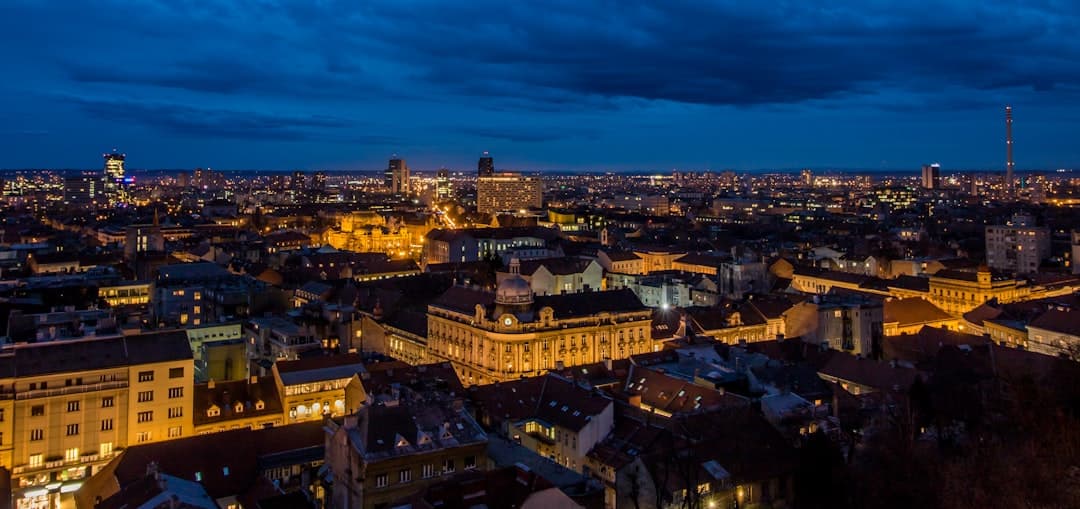
An aerial view of Zagreb's Lower Town at dusk, with the lights of the city's squares and rooftops stretching towards the cathedral.
Central Plaza

Ban Jelačić Square

The obvious starting point. The city's central square is dominated by a giant Advent wreath and the official city tree, with stalls along the southern edge selling kobasice, mulled wine and souvenirs. This is the busiest pitch in the city and the easiest place to take the temperature of the event, though you'll find better food two squares south.

Photogenic Heart

Zrinjevac Park

The prettiest of the markets. The nineteenth-century plane trees are wrapped in lights, the iron-and-glass music pavilion hosts brass bands and choirs in the evenings, and the wooden chalets sell Zagorje-style grilled meats, hot rum and craft gin. Come at dusk when the lamps switch on — it is the photograph you have seen of Advent in Zagreb, every time.

Ice Park

King Tomislav Square

Directly south of Zrinjevac, this square becomes the Ice Park (Ledeni park) for the duration of the event. The skating rink is the largest open-air rink in the city and frames the bronze equestrian statue of King Tomislav with the neo-classical Art Pavilion behind. Skate hire and admission are sold on site. The surrounding stalls lean towards comfort food: bean stew, sausages and waffles.

Foodie Zone

Strossmayer Square (Fuliranje)

The market here is called Fuliranje — roughly "Fooling Around" — and it is curated by Zagreb's restaurant scene rather than the city. Stalls rotate each year, but recent editions have featured cheddar-stuffed sausages from Good Food, sweet and savoury štrukli from Eduard Beg, skinless sausage burgers from chef Mate Janković, and cronuts and Dubai fritule from Boogie Lab. Come hungry and treat it as a tasting menu across a dozen stalls.

Funicular Strip

Tomićeva Street and the Funicular

This is Time Tunnel (Tunel grič) and a string of festively dressed bars connecting the Lower Town to the Upper Town. The funicular itself, at 66 metres one of the world's shortest public railways, runs every ten minutes for a flat fare and saves you the staircase climb if you've eaten well.

Upper Town

Gornji grad (Upper Town)

Advent carries up the hill. The market on St. Mark's Square is small but sits beside the photogenic tiled roof of St. Mark's Church. European Square and the Cathedral approach add quieter stalls, and the Krampusrun — a procession of horned figures on the night of 5 December — passes through Tkalčićeva Street the evening before the feast of St. Nicholas.

What to Eat and Drink

The Food and Drink Worth Queueing For

Order kuhano vino first. Croatian mulled wine is heavier on red wine and lighter on sugar than the German version, usually fortified with a slug of brandy and served in a souvenir mug you keep. Medica — a hot honey brandy — is the local alternative and worth trying once.

For street food, three dishes show up everywhere and are reliably good. Fritule are small rum-and-citrus-zest doughnuts dusted with icing sugar; a paper cone of ten costs around three euros. Kobasice — paprika-spiced sausages — are grilled to order and served in a half-loaf with mustard. Štrukli are the local hero: hand-stretched dough wrapped around cottage cheese, then either baked with cream or boiled and served with sugar. The version at Fuliranje from La Štruk's offshoots is the benchmark.

For something more substantial, look for sarma (sour-cabbage rolls stuffed with pork and rice, simmered for hours) at Zrinjevac, kotlovina (a Zagorje stew of pork, sausages and potatoes cooked in a wide copper pan) on Strossmayer, and purica s mlincima — roast turkey with torn pasta sheets cooked in the bird's juices — at the larger restaurants flanking the squares. The Esplanade Hotel serves an upmarket štrukli at its Oleander Terrace, which is part of the Fuliranje circuit.

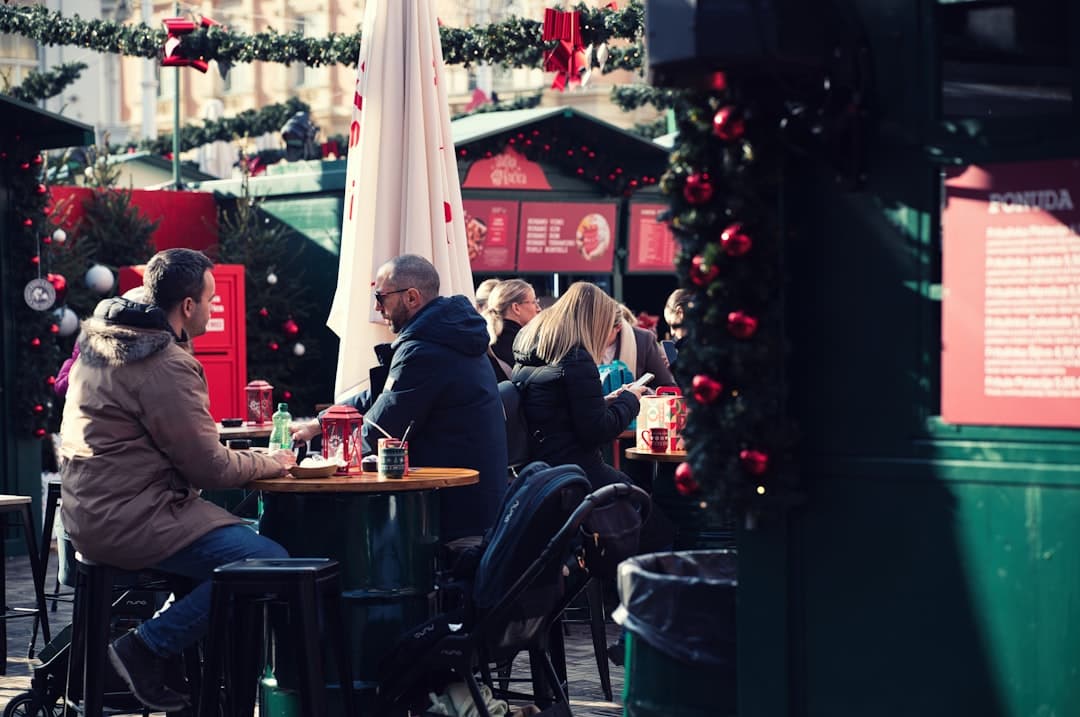
Diners seated at outdoor tables beside red wooden chalets at Zagreb's Fuliranje food market, with strings of lights overhead.
Practical Info

How to Plan Your Visit

Three nights is the sweet spot. One evening covers Zrinjevac and King Tomislav, one covers Fuliranje on Strossmayer, and the third gives you the Upper Town markets, the funicular and time to leave the centre. Tack on a day for one of the day trips out of Zagreb — the cave system at Grabovača, the medieval old town at Samobor, or the wine cellars of Plešivica forty minutes west.

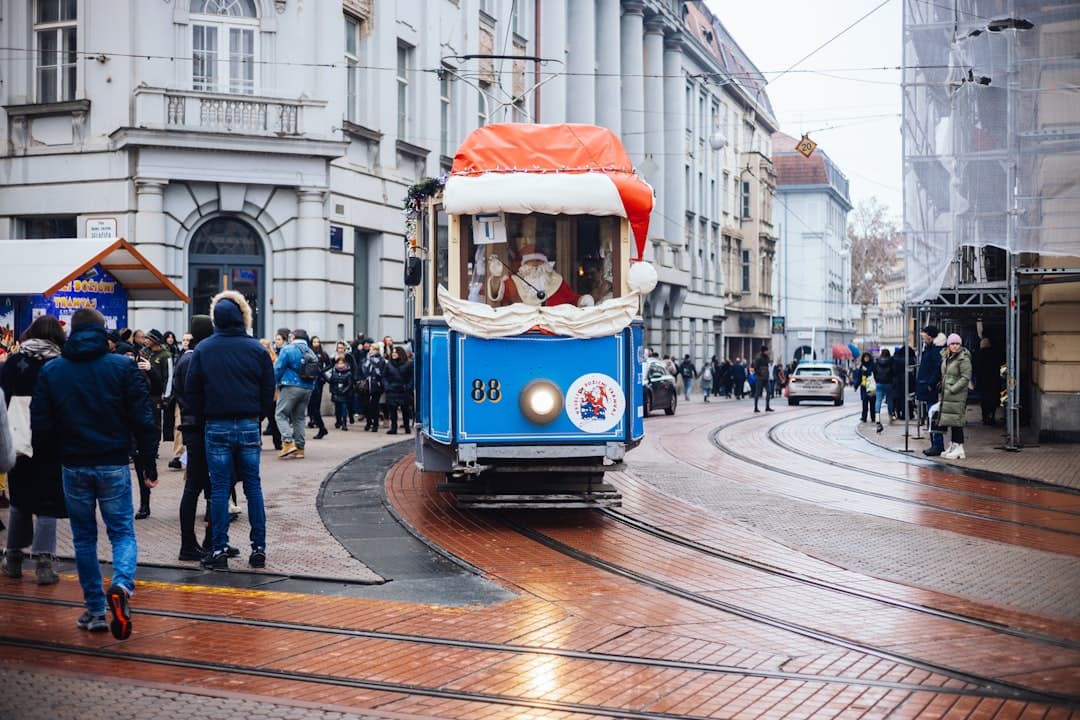
Zagreb's festive Christmas tram, decorated in red and white and crewed by drivers dressed as Santa Claus, passing through the city centre.

How long to stay

Three nights is the sweet spot. Evening one covers Zrinjevac and King Tomislav; evening two is Fuliranje on Strossmayer; evening three handles the Upper Town markets and the funicular. A spare day buys you a Samobor, Plešivica wine cellars or Grabovača cave system day trip.

Where to stay

Stay in the Lower Town between Ban Jelačić Square and the railway station. You'll be inside the markets without paying the cathedral-view premium, and the squares are a five-minute walk in any direction. The Esplanade, Sheraton and Hotel Dubrovnik are the established options; Hotel Jägerhorn on Ilica is the most central mid-range choice.

Getting around

You will not need a car. Zagreb's tram network is one of the densest in central Europe and runs until midnight, with night trams covering the main routes after that. A single ticket from a kiosk is cheaper than buying from the driver, and the Zagreb Card (24 or 72 hours) bundles transport, museum entry and discounts at several Advent attractions including the Ice Park.

Weather and cash

Expect zero to seven degrees Celsius through most of December. Snow is occasional rather than reliable, and the bigger threat is rain — bring waterproofs and shoes you can stand in for four hours. Most stalls accept card payments, but small kiosks and the funicular still prefer cash, so keep ten or twenty euros in coins on hand.

FAQ

Common Questions About Advent in Zagreb

The first ten days of December and the first week of January are noticeably quieter than the run-up to Christmas. Stalls are fully open, the Ice Park is running, and you'll find tables at Fuliranje without queuing. Avoid 23 to 27 December and 30 to 31 December if crowds bother you.

Yes, especially for weekends in December. Zagreb sees over a third of its annual hotel demand during the six weeks of Advent, and the centrally located hotels sell out two to three months ahead for the prime December weekends. Booking by mid-October is sensible; booking by August is safer for New Year's Eve.

Entry to all markets is free. A souvenir mug of kuhano vino is around four euros (with a one to two euro deposit), street food plates run six to twelve euros, and skating at the Ice Park is about ten euros including skate hire. Two people can do an evening of food, drink and skating for under sixty euros.

Yes, and deliberately so. The Ice Park has a separate children's rink, Zrinjevac runs a daily children's programme of choirs and storytelling, and the Christmas Tram circulates through the Lower Town in the afternoons with Santa on board. King Tomislav Square and Zrinjevac are the most pram-friendly markets.

You can, but expect a different country. Most coastal towns close their tourist infrastructure between November and April, so don't plan a beach day. Realistic winter combinations are Zagreb plus Plitvice Lakes (frozen waterfalls if you're lucky), Zagreb plus the Istrian hilltop towns, or Zagreb plus a weekend in Ljubljana, which runs its own well-regarded Advent programme.

The Croatia Airlines shuttle bus runs every 30 minutes from outside the terminal to the main bus station (Autobusni kolodvor) and takes around 30 minutes; tickets are eight euros. A taxi or Uber will cost twenty to thirty euros and take roughly the same time. From the bus station the central squares are a fifteen-minute walk or a four-minute tram ride on lines 2 or 6.

Explore More of Croatia

Discover more stories, hidden gems, and travel inspiration to help you plan your perfect Croatian adventure.