Hvar
Croatia's most glamorous island — where Venetian elegance meets Mediterranean sunshine
About Hvar
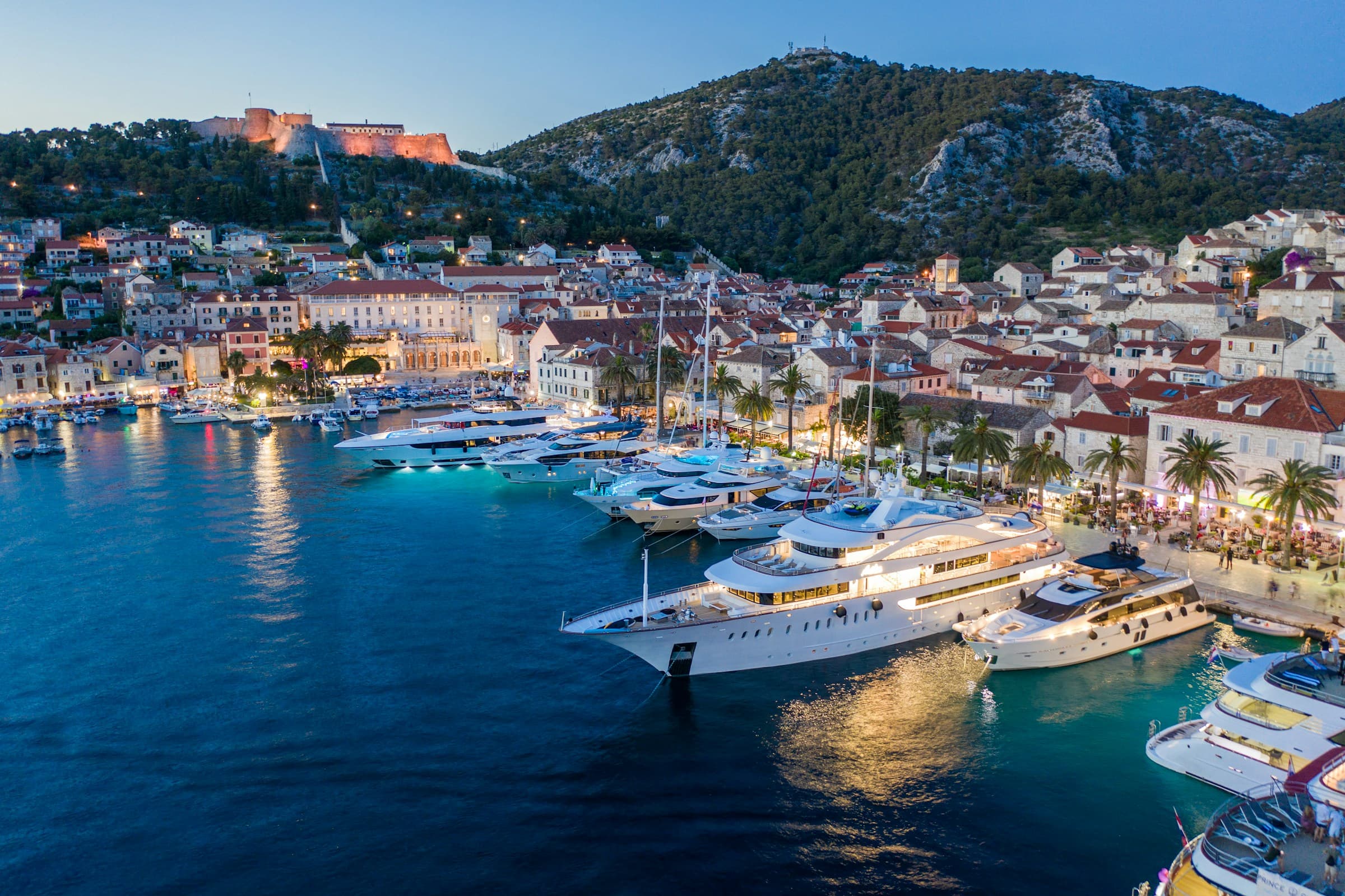
Bathed in sunshine and surrounded by the crystal-clear Adriatic, Hvar is Croatia's most glamorous island — known for its rich history, elegant architecture, lavender fields, and vibrant nightlife. Once a powerful Venetian stronghold, Hvar today balances centuries-old charm with a modern Mediterranean pulse. Marble streets, Renaissance palaces, and chic seaside bars create an atmosphere that is both timeless and cosmopolitan.
Beyond its lively harbour, the island reveals tranquil coves, hilltop villages, and fragrant vineyards — a perfect harmony of culture, nature, and indulgence. Whether you come for history, beaches, or fine wine, Hvar captures the very essence of the Adriatic lifestyle.
The Island of Sun
With more than 2,800 hours of sunshine per year, Hvar is officially the sunniest spot in Croatia. Locals proudly call it “the island of sun and lavender” — a place where ancient stone towns meet endless blue horizons.
History of Hvar
From ancient Greek colony to Venetian jewel
From Greek Colony to Venetian Jewel
Hvar's story begins in ancient times when the Greeks founded the colony of Pharos (modern-day Stari Grad) in the 4th century BC, making it one of the oldest settlements in Croatia. The island's strategic position in the Adriatic turned it into a key maritime and trade centre under various rulers — from the Romans to Byzantines and Venetians.
During Venetian rule (15th–18th centuries), Hvar flourished as a cultural and naval hub. Its port became one of the most important along the Dalmatian coast, while artists and architects left behind magnificent buildings that still define the island's look today.
A Centre of Culture and Heritage
In the Renaissance era, Hvar was among the first towns in Europe to build a public theatre (1612), symbolising its refined cultural life. Many traditions from that period endure — from local festivals and klapa singing to the production of lavender oil and fine wine.
Today, Hvar harmoniously blends its noble past with a modern flair, drawing travellers from around the world while preserving its authentic island character.
Explore Hvar Town
Hvar Fortress (Fortica / Španjola)
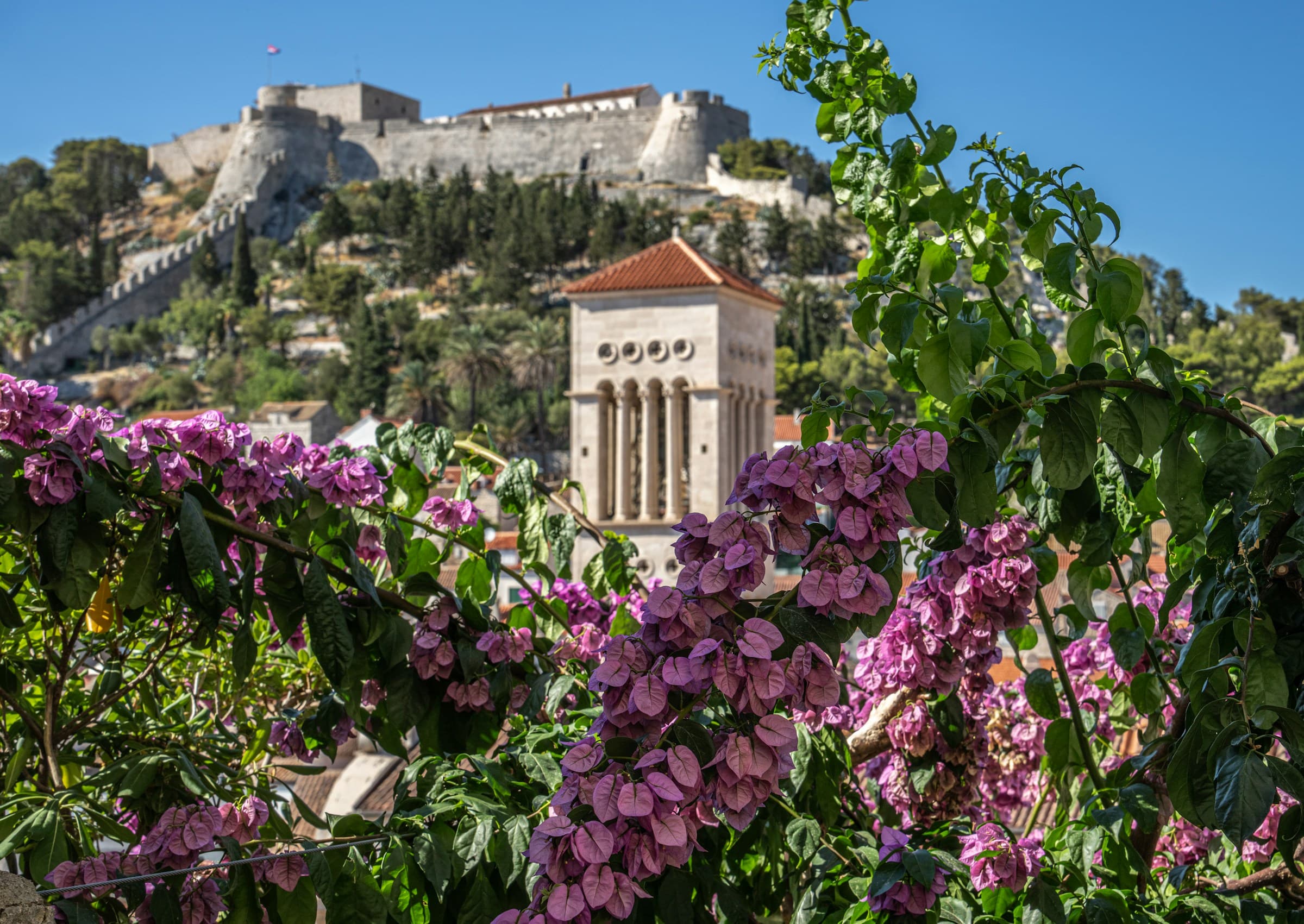
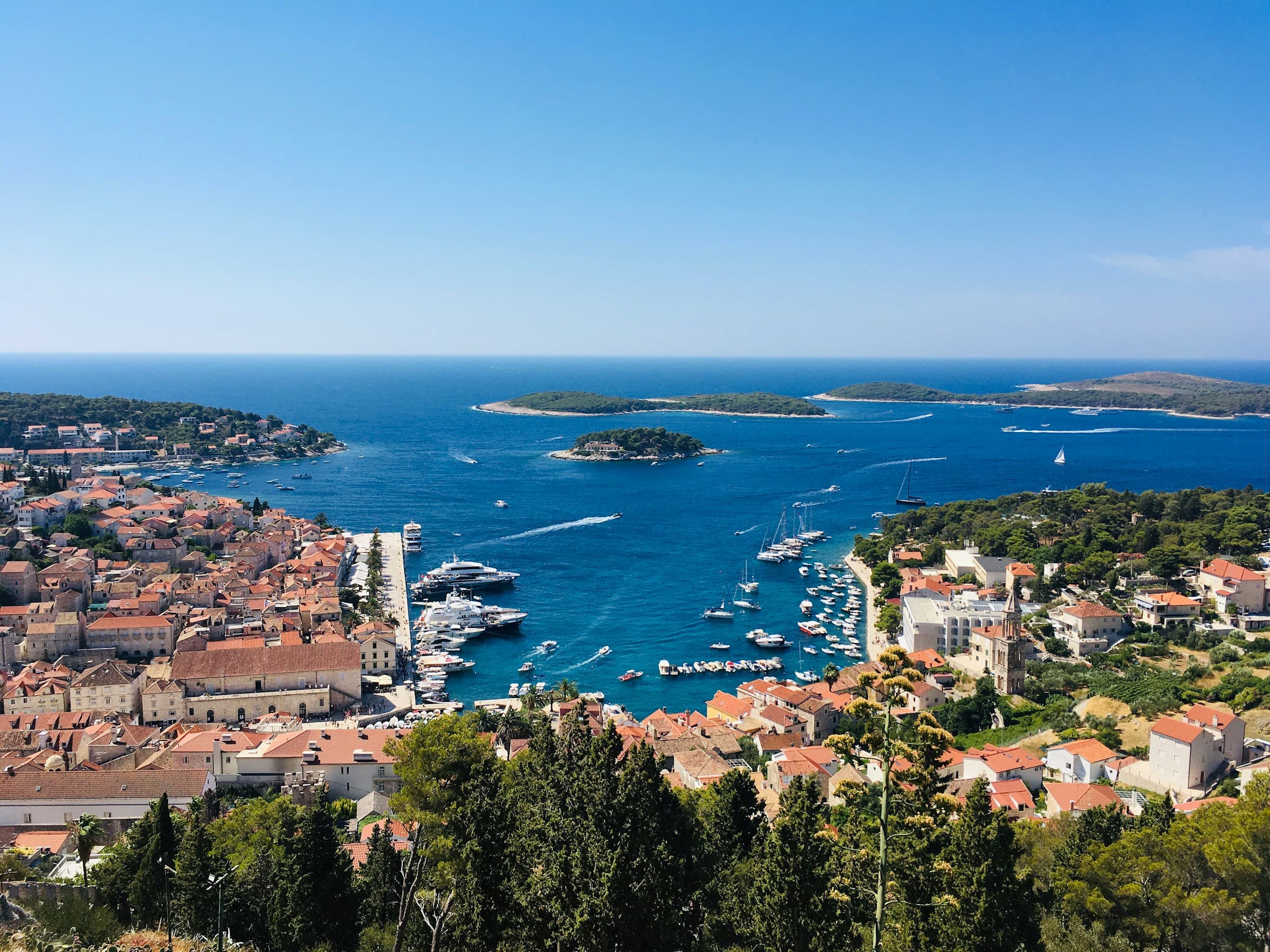
A 16th-century fortress perched above the town, offering spectacular panoramic views of the harbour and Pakleni Islands.
Hvar Cathedral of St. Stephen
Dominating the main square with its elegant façade and rich interior.
Hvar Public Theatre
One of Europe's oldest municipal theatres, housed above the Arsenal.
Arsenal & Piazza
The heartbeat of Hvar Town, lined with Venetian-style palaces and lively cafés.
Franciscan Monastery
Home to Renaissance artworks and a tranquil cloister overlooking the sea.
Stari Grad — The Island's Ancient Soul
One of the oldest towns in Europe, founded by the Greeks in the 4th century BC
Stari Grad Plain (Ager)
A UNESCO World Heritage Site where the original Greek agricultural layout is still visible after 2,400 years.
Tvrdalj Castle
The fortified Renaissance residence of poet Petar Hektorović, with a fishpond and inscriptions celebrating harmony and nature.
Stari Grad Old Town
Stone lanes, galleries, and small taverns reflecting the island's quieter rhythm.
Natural Beauty & Beaches
From turquoise lagoons to fragrant lavender fields
Pakleni Islands
A stunning chain of islets across from Hvar Town, known for turquoise lagoons, pine forests, and beach clubs.
Culture & Wine
Discover the authentic flavours and traditions of island life
Wine Tasting in Jelsa
Sample excellent local wines made from native Plavac Mali grapes.
Lavender & Olive Oil Tours
Meet local producers and learn about traditional island crafts.
Klapa Evenings
Enjoy a cappella performances of Dalmatian folk music echoing through old stone streets.
Festivals & Events
Celebrate island traditions and Mediterranean culture
Concerts and performances in historic settings across the island.
Top Attractions & Sights
The essential Hvar experiences
Stari Grad Plain (UNESCO)
UNESCOHvar Fortress (Fortica / Španjola)
Hvar Cathedral & Main Square
Pakleni Islands
Dubovica Beach
Stari Grad Old Town
Franciscan Monastery
Tvrdalj Castle
Lavender Fields
Book Guided Tours & Experiences in Hvar
Explore Hvar's lavender fields, nightlife and hidden coves with guided tours.
Why Visit Hvar?
Hvar is where timeless beauty meets effortless style — an island that shines as brightly at sunset as it does under the Mediterranean sun.
Plan Your Hvar Adventure
From lavender-scented hills to crystal-clear bays, discover why Hvar captures the essence of the Adriatic lifestyle.
Start PlanningHow to Get to Hvar
Your gateway to Croatia's sunniest island
By Ferry
Regular car ferries from Split to Stari Grad (approx. 2 hours) and high-speed catamarans to Hvar Town (about 1 hour).
By Air
Nearest airports are Split and Dubrovnik; from Split, transfer to the ferry port for onward travel.
By Car
Drive to Split or Drvenik and take a ferry to the island.
By Private Boat or Yacht
Hvar Town's marina is among the most popular on the Adriatic, with full-service berths and nearby anchorages around the Pakleni Islands.
When to Visit Hvar
Hvar enjoys a mild Mediterranean climate with long summers, ideal for both relaxation and exploration
Spring
April–June
Ideal for sightseeing, cycling, and enjoying wildflowers before peak crowds arrive on the island.
- Lavender fields begin blooming
- Perfect cycling temperatures
- Wildflowers across the island
- Fewer crowds at key sites
Summer
July–August
Hot, lively, and festive — perfect for beach days and nightlife on Croatia's most glamorous island.
- Vibrant nightlife scene
- Beach clubs in full swing
- Warm sea for swimming
- Festivals and cultural events
Autumn
September–October
Warm sea, fewer tourists, excellent for hiking and wine tasting across the island's vineyards.
- Warm sea temperatures linger
- Wine harvest and tastings
- Excellent hiking conditions
- Relaxed, unhurried atmosphere
Winter
November–March
Quiet and authentic, ideal for travellers seeking local life without crowds on the sunniest Croatian island.
- Authentic local atmosphere
- Mild winter temperatures
- Lowest prices of the year
- Peaceful Old Town exploration
Hvar In-Depth Guides
Dive deeper into everything Hvar has to offer with our detailed guides.
Where to Stay
Best places to stay on Hvar, from lively Hvar Town to quieter island villages.
Things to Do
Top activities and experiences — from the fortress to the Pakleni Islands.
Beaches
The best beaches and swimming spots on and around Hvar island.
Restaurants
Where to eat — seafood, fine dining, wine bars, and island specialities.
Day Trips
Pakleni Islands, Vis & Blue Cave, Korčula, and more.
Frequently Asked Questions about Hvar
Two to three days is ideal for Hvar. This gives you time to explore Hvar Town and its fortress, take a boat trip to the Pakleni Islands, visit the UNESCO-listed Stari Grad Plain, and enjoy the beaches and nightlife. If you want to explore the island's interior villages and lavender fields, add an extra day.
The fastest option is the Jadrolinija or Krilo catamaran from Split to Hvar Town, which takes about 1 hour. There is also a car ferry from Split to Stari Grad (2 hours), useful if you want to bring a vehicle. In summer, catamarans run multiple times daily. Book in advance during peak season as they sell out.
June and September are the sweet spot — warm weather (25-30°C), the sea is perfect for swimming, and the island is lively but not overwhelming. July and August are peak season with the most nightlife and events but also the biggest crowds and highest prices. May and October are quieter with pleasant weather, though some beach bars and clubs may be closed.
Hvar Town is one of Croatia's priciest destinations, especially in July and August. Accommodation, dining, and boat trips carry a premium compared to the mainland. However, staying in Stari Grad or Jelsa is more affordable, and eating at local konobas rather than waterfront restaurants helps. Budget travellers can find reasonable options outside Hvar Town centre.
Hvar is famous for being Croatia's sunniest island (2,724 hours of sunshine per year), its glamorous nightlife and yacht scene in Hvar Town, the Pakleni Islands archipelago with crystal-clear swimming, lavender fields in the interior, and the UNESCO-listed Stari Grad Plain — one of the oldest agricultural landscapes in the Mediterranean, dating back to the 4th century BC.
Book Tours & Experiences in Hvar
Explore Hvar's lavender fields, hidden coves and vibrant nightlife with boat tours, wine tastings and island adventures.