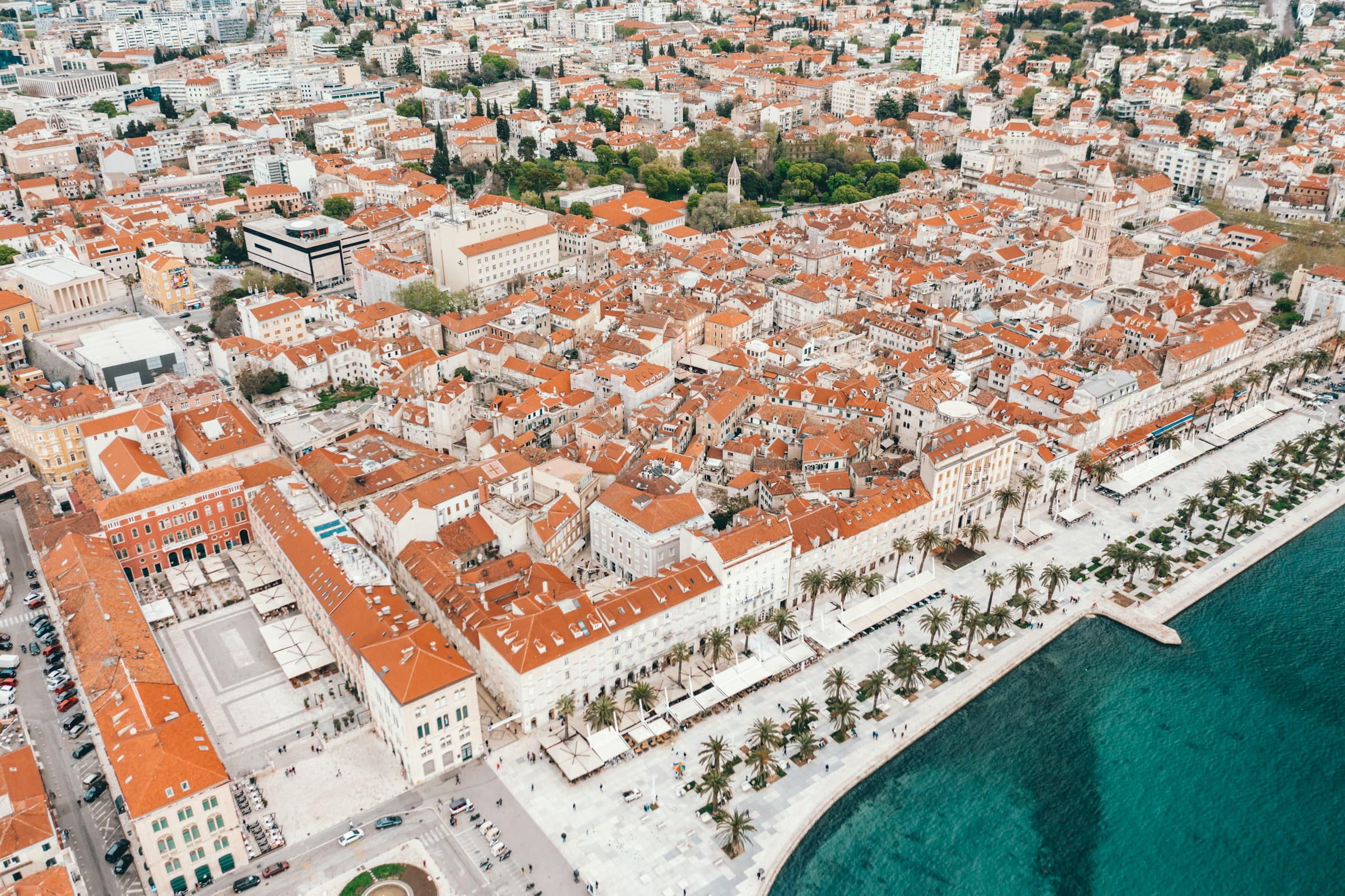
Split
Where ancient Roman heritage meets Mediterranean life
About Split
Set on the sparkling Adriatic coast, Split is Croatia's vibrant second-largest city — a blend of ancient history, seaside energy and Mediterranean life. Centred around the magnificent Diocletian's Palace, a UNESCO World Heritage Site, the city feels like a living museum where Roman walls, Gothic churches, Renaissance palaces and modern cafés coexist within the same stone labyrinth.
With its palm-lined waterfront promenade (the Riva), lively markets and relaxed lifestyle, Split captures the essence of Dalmatian life — unhurried, sun-soaked and steeped in history. Whether you are strolling narrow alleys, sipping espresso by the sea or boarding a ferry to a nearby island, Split combines the soul of an ancient city with the pulse of a modern Mediterranean hub.
Diocletian's Palace
Split grew from the walls of Diocletian's Palace, built by the Roman emperor in the 4th century as his seaside retreat. Over time, homes, cafés and shops filled its marble halls, turning the former imperial residence into a living city that still beats at the heart of Split today.
History of Split
From imperial residence to coastal city
Roman origins
The roots of Split lie in Diocletian's Palace, built between 295 and 305 AD as the emperor's seaside retreat. Constructed with local limestone and marble from nearby Brač, the palace was fortified with towers, gates and massive walls.
After Diocletian's death, the complex became a refuge for citizens fleeing the fall of nearby Salona, the Roman capital of Dalmatia. Over the centuries the settlement grew outward from the palace walls, blending Roman foundations with medieval and Venetian influences. The result is today's Old Town — a mix of ancient cellars, stone houses and winding alleys that still trace the outline of the original palace.
Venetian and Austro-Hungarian periods
During the Middle Ages, Split flourished under Venetian rule, developing strong maritime trade ties. Many of the city's Gothic and Renaissance landmarks, such as the City Hall and the palaces on Pjaca square, date from this period.
Later, under the Austro-Hungarian Empire, the city expanded beyond the old walls, gaining elegant seafront buildings and the iconic Riva promenade that remains the heartbeat of Split today.
295 AD
Palace construction began
1700+
Years of history
1979
UNESCO listed
Explore Diocletian's Palace
Step inside one of the best-preserved Roman monuments in the world
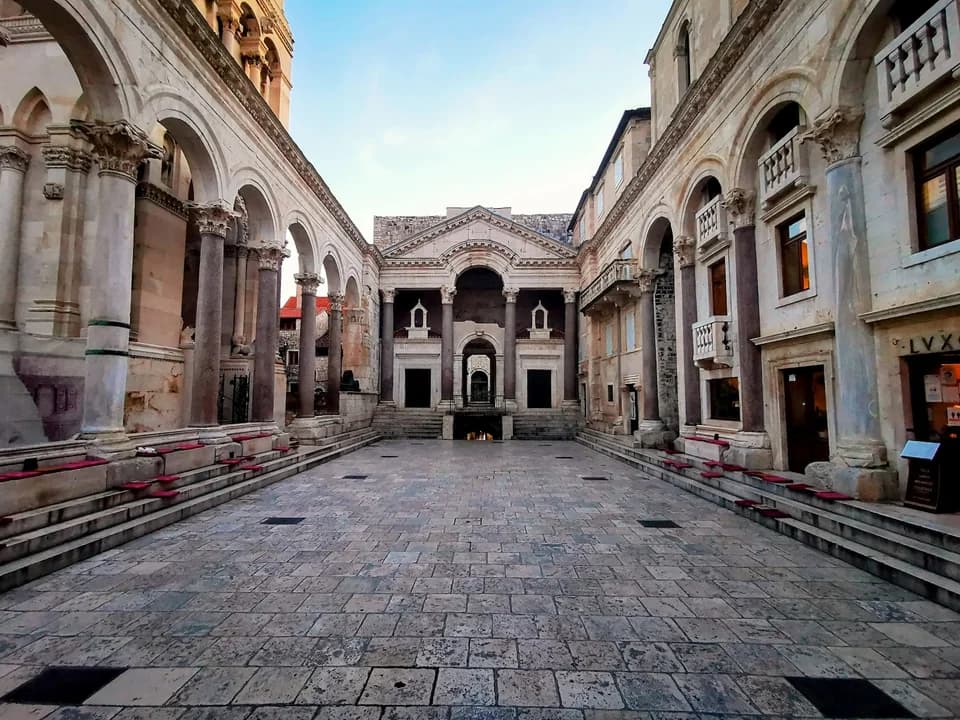
Peristyle Square
Old Town and beyond
Explore the historic streets and natural escapes surrounding the palace
Pjaca (People's Square)
A lively hub lined with Renaissance palaces, cafés and the Old Town Hall — the social centre of Split for centuries.
Fruit Square (Voćni trg)
Named after the old fruit market, this small square is surrounded by Venetian-style architecture and busy all evening.
Marjan Hill
Often called the lungs of Split, this forested park has walking trails, hidden chapels and panoramic viewpoints over the city and palace.
Museums and culture
Discover Split's artistic and historical heritage
Split City Museum
Traces the story of Split from Roman times to the modern day, with a clear focus on its connection to Diocletian's Palace.
Archaeological Museum
The oldest museum in Croatia, with artefacts from nearby Salona and the wider Dalmatian region.
Gallery of Fine Arts
Works by Croatian masters and European artists, from medieval icons to contemporary painting.
Meštrović Gallery
Dedicated to Ivan Meštrović, Croatia's most famous sculptor. His former villa shows how classical form meets national spirit.
Best beaches
Sun-soaked shores just steps from the ancient palace
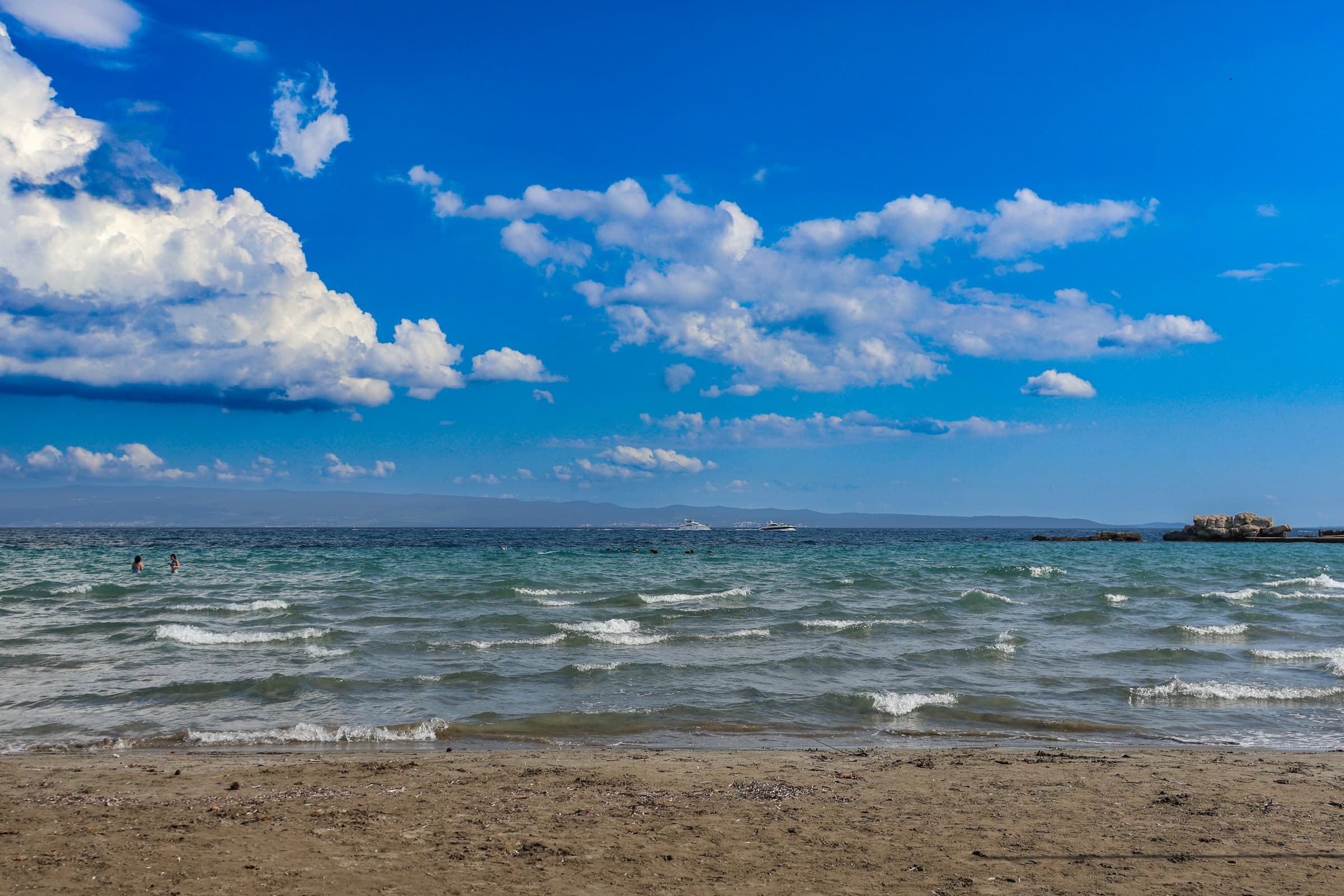
Bačvice Beach
Complete Beach Guide
Read the full Split beach guide with all 8 beaches, tips and FAQs.
Day trips
Ferries connect Split to nearby islands including Brač, Hvar, Šolta and Vis — all easy one-day escapes or the starting point for longer island-hopping adventures.
Festivals and events
Year-round celebrations that bring Split's culture to life
Opera, theatre and open-air performances in historic venues across Diocletian's Palace and around the city.
One of Europe's largest electronic music festivals, drawing global crowds to the Poljud Stadium each summer.
Locals in full Roman costume reenact life under the emperor, bringing the palace's origins to life for a few days each summer.
Small markets, concerts and lights along the Riva during Advent, giving a festive Mediterranean twist to the holiday season.
Split in-depth guides
Dive deeper into everything Split has to offer with our detailed guides.
Where to Stay
Best areas to stay in Split, from the Old Town to beachside Bačvice and Žnjan.
Things to Do
Top activities and experiences — from Diocletian's Palace to sea kayaking and island hopping.
Beaches
Sandy Bačvice, hidden Marjan coves and the best swimming spots in and around Split.
Restaurants
Where to eat — palace konobas, modern bistros, wine bars and local dishes worth seeking out.
Day Trips
Hvar, Brač, Vis, Krka Waterfalls, Trogir and more — all reachable from Split.
Why visit Split?
Split is more than a seaside destination; it is a living mosaic of history and everyday life. Every stone tells a story, and every sunset over the Riva invites you to stay a little longer.
- A genuine fusion of Roman heritage and Mediterranean lifestyle
- Lively waterfront and café culture
- Beaches within walking distance of the Old Town
- Gateway to Croatia's most popular islands
- A rich calendar of festivals and cultural events
- A balance between history, nature and urban energy
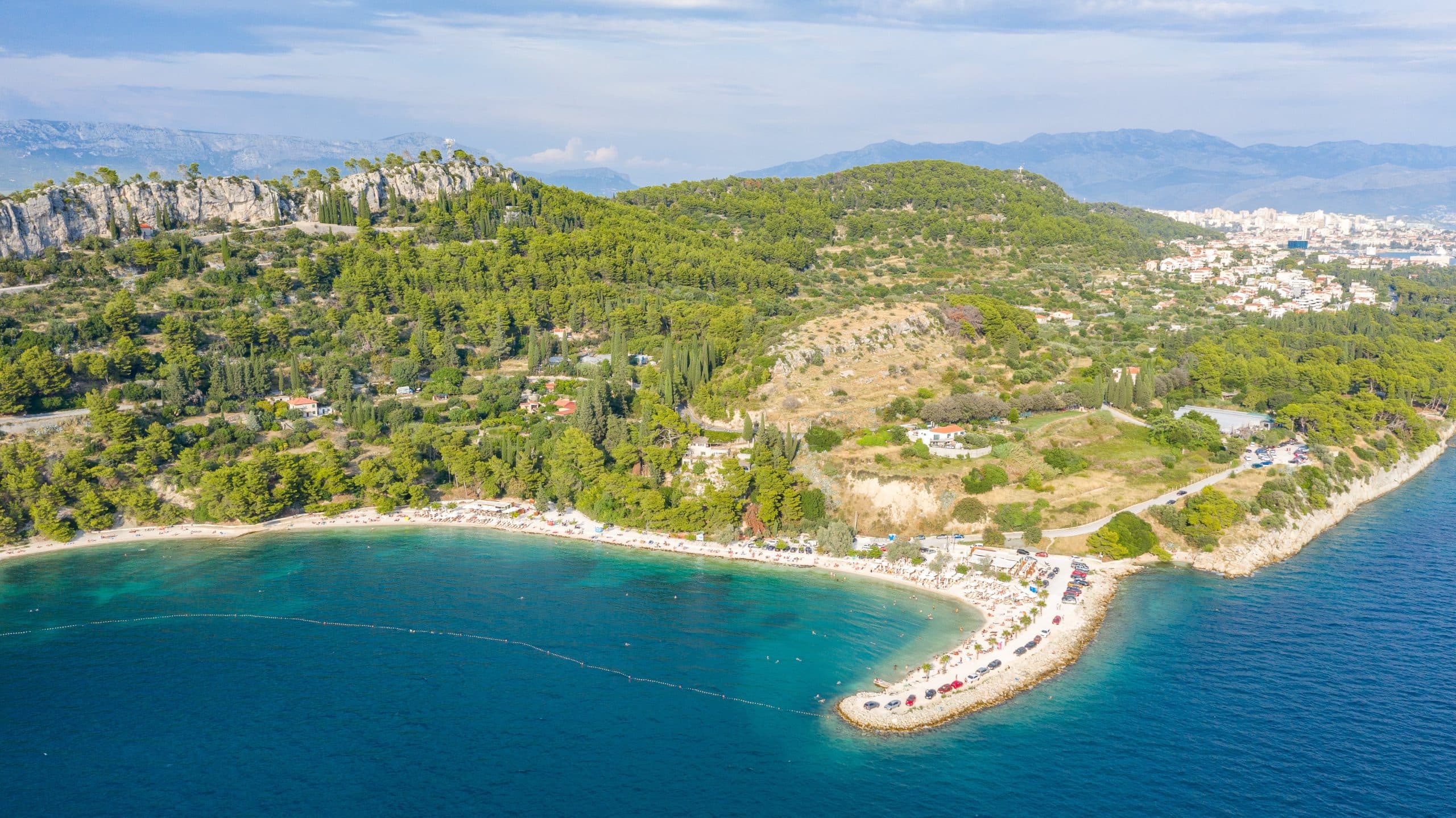
How to get to Split
Several convenient ways to reach the Dalmatian coast
By air
Split Airport (SPU) sits 25 km from the city and offers direct flights from major European cities in summer.
By train
Regular trains connect Split with Zagreb and other Croatian cities, with seasonal overnight services.
By bus
Frequent national and international buses arrive at the main terminal right beside the ferry port.
By ferry
Daily sailings link Split with Brač, Hvar, Vis, Korčula, Dubrovnik and Ancona in Italy.
By car
The A1 motorway (Dalmatina) connects Split with Zagreb and the rest of Croatia, and onward to Dubrovnik.
When to visit Split
Split enjoys over 2,700 hours of sunshine a year, making it a year-round destination
Spring
April – June
Warm weather, blooming parks and fewer tourists — ideal for sightseeing around Diocletian's Palace.
- Ideal temperatures for the palace
- Blooming parks and promenades
- Comfortable sightseeing weather
- Fewer visitors than in peak summer
Summer
July – August
Peak season, with nightlife, festivals and lively beach days at Bačvice and Žnjan.
- Vibrant nightlife scene
- Split Summer Festival
- Beach life at Bačvice
- Island ferries run frequently
Autumn
September – October
The sea stays warm into October, crowds thin out and the city returns to a more local rhythm.
- Warm sea for swimming
- Smaller crowds at every site
- Perfect for cultural visits
- Wine and food festivals
Winter
November – March
Quiet and atmospheric, with mild weather, local life returning to the streets and low prices on accommodation.
- Authentic local atmosphere
- Mild Mediterranean winters
- Lower accommodation prices
- Cosy konoba dining
Frequently Asked Questions about Split
Two to three days is ideal for Split. That is enough time to explore Diocletian's Palace and the Old Town, hike Marjan Hill, relax at Bačvice beach and enjoy the local food scene. If you plan to use Split as a base for island hopping to Hvar, Brač or Vis, add one or two extra days for day trips.
Split is best known for Diocletian's Palace, a UNESCO World Heritage Site built as a retirement home for the Roman emperor Diocletian in the 4th century. Unlike most ancient ruins, the palace is a living part of the city — its walls contain homes, shops, restaurants and bars. Split is also famous for the waterfront Riva promenade, Bačvice beach and the local ball game picigin, and its role as the main ferry hub for Croatia's central Dalmatian islands.
The best time is May to June or September to October, when temperatures are pleasant (20–28°C), the sea is warm enough for swimming and there are fewer tourists than in peak summer. July and August bring the Split Summer Festival and the hottest weather, but also the largest crowds and highest prices. Spring and early autumn offer the best balance of weather, affordability and atmosphere.
Split is the best base for island hopping in Croatia. It is the main ferry hub for central Dalmatia, with daily catamarans and ferries to Hvar (1 hour), Brač (50 minutes), Vis (2.5 hours) and Šolta (50 minutes). Krka National Park and the UNESCO town of Trogir are also easy day trips by bus or car. The frequent connections make it simple to visit a different island each day.
Both are excellent but offer different experiences. Split feels more like a lived-in city with a younger, more local atmosphere, better nightlife and easier access to islands. Dubrovnik is more polished and scenic, with its famous city walls and dramatic coastal setting. Split is generally more affordable and less crowded. Many visitors include both — they are connected by a 4.5-hour ferry or a 3-hour drive along the coast.
Book Tours & Experiences in Split
Discover Split's ancient history and stunning coastline with expert-led tours, island hopping trips and memorable experiences.