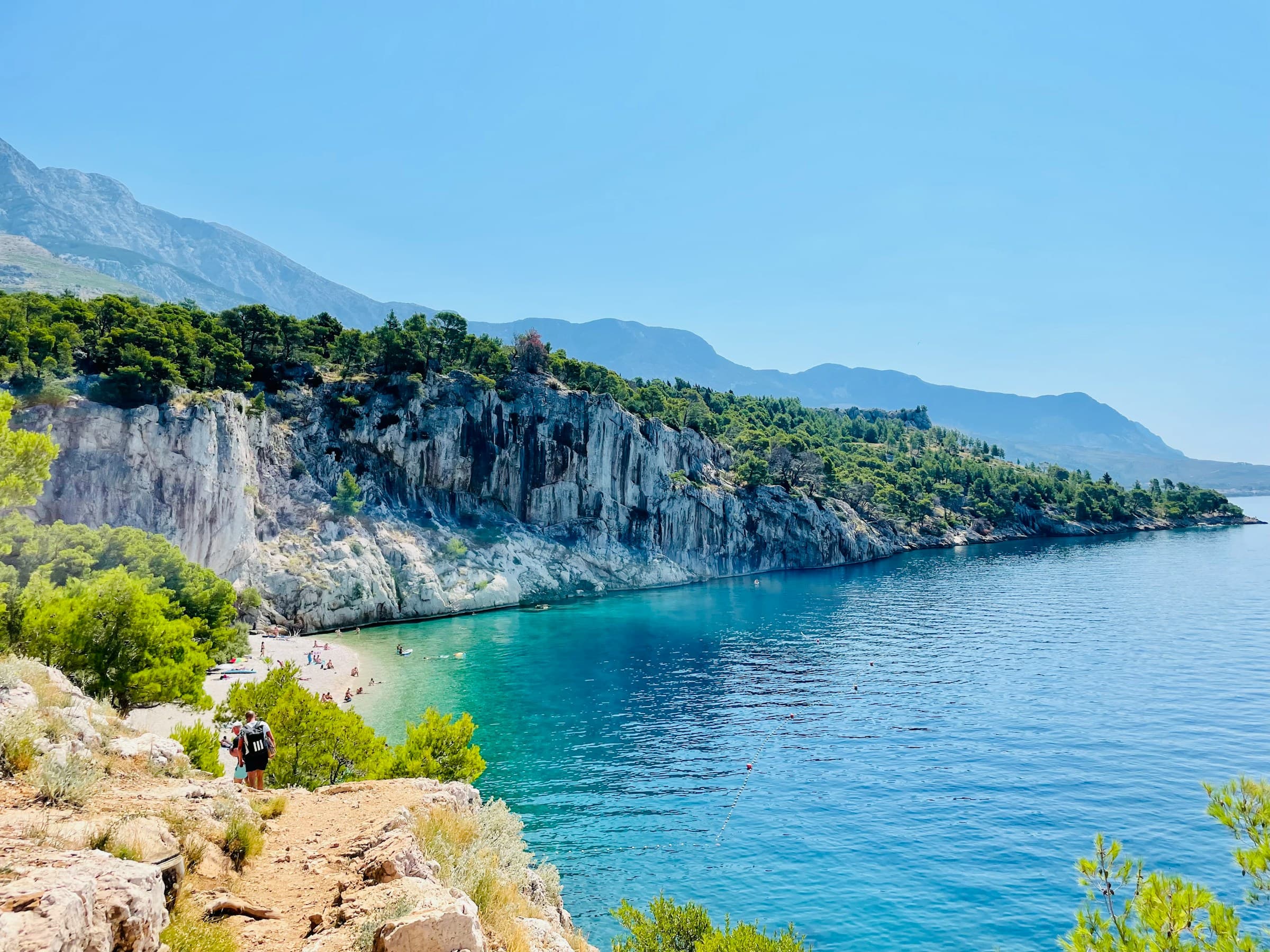
Plan Your Trip to Croatia
Everything you need to plan the perfect Croatia trip — curated itineraries, essential travel tips, and a complete guide to one of Europe's most beautiful destinations.
About Croatia
Croatia bridges Central and Southeast Europe with a population of just over 4 million. Known for its breathtaking Adriatic coastline, rich cultural heritage, and diverse landscapes, it sits at the crossroads of cultures where Western Europe meets the Balkans.
A Rich Past
Croatian History
Croatia's history spans thousands of years, marked by its strategic location at the crossroads of Central Europe, Southeast Europe, and the Mediterranean.
Ancient & Early History
Prehistoric Croatia
Archaeological evidence shows that humans inhabited Croatia as far back as the Paleolithic period. Sites such as Krapina, home to Neanderthal remains, reveal its early importance.
Illyrian Tribes
By the Bronze and Iron Ages, the Illyrians were the dominant people in the region. They were later joined by the Celts, who contributed to the area's cultural complexity.
Roman Rule (1st Century BC – 5th Century AD)
Croatia became part of the Roman Empire in the 1st century BC. Major settlements like Pula, Zadar, and Split emerged during this era. The iconic Diocletian's Palace in Split, built in the 4th century, is a lasting symbol of Roman heritage.
Early Christianity
During Roman rule, Christianity spread across the region, leaving a strong influence that persists today. Ancient churches and basilicas, such as those in Poreč, are remnants of this era.
Medieval Croatia
Arrival of the Croats (6th–7th Century)
The Croats, a Slavic people, arrived in the region during the migration period. They settled in what is now modern Croatia and began forming the foundations of the Croatian nation.
The Kingdom of Croatia (925–1102)
Croatia became a unified kingdom under King Tomislav in 925. This period marked Croatia's first recognition as an independent state. The kingdom flourished, developing its own culture and identity.
Union with Hungary (1102)
After the death of the last Croatian king, Croatia entered into a union with Hungary through the Pacta Conventa, maintaining a degree of autonomy while being ruled by the Hungarian crown.
Renaissance & Venetian Influence
Dalmatian Coast under Venetian Rule
From the late Middle Ages, much of the Dalmatian coast came under Venetian rule, leading to significant cultural and architectural influence. Dubrovnik, however, maintained its independence as a maritime republic, thriving under the Republic of Ragusa.
Ottoman Threat (15th–17th Century)
Inland Croatia became a frontier zone during the Ottoman expansion into Europe. This era saw the construction of numerous fortifications and the militarization of society.
Habsburg Rule & Austro-Hungarian Empire
Habsburg Monarchy (1527–1918)
Croatia became part of the Habsburg Monarchy in 1527. The Austro-Hungarian period brought modernization, including railways, urban development, and a rise in Croatian nationalism.
Illyrian Movement
The 19th century saw the Illyrian Movement, a cultural and political effort to unify South Slavic peoples and promote the Croatian language and identity.
Modern History
Yugoslavia (1918–1991)
After World War I, Croatia became part of the Kingdom of Serbs, Croats, and Slovenes, later renamed Yugoslavia. This period was marked by political instability and tensions between the diverse ethnic groups.
World War II
During the war, Croatia was a puppet state under Axis control, governed by the Ustaše regime. This period saw significant suffering and atrocities, including against Serbs, Jews, and Roma.
Post-War Socialist Yugoslavia
After WWII, Croatia became a republic within Socialist Yugoslavia under Josip Broz Tito. The era was marked by industrialization and relative stability but also political repression.
Independence & Contemporary Croatia
War for Independence (1991–1995)
Following the dissolution of Yugoslavia, Croatia declared independence in 1991. This led to a brutal war, with significant loss of life and damage to infrastructure. The conflict ended with the signing of the Dayton Agreement in 1995.
EU Membership
Croatia joined the European Union in 2013, marking a new chapter in its history as a modern, democratic state. Today, it is a popular tourist destination, celebrated for its rich heritage, stunning landscapes, and vibrant culture.
Key Historical Sites to Visit
Dubrovnik's Old Town
A UNESCO World Heritage Site, often referred to as the "Pearl of the Adriatic."
Diocletian's Palace in Split
One of the best-preserved Roman palaces in the world.
Pula Arena
A Roman amphitheater showcasing Croatia's ancient roots.
Plitvice Lakes
A national park with cultural and natural significance.
Trakošćan Castle
A well-preserved medieval castle with stunning views.
Landscapes & Regions
Geography of Croatia
Spanning approximately 56,600 square kilometers, Croatia is divided into distinct regions, each offering its own landscapes, climate, and attractions.
Coastal Croatia
Mediterranean — hot, dry summers and mild, wet winters
The Adriatic coastline is Croatia's most iconic feature, stretching over 1,700 kilometers and encompassing more than 1,000 islands, islets, and reefs.
Dalmatian Coast
Known for its dramatic cliffs, pebble beaches, and historic towns like Dubrovnik, Split, and Zadar. The islands of Hvar, Brač, and Korčula lie just offshore.
Istrian Peninsula
Famous for rolling hills, vineyards, and picturesque coastal towns like Rovinj and Poreč. Also boasts hidden coves and the Roman amphitheater in Pula.
Kvarner Gulf
Nestled between Istria and Dalmatia, this region includes islands like Krk, Rab, and Pag, along with the elegant seaside town of Opatija.
Mountainous Croatia
Continental with alpine influences — cooler summers and snowy winters
The Dinaric Alps run parallel to the coast, creating a natural barrier between the coastal and inland regions, featuring limestone peaks, dense forests, and deep karst caves.
Velebit Mountain Range
A UNESCO Biosphere Reserve, offering spectacular hiking trails such as the Premužić Trail and the nearby Plitvice Lakes National Park.
Gorski Kotar
Known as the "Green Heart of Croatia," this region provides lush forests, wildlife spotting, and peaceful retreats. Risnjak National Park is a major attraction.
Central Croatia
Continental — hot summers and cold winters
This region encompasses rolling hills, picturesque vineyards, and cultural landmarks. The fertile plains and valleys make it ideal for agriculture and wine production.
Zagreb
The capital city and a vibrant cultural hub with historic districts like Gradec and Kaptol, a thriving café scene, and numerous museums.
Plešivica & Zagorje Wine Regions
Renowned for producing sparkling wines and traditional varieties. Visitors can explore wine cellars and participate in tastings.
Varaždin
A baroque gem with stunning architecture, cobblestone streets, and the annual Špancirfest celebrating arts and culture.
Žumberak-Samobor Highlands
A haven for nature lovers with hiking trails, serene villages, and historical ruins.
Eastern Croatia (Slavonia & Baranja)
Continental — hot summers ideal for agriculture, cold winters
A flat, fertile expanse dominated by the Pannonian Plain. Known as the breadbasket of Croatia, Slavonia is famous for its golden fields of wheat, sunflowers, and vineyards.
Osijek
The cultural and economic center of Slavonia, featuring historic landmarks such as the Tvrđa fortress and the Drava River promenade.
Kopački Rit Nature Park
One of Europe's largest wetland areas, perfect for birdwatching and exploring by boat.
Wine Routes
The Baranja and Ilok regions are renowned for their wine production, particularly Graševina, a crisp white wine.
Distinct Climate Zones
Mediterranean
Coast
Warm, dry summers and mild winters.
Continental
Central & Eastern
Hot summers and cold, snowy winters.
Mountain
Dinaric Alps
Cool summers and snowy winters.