A green-topped limestone headland drops into turquoise Adriatic water at Cape Kamenjak.
Back to Get Inspired
NatureIstria

Cape Kamenjak: A Guide to Istria's Wild Southern Tip

A protected 30-kilometre coastline of coves, orchids and dinosaur footprints at the southern end of Istria, twenty minutes from Pula.

Istria, Croatia

What Cape Kamenjak Actually Is

Cape Kamenjak is the wild southern finger of Istria, a low limestone peninsula that ends in cliffs, shallow coves and meadows of wind-bent grass. It is not a national park but a protected landscape, which means you can swim, walk and cycle freely on the karst paths — there are no fences around the coves, no paid loungers, no built-up promenade. The whole area is car-accessible via a single rough gravel road that loops from Premantura out to the southern tip and back, around 9 km in length, with parking pull-outs at the major beaches.

The cape protects more than 400 plant species, including around thirty wild orchids — two of them endemic to Istria. You will see them in April and May along the meadows behind the cliffs, when the cape is at its greenest. By July the limestone has bleached to bone, the macchia smells of immortelle and sage, and the colour of the sea against the white rock is the thing that makes people return.

Quick Facts

Where

Southern tip of the Istrian peninsula, beginning at the village of Premantura.

Size

Roughly 3.4 km long and 500–1,600 m wide, with more than 30 km of indented coastline.

Status

Protected landscape (Significant Landscape) since 1996; over 400 plant species recorded.

Entrance fee

€10–15 per car depending on season; free on foot, by bike or by boat.

Closing time

All visitors must leave the cape by 10pm; the gate is enforced.

From Pula

10–15 km south, around 20–30 minutes by car; a direct bus also runs from Pula to Premantura village.
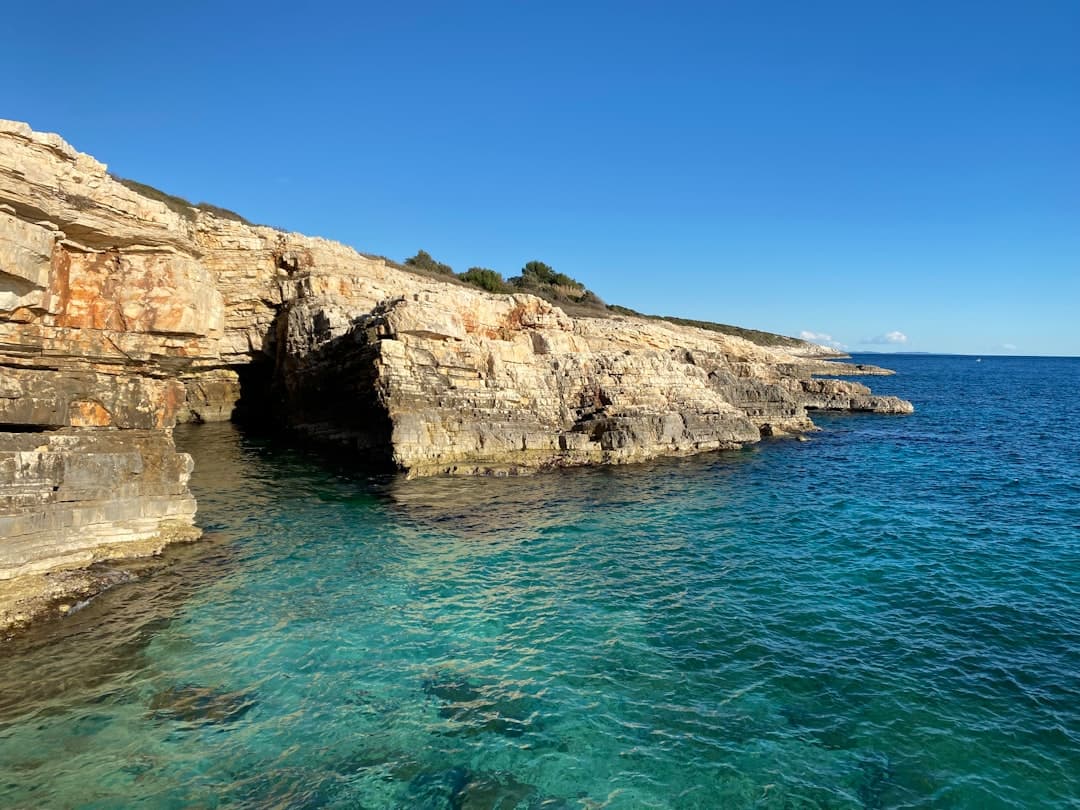
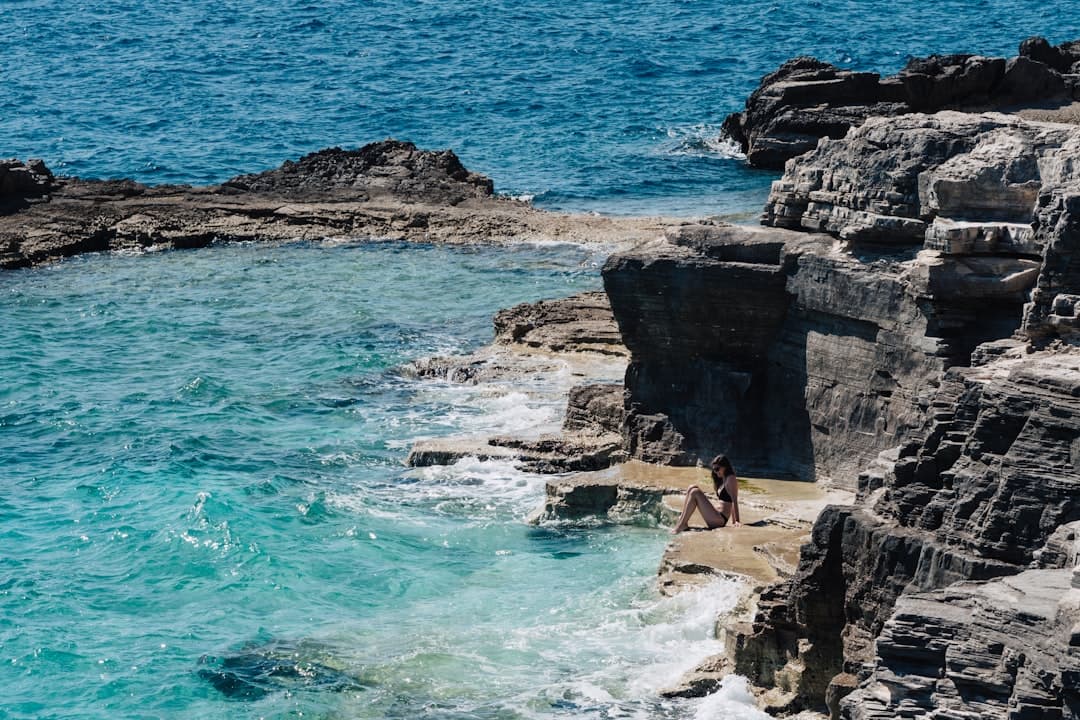
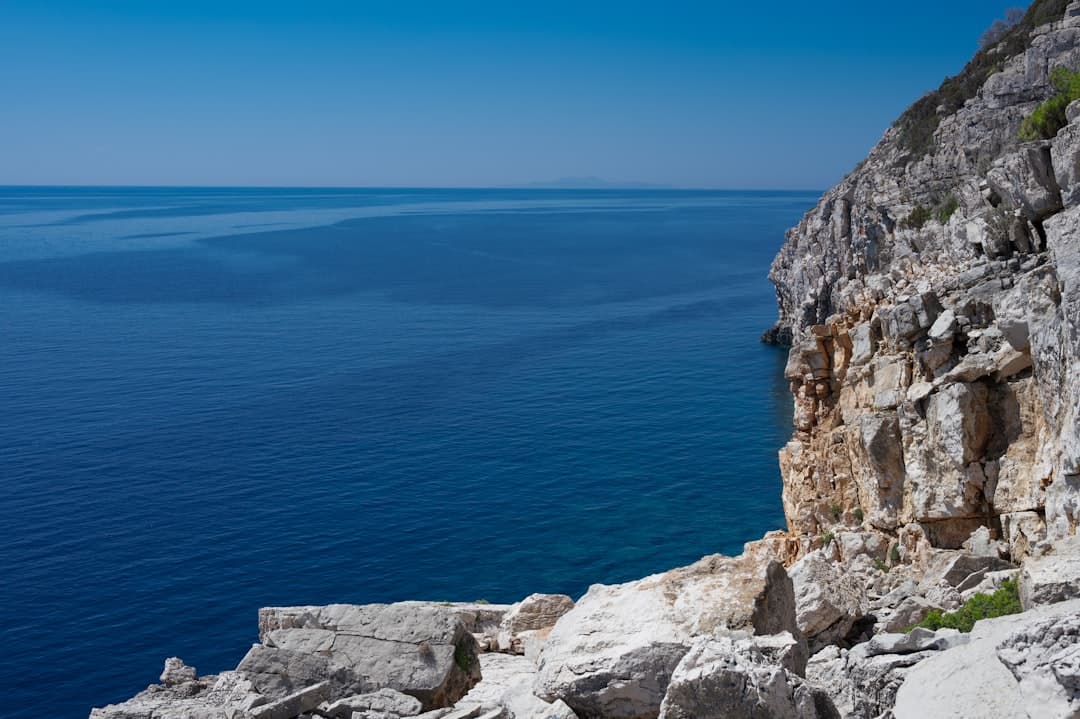
A bone-white limestone cliff rises from a deep-blue Adriatic — the karst geology that defines Cape Kamenjak.
Coves and Coastline

Beaches and Coves

The shoreline is rock and pebble rather than sand, and the geography rewards a bit of scouting. Pinižule, on the eastern side, is a long pebble bay with shallow turquoise water and the easiest entry on the cape — it works well for families and for first-time visitors who want to anchor for a day. Mala Kolombarica, near the southern tip, is the snorkelling favourite: the underwater drop is dramatic, the visibility excellent on calm days, and the Safari Bar sits directly above the water.

Velika Kolombarica, the larger cove next door, is where the cliff-jumping happens, with platforms ranging from a comfortable three metres up to around eight. Locals will tell you to scout the entry first and never jump if the sea is murky — the rocks below are unforgiving. Further west, Njive and Debeljak are quieter, reachable on foot from the gravel road, and are the coves to aim for if you want a small bay with no music and only a few neighbours.

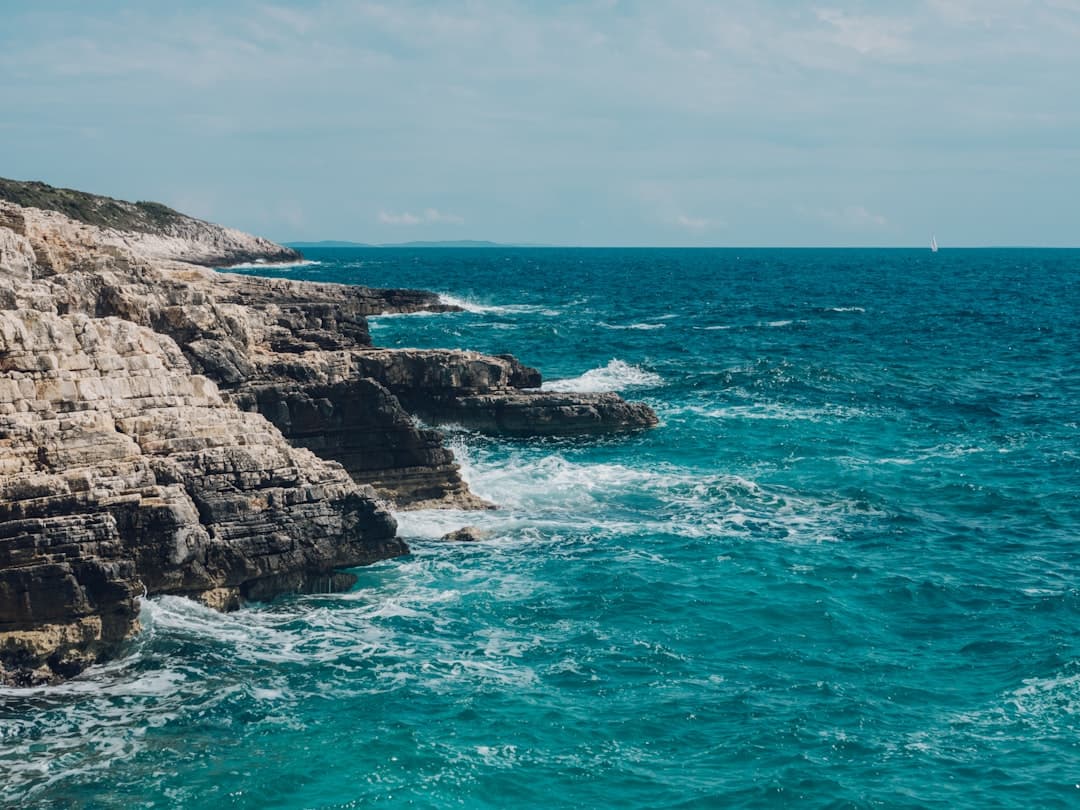
A small rocky outcrop drops into glass-clear turquoise water — the kind of pebble cove that defines Cape Kamenjak's coastline.
Fossil Trail

The Dinosaur Footprints

On the Grakalovac sub-peninsula, halfway down the eastern side, a short marked trail leads to fossilised footprints left by sauropod dinosaurs in what was then a shallow coastal lagoon, around 130 million years ago. The trail is about 600 metres each way, gentle gradient, and finishes near Pinižule cove. Wooden life-size dinosaur models have been placed along the path as a tribute, which gives the walk a slightly theatrical feel, but the real prints — pressed into the flat limestone slabs at the water's edge — are the genuine thing.

Visit at low tide and bring water shoes; the prints are easiest to see when the rock is wet but the surface dry enough to walk. Touching is discouraged but not policed, and the prints have visibly weathered over the past decade, so the polite thing is to look and step around them.

A flat limestone shelf drops into the Adriatic — the kind of slab where sauropod prints are preserved on the Grakalovac sub-peninsula.
Eat and Drink

Safari Bar and What to Eat

Safari Bar is the cape's only landmark of any size: a thatched, ramshackle beach bar tucked into the macchia above Mala Kolombarica, with hammocks, tree-stump seating and tables set under twisted oaks. It serves cold drinks, sandwiches and basic grilled fish and meat, and it is famously cash only — there is an ATM on site but it has been known to be empty in high season, so bring euros with you.

The mood is intentionally rough and rural, and the queue at sunset is long. If you want a proper sit-down meal, drive five minutes back to Premantura village where the konobas serve scampi, peka and Istrian wines at far lower prices than central Pula. The village square is also where you will find a bakery, an ice cream stop and the only reliable supermarket within ten kilometres.

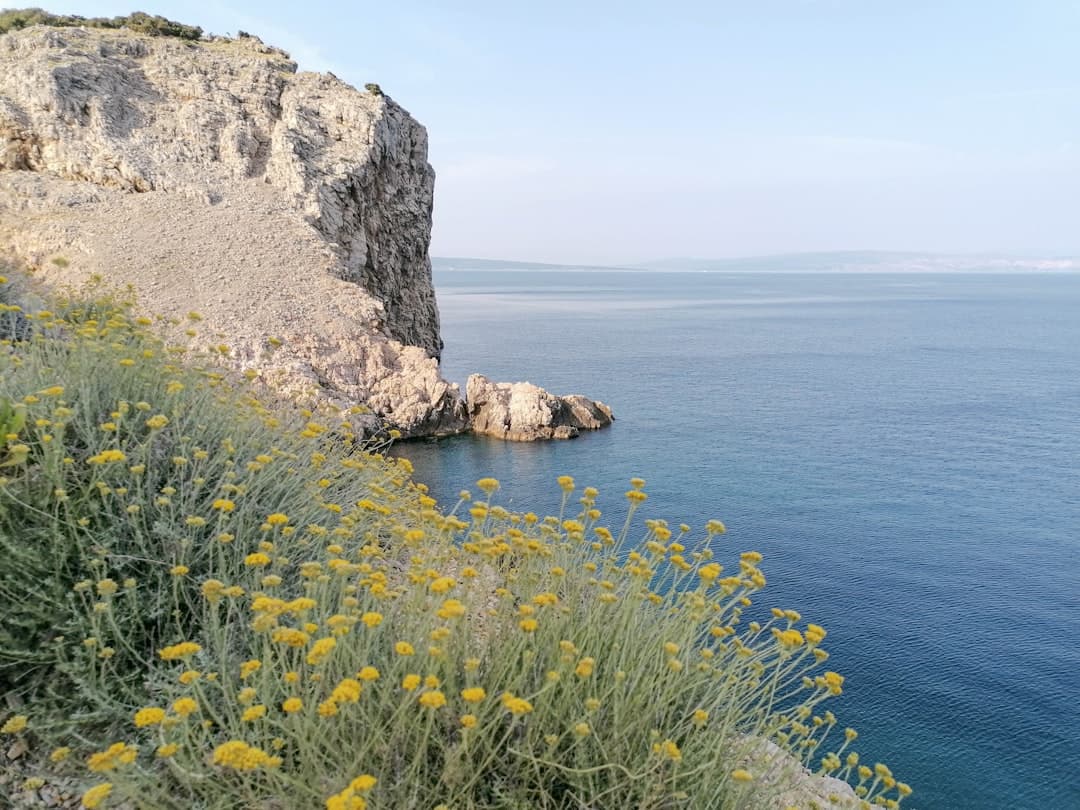
Yellow wildflowers in the foreground of a white limestone cliff over the Adriatic — the macchia-and-rock setting around Safari Bar.
Practical Info

How to Plan Your Visit

The cape is small enough to do in a day from Pula, Medulin or Premantura itself, but it rewards an unhurried pace. Arrive early — before 10am in July and August — to claim a parking spot near the cove you want, since the gravel road becomes a slow convoy by midday. The road is dusty and rutted but passable for any normal car driven slowly; a hire-car deductible-waiver is a small piece of useful insurance if you have it.

Arrival and parking

From Pula, drive south on the D66 through Medulin to Premantura village, then follow signs to Kamenjak. The entry booth sits at the start of the gravel loop — pay the per-car fee, then drive at walking pace to the parking pull-out nearest your chosen cove. Pinižule and Mala Kolombarica fill first; arrive before 10am in July or August.

What to bring

Everything you will eat or drink beyond Safari Bar, since there is no shop inside the cape and the few water taps are not reliable. Water shoes are not optional — the rock entries are sharp and sea urchins are common. A snorkel and mask earn their keep at Mala Kolombarica, and a thin towel doubles as a sun-block over the bleached limestone.

Rules and closing time

The protected status means no camping inside the cape, no fires of any kind, and dogs must be kept on a lead. Picking the orchids and other protected plants is forbidden. The gate closes at 10pm and the closing time is enforced, but sunset over the southern tip — looking towards the Porer lighthouse two kilometres offshore — is one of the things people remember from an Istria trip.

Without a car

Rent bicycles in Premantura village and ride the loop on a hybrid or mountain bike — the gravel is rough but the gradients are gentle, and cycling in is free. Premantura also has a small port from where you can join a guided kayak tour around the cape, with stops at sea caves you cannot reach on foot. A regular bus from Pula serves Premantura village.

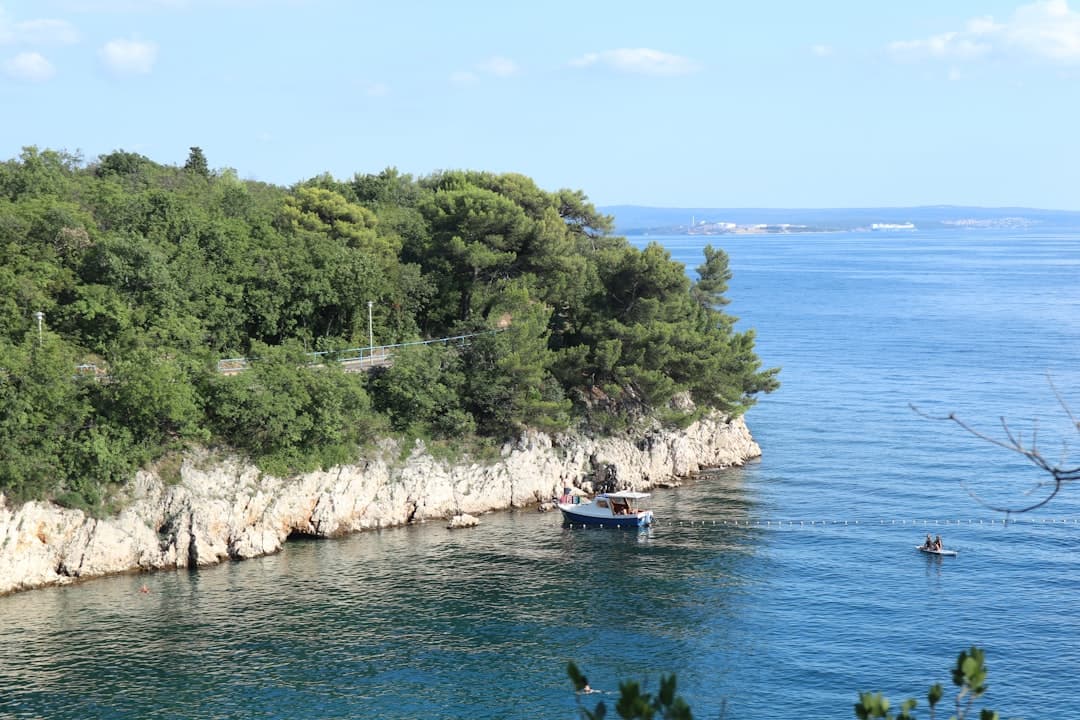
A small boat sits on calm water beneath a low Istrian cliff — visiting Cape Kamenjak by boat avoids the entrance fee entirely.
FAQ

Common Questions About Cape Kamenjak

Entry on foot, by bike or by boat is free year-round. Driving in costs €10–15 per car in summer, paid at a booth at the Premantura entrance. The fee covers the whole day and includes parking inside the cape.

Yes — the coves are open to all and there are no lifeguards or roped swimming zones. Water shoes are essential because the entries are rocky and sea urchins are common, and you should avoid the steepest cliff sections if the wind is up.

The cliffs range from about three to eight metres and are well used by locals, but the water depth varies with sea conditions and the rocks below are sharp. Watch other jumpers first, check the entry with a snorkel, and avoid jumping in choppy water or after recent storms when sand and debris can shift.

A half-day is enough to see one or two coves and walk a short trail. A full day allows time to drive the loop, snorkel at Mala Kolombarica or Pinižule, walk the dinosaur trail and finish with sunset at the southern tip.

May, June and September are the sweet spots: the sea is warm enough to swim from late May, the orchid meadows are at their best in April and May, and the crowds and entry fees are gentler outside July and August. In peak summer arrive at opening or after 5pm to avoid the worst heat and queues.

Facilities are minimal — basic toilets near the main parking areas at Pinižule and Mala Kolombarica, and intermittent water taps. Plan to bring all the water you need, and treat Safari Bar as the only reliable food and drink stop inside the protected area.

Explore More of Croatia

Discover more stories, hidden gems, and travel inspiration to help you plan your perfect Croatian adventure.