Why these towns exist where they do
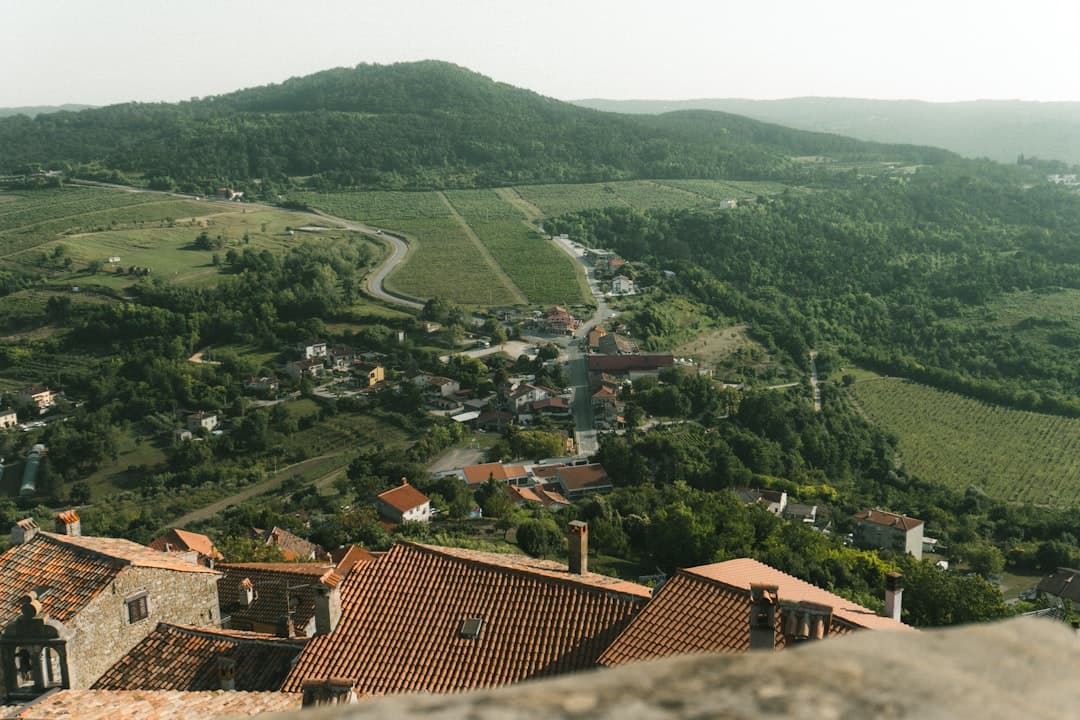
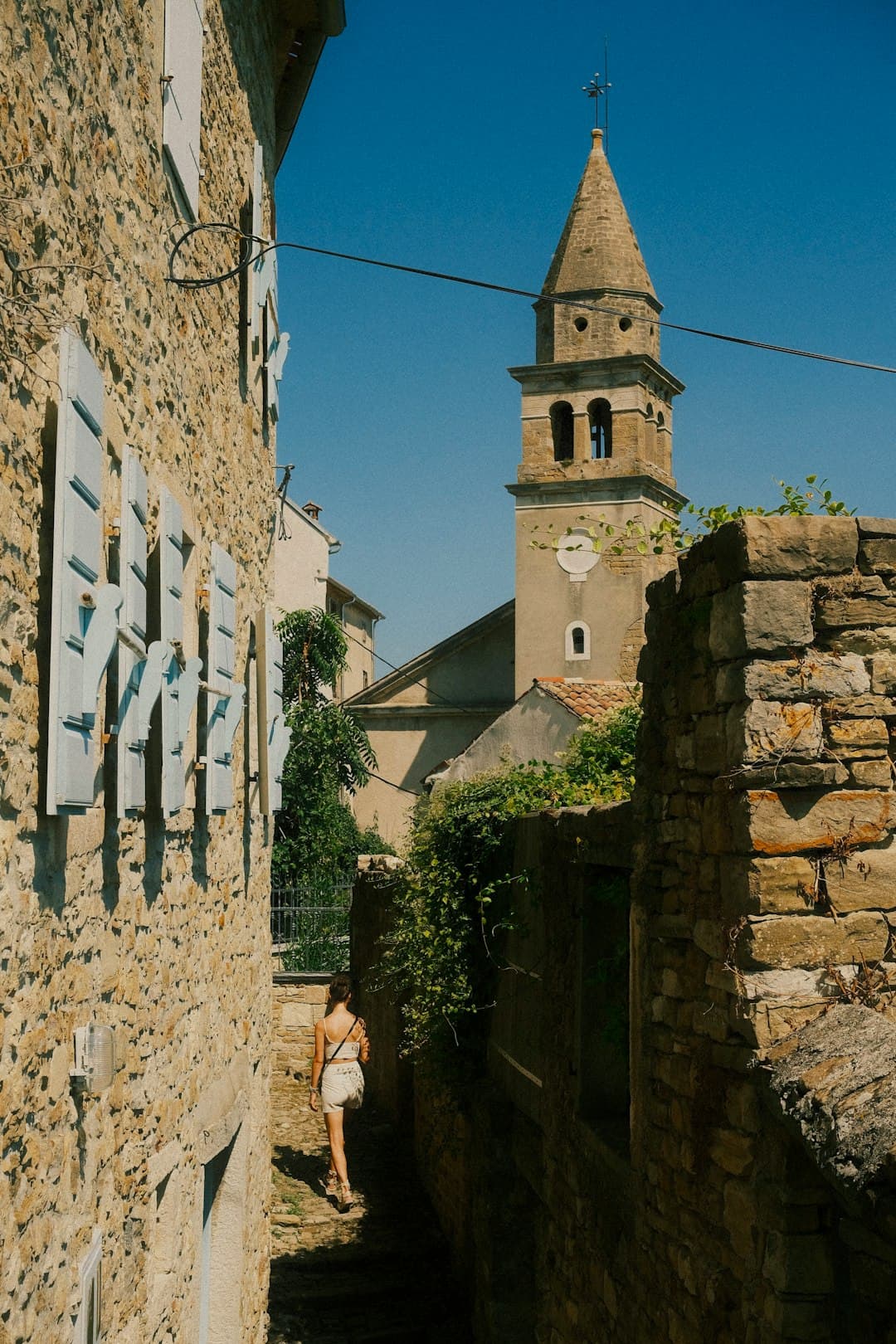
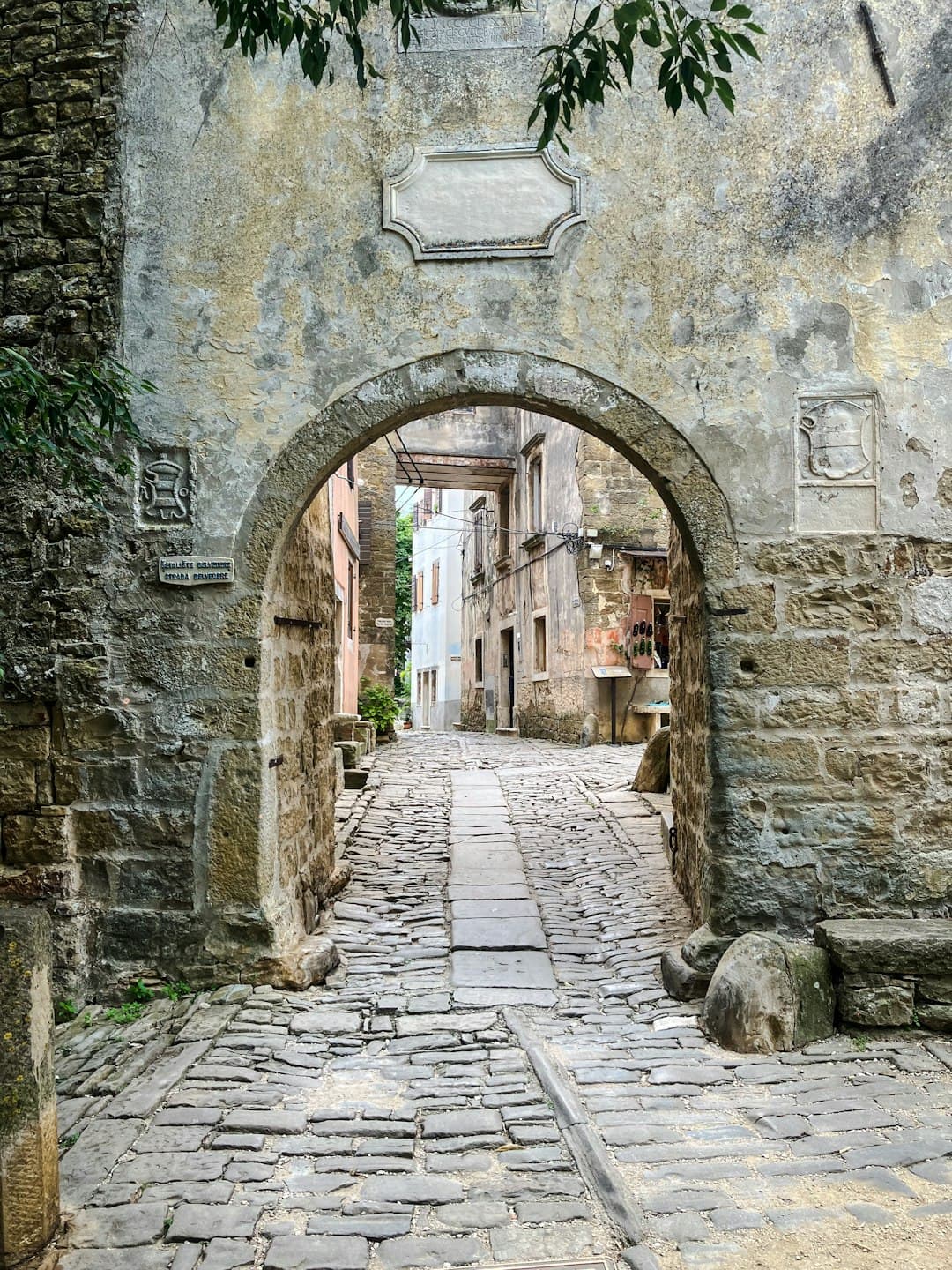
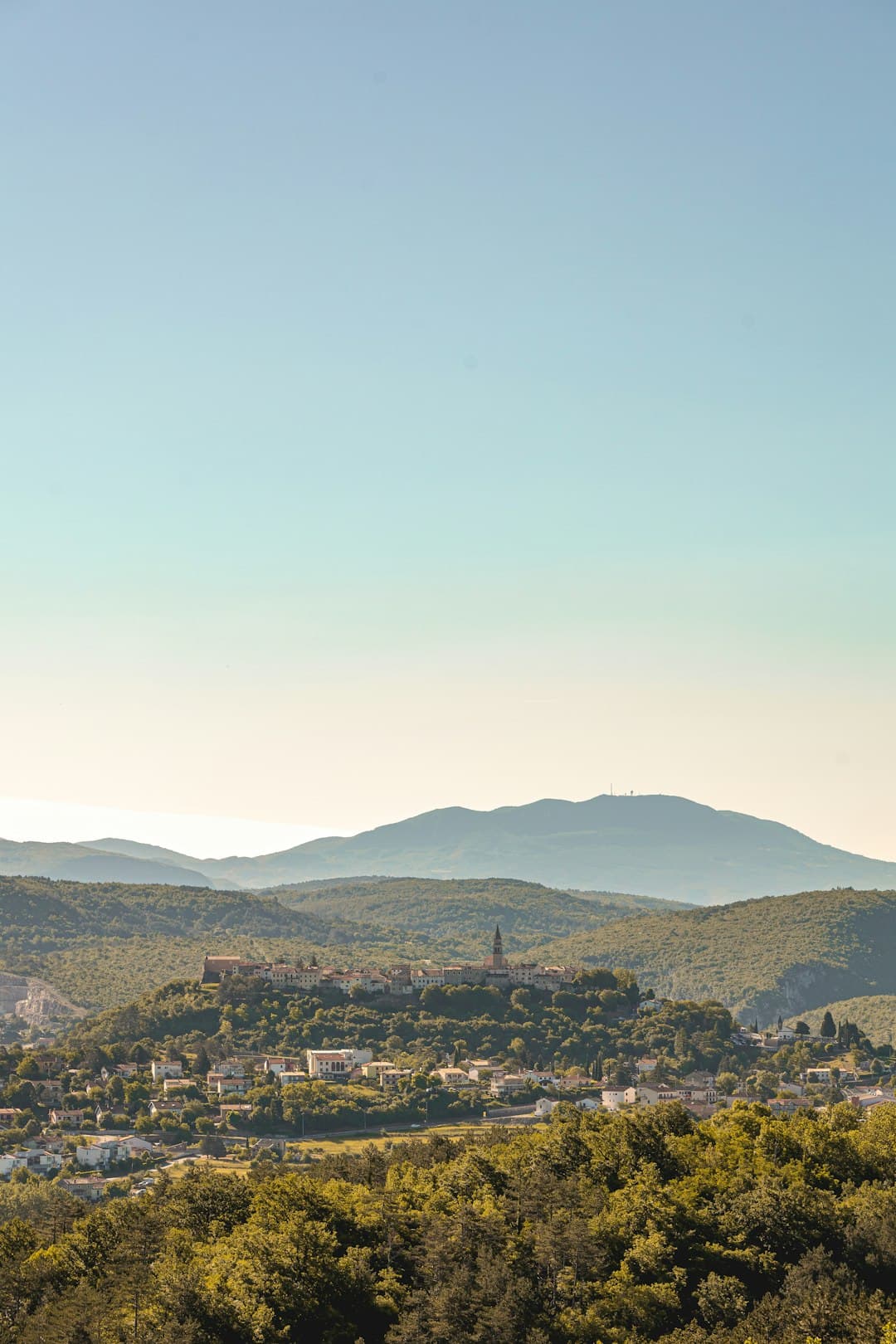
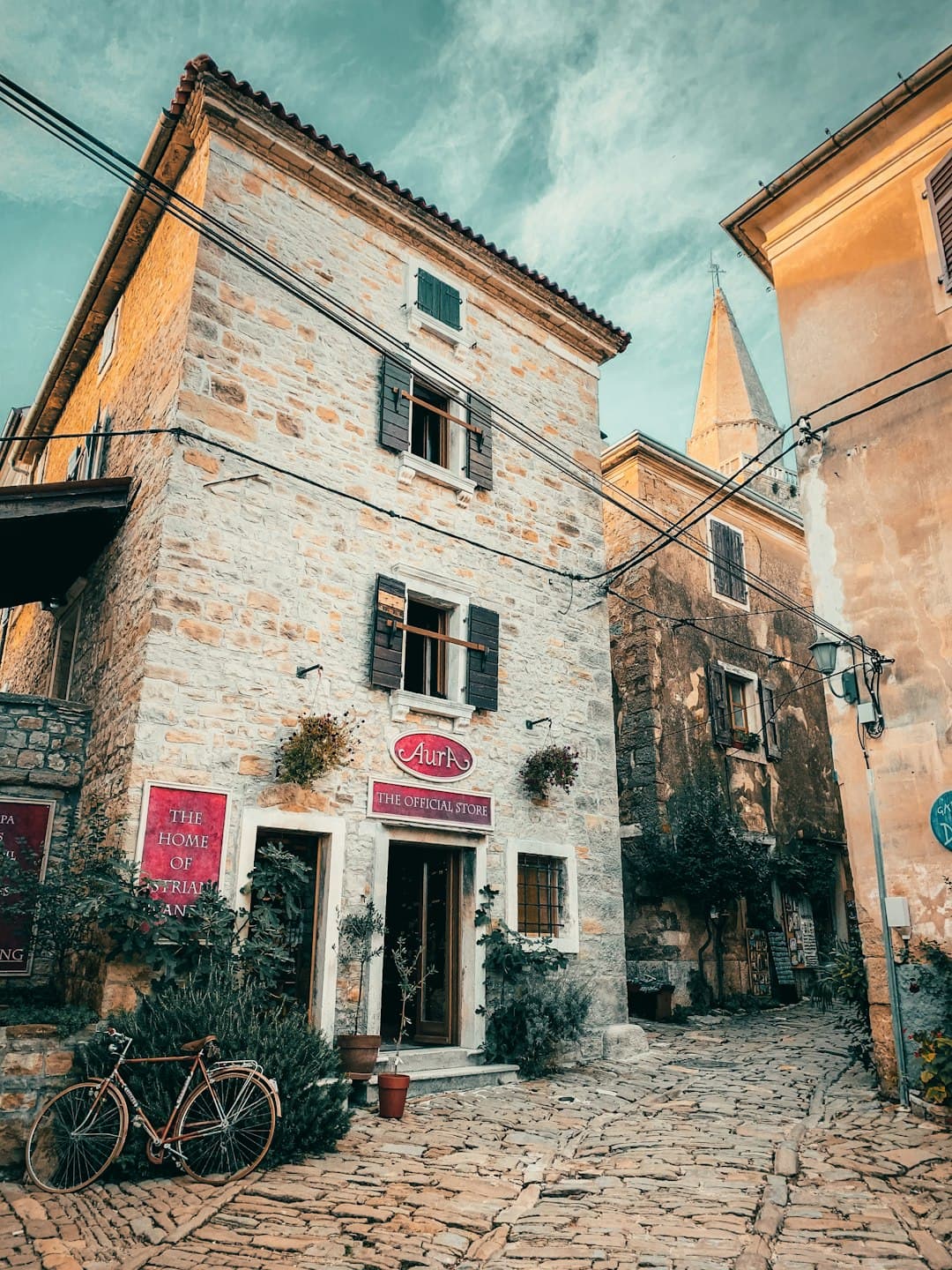
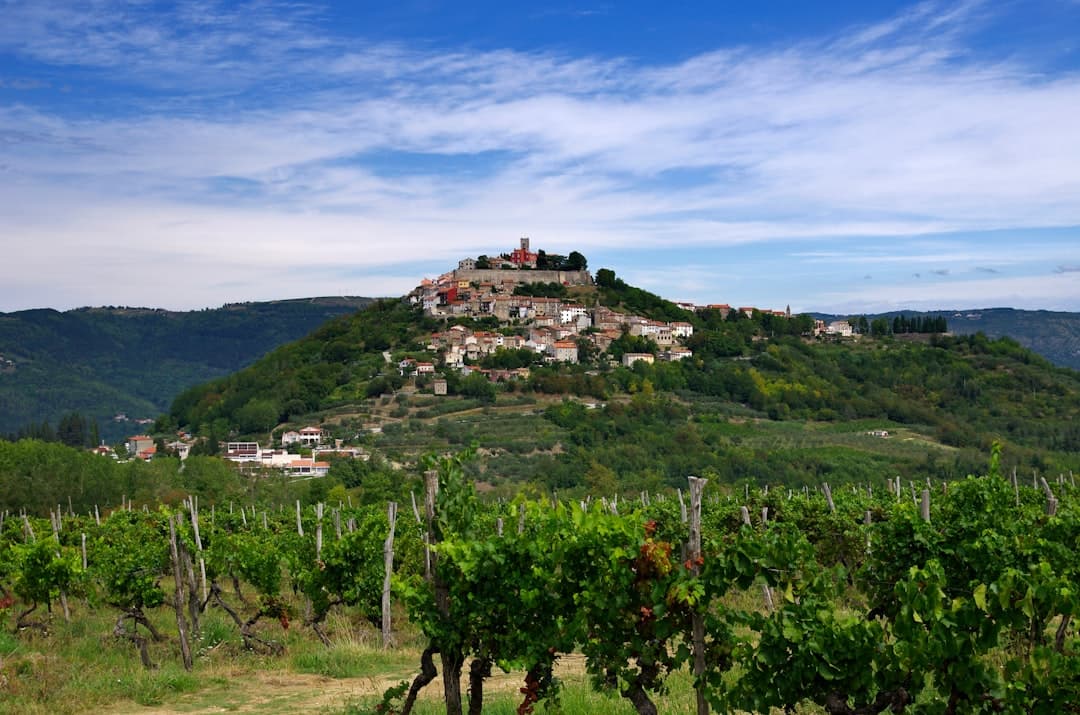
Istria's interior is karst country — a soft, cave-riddled limestone landscape cut by the Mirna and Raša river valleys. From the early Middle Ages onwards, communities clustered on isolated rocky outcrops above the valleys for the same set of reasons: defence against raiders coming up from the coast, malaria-free air above the marshy lowlands, and a clear view of the trade routes between the Adriatic and the Slovenian and Italian hinterland. The result is an unusually dense cluster of fortified stone villages, each built with the same Venetian-Gothic vocabulary of city gates, loggias, bell towers and double curtain walls.
Most of these towns belonged to the Republic of Venice from the late thirteenth century until 1797, and the Venetian lion of Saint Mark is still carved above almost every gate. They later passed through Austrian and Italian rule, which is why every signpost in the area is bilingual Croatian-Italian and why the food is closer to Friuli than to Dalmatia. After the Second World War much of the Italian-speaking population left in the so-called Istrian exodus, and several of the smaller villages were nearly empty by the 1960s. A number only survived because of artistic and cultural revival projects that began in that decade — Grožnjan being the most famous case.
What this means for a visitor today is that you can drive thirty kilometres through forest and vineyard and pass five or six near-identical-looking stone towns, each on its own hill, each with its own character: one a film festival town, one a music academy, one barely inhabited, one famous for a giant omelette. The point of touring inland Istria is to feel the differences between them.
Quick Facts
Where
Central and northern Istria, roughly the triangle between Pazin, Buzet and Buje. Most of the towns sit between 250 and 380 metres above the Mirna River valley.
Best time to visit
Late April to mid-June and September to early November. Spring brings wildflowers and uncrowded loggias; September and October are truffle season and the busiest weekends of the year.
How to get there
A car is essential — public buses serve Pazin and Buzet but do not connect the smaller villages. Pula is about an hour from Motovun; Rovinj 50 minutes; Trieste in Italy around 90 minutes.
Time needed
A long day covers two or three towns; three days lets you slow down and reach the harder-to-find ones such as Hum, Roč and Oprtalj.
Closest airports
Pula (PUY) for the south of the region, Trieste (TRS) and Ljubljana (LJU) for the north.
What to budget
A truffle tasting menu in Motovun runs €60–€90 a head; a glass of local Malvazija €4–€6; parking at the foot of Motovun is €5 a day, with a free shuttle into town in summer.