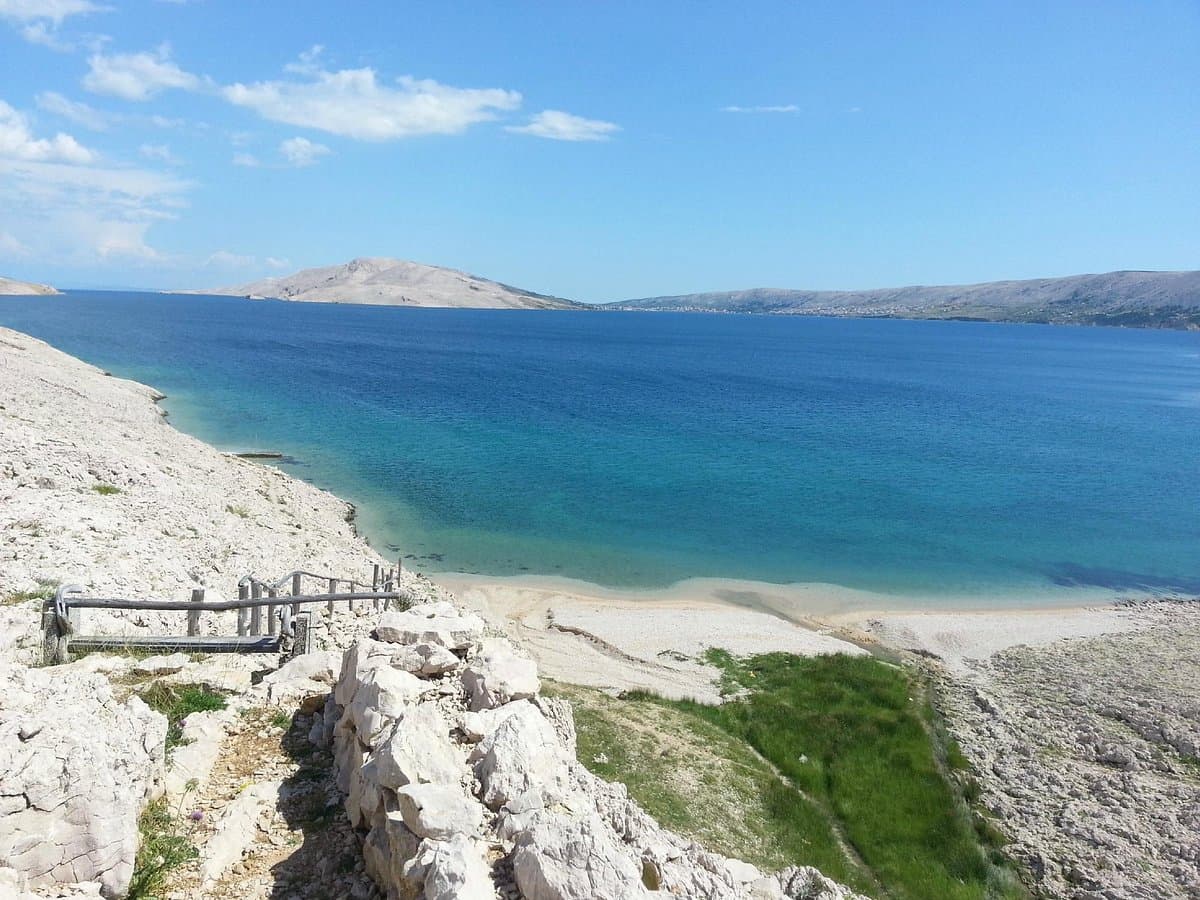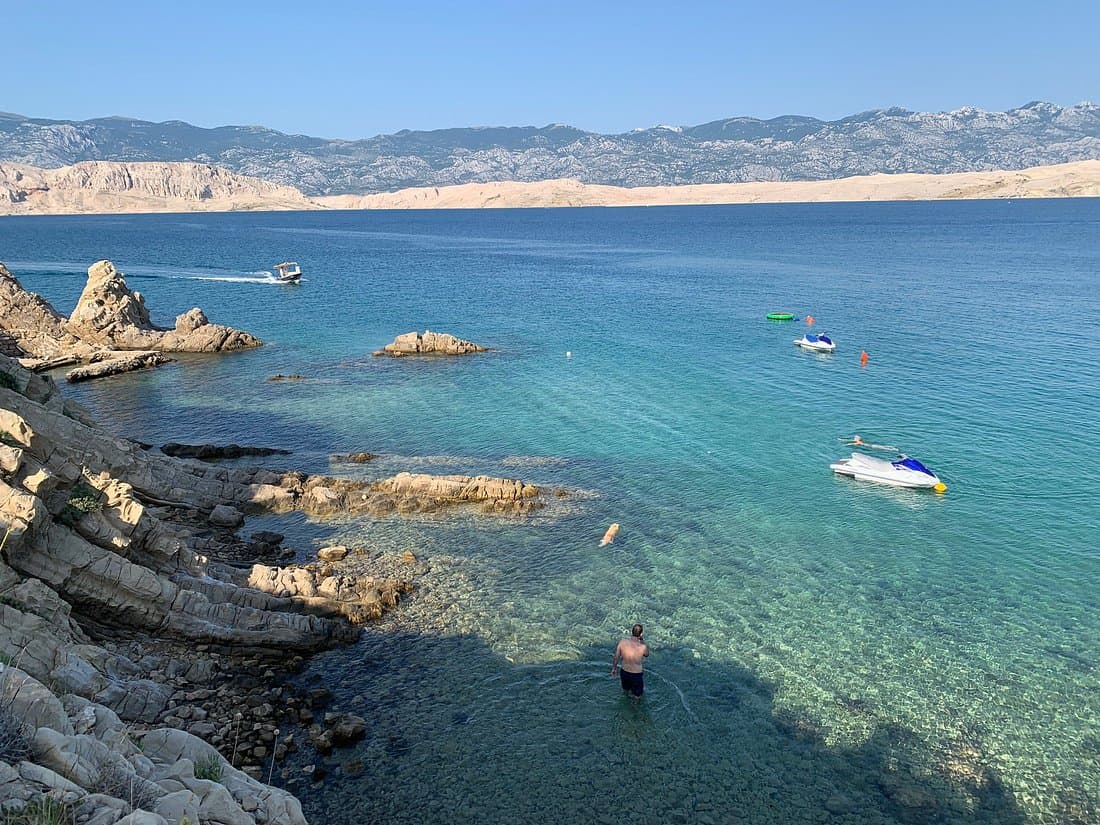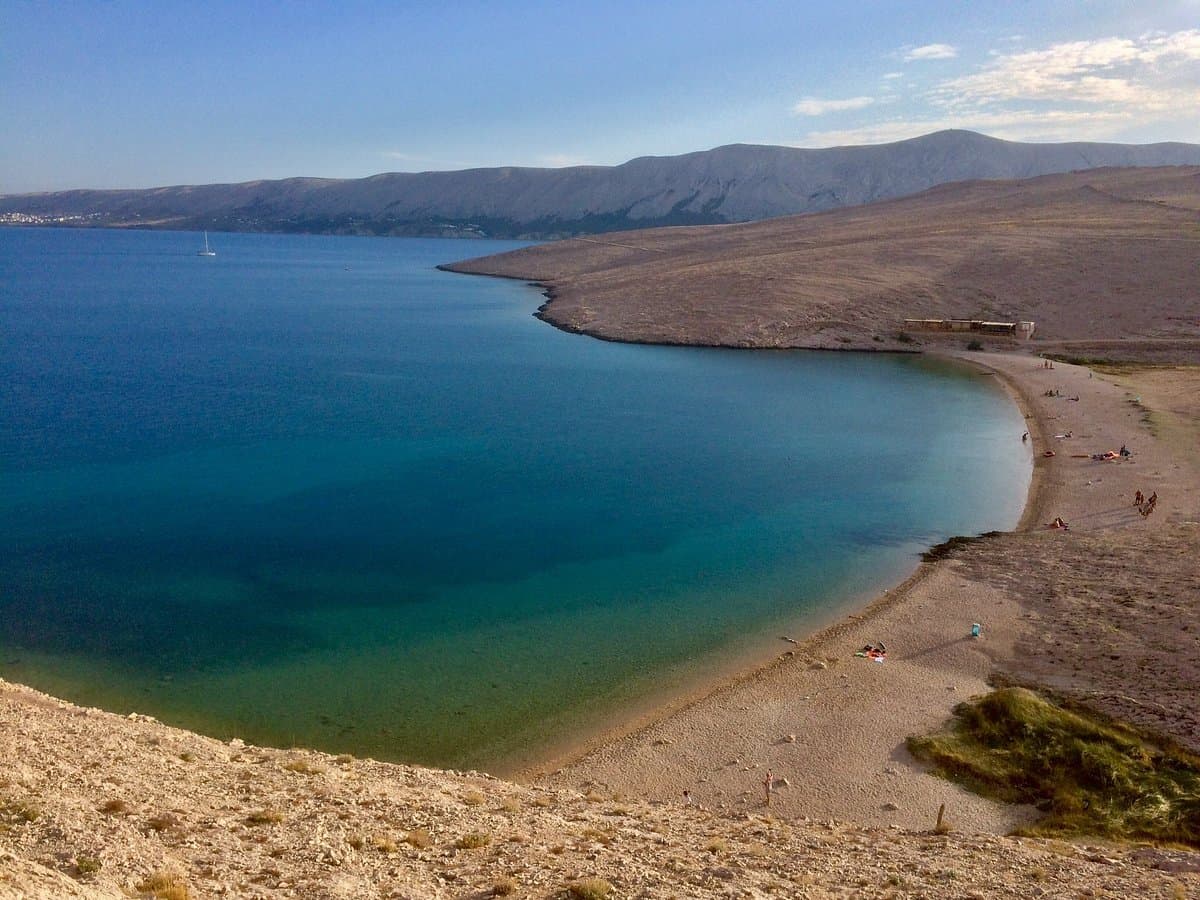
The Life on Mars Trail on the island of Pag, Croatia — white karst rocks and deep blue Adriatic sea
Get Inspired
Hiking & Trails

Life on Mars Trail and the Island of Pag: Croatia's Most Otherworldly Island

A guide to Croatia's most otherworldly island and its extraordinary Mars-like trail near Metajna.

Island of Pag, Croatia

There are places in Croatia that feel soft, green, and Mediterranean in the familiar way: pine trees, stone villages, fishing boats, and the smell of the sea in the air.

And then there is Pag.

Pag does not try to be pretty in the usual island way. It is raw, pale, rocky, windswept, and almost unreal. In some parts, the island looks less like the Adriatic and more like another planet. The stone is white and sharp, the hills are bare, the sea is impossibly blue, and the landscape feels like it has been shaped by wind, salt, sun, and time.

This is exactly why the Life on Mars Trail near Metajna has become one of the most unique hiking experiences in Croatia. The name is not just clever marketing. When you walk across this part of Pag, surrounded by white karst rock, hidden beaches, and views of the Velebit mountains across the sea, it really does feel like you have stepped onto another world.

But to understand the trail, you first have to understand Pag itself.

Because Pag is not just an island with a beautiful hike. Pag is one of Croatia's most unusual islands — a place of salt, sheep, cheese, lace, music, stone, and silence.

I should probably say this from the beginning: Pag is not just another island in Croatia I am writing about. My family has had a vacation home here for years, and I have been coming to Pag one or several times every year for the last 20 years. So when I write about this island, it comes from many summers, many drives across its bare stone landscape, many swims, many windy days, and many small moments that made Pag feel familiar and still somehow surprising every time. That is also why I believe Pag is one of the most unique islands in Croatia — not because I visited once and was impressed, but because after two decades, it still does not feel ordinary.

Quick facts about the trail

Best season

Spring & autumn — March–May, September–October

Trail length

~16 km of marked routes near Metajna

Starting point

Village of Metajna, island of Pag

Difficulty

Moderate — rocky, exposed, very little shade

Via ferrata

100 m above the sea — requires full climbing gear

Nearest city

Zadar (~1 hour by car)
The bare, moonlike karst landscape of the island of Pag, Croatia, shaped by wind and salt

Pag: The Island That Looks Like the Moon

Pag is located in the northern part of Dalmatia, stretching between the mainland and the open Adriatic. It is one of the largest Croatian islands, but what makes it stand out is not its size. It is the landscape.

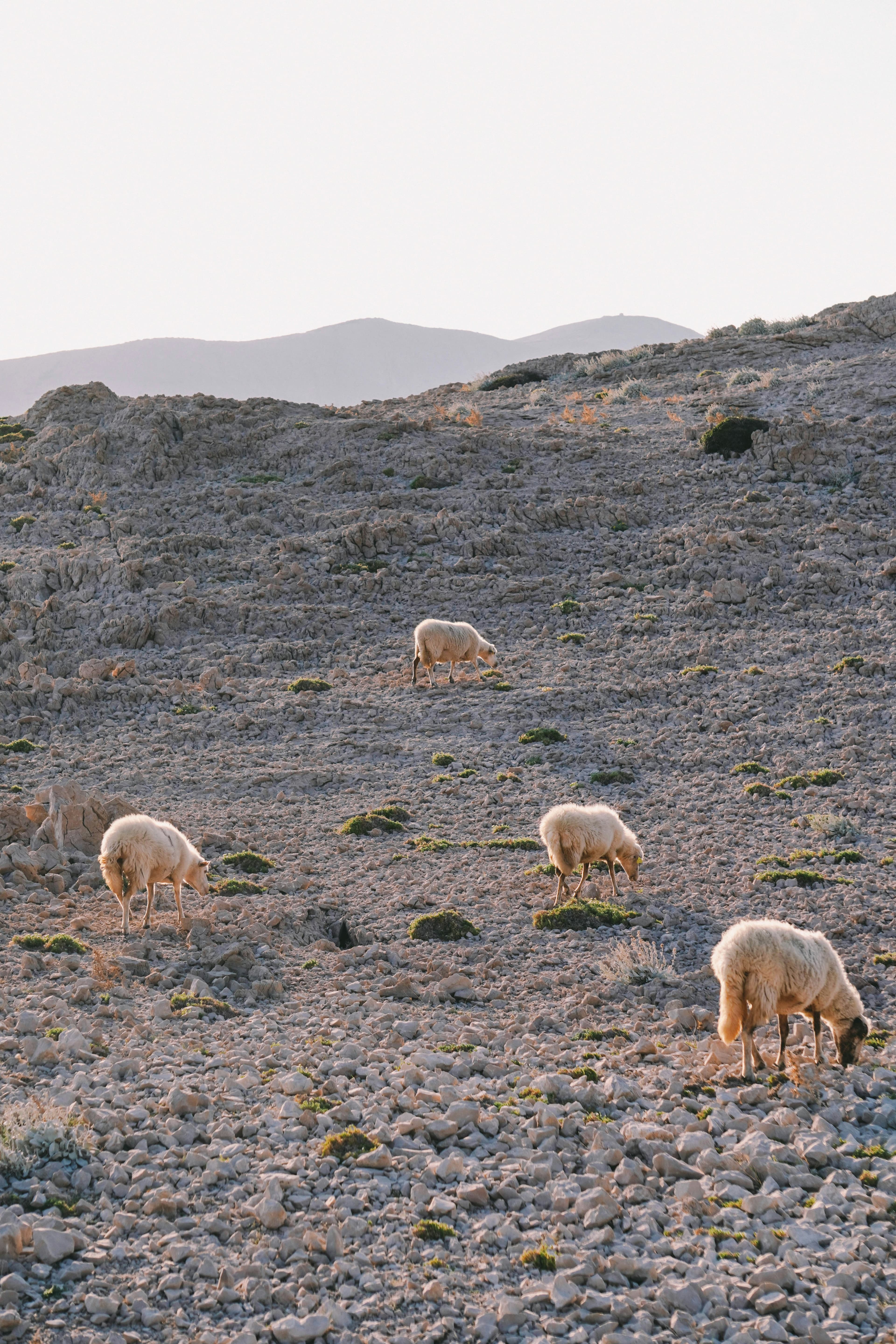
Much of Pag is bare and rocky, especially when you approach it from the mainland bridge or drive through the central and northern parts of the island. The scenery is almost lunar. There are no thick forests here, no soft green hills, no typical postcard island views at first glance. Instead, you see stone, salt, dry grass, sheep, and the sea cutting through everything in shades of blue.

The island's famous moonlike appearance comes from its karst terrain, strong bora wind, and salt carried from the sea. Over time, these elements have created a landscape that feels dramatic and exposed. Pag is beautiful, but not in a gentle way. It is beautiful because it is different.

That difference is what makes people remember it.

You can visit many islands in Croatia and say they are charming. Pag is not just charming. Pag is strange, bold, and unforgettable.

Why Pag Is So Unique

Pag has several identities, and somehow they all exist together.

It is a quiet island of stone villages, sheep pastures, and traditional food. It is also home to Zrće Beach near Novalja, one of the most famous party beaches in Europe. It has peaceful coves where you can swim alone, but also summer festivals that attract visitors from all over the world.

It is known for Paški sir, the famous Pag cheese made from sheep's milk. The sheep graze on salty, herb-covered pastures, and that gives the cheese its strong, distinctive flavor. Pag is also famous for its lamb, salt production, and delicate Pag lace, which is part of Croatia's protected cultural heritage.

So Pag is not one thing.

It is wild nature and nightlife. It is tradition and adventure. It is silence and music. It is stone and sea.

And nowhere does the island's wild side show itself better than on the Life on Mars Trail.

Life on Mars Trail: Hiking Through Another Planet

The Life on Mars Trail starts near the village of Metajna, on the eastern side of Pag, close to Novalja. This part of the island is one of the most spectacular areas for walking, hiking, trail running, and photography.

The trail was first connected with the Life on Mars Trail race, which began in 2017 and is usually held in spring. Today, marked trails in the area are open to visitors year-round, with routes leading through Metajna and across some of the most dramatic coastal scenery on Pag. The official trail network includes several marked routes with a total length of around 16 km, and the area is known for its views, beaches, and Mars-like stone landscape.

The landscape here is almost surreal. You walk across pale rock with very little shade, while the sea appears below in bright turquoise and deep blue. In the distance, the Velebit mountain range rises across the water, making the whole scene feel even more dramatic.

It is not a forest hike. It is not a soft coastal promenade. It is rocky, exposed, and powerful.

That is exactly what makes it special.

The start of the Life on Mars Trail near Metajna — white rocky path with the Adriatic below
View from the island of Pag across the Adriatic towards the Velebit mountain range on the Croatian mainland

Beaches Along the Life on Mars Trail

One of the best things about the Life on Mars Trail is that it combines hiking with some of the most beautiful hidden beaches on Pag.

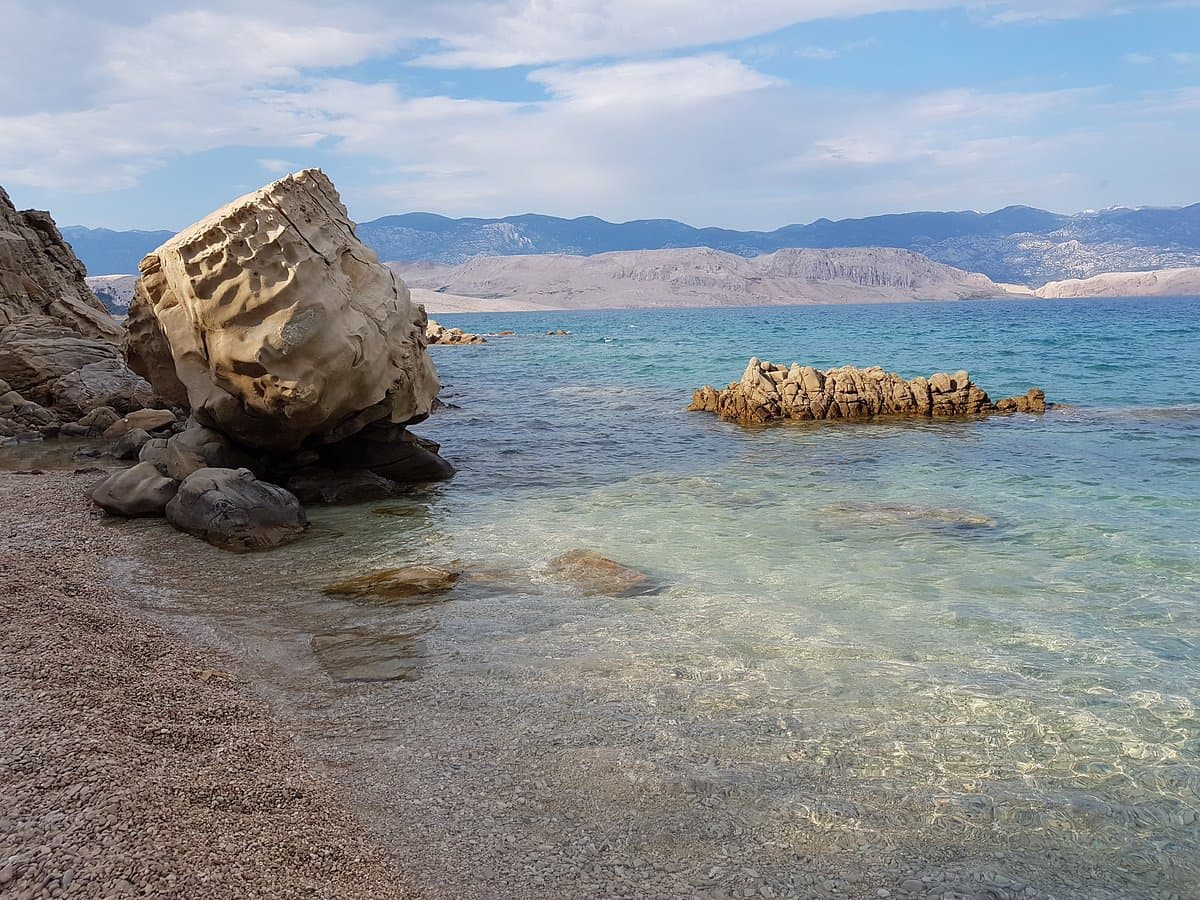
The trail passes near places such as Ručica Beach, Beriknica Beach, Slana Bay, and other small coves that feel far away from everything. These beaches are not surrounded by pine trees or beach bars. They are framed by stone, cliffs, and open sky.

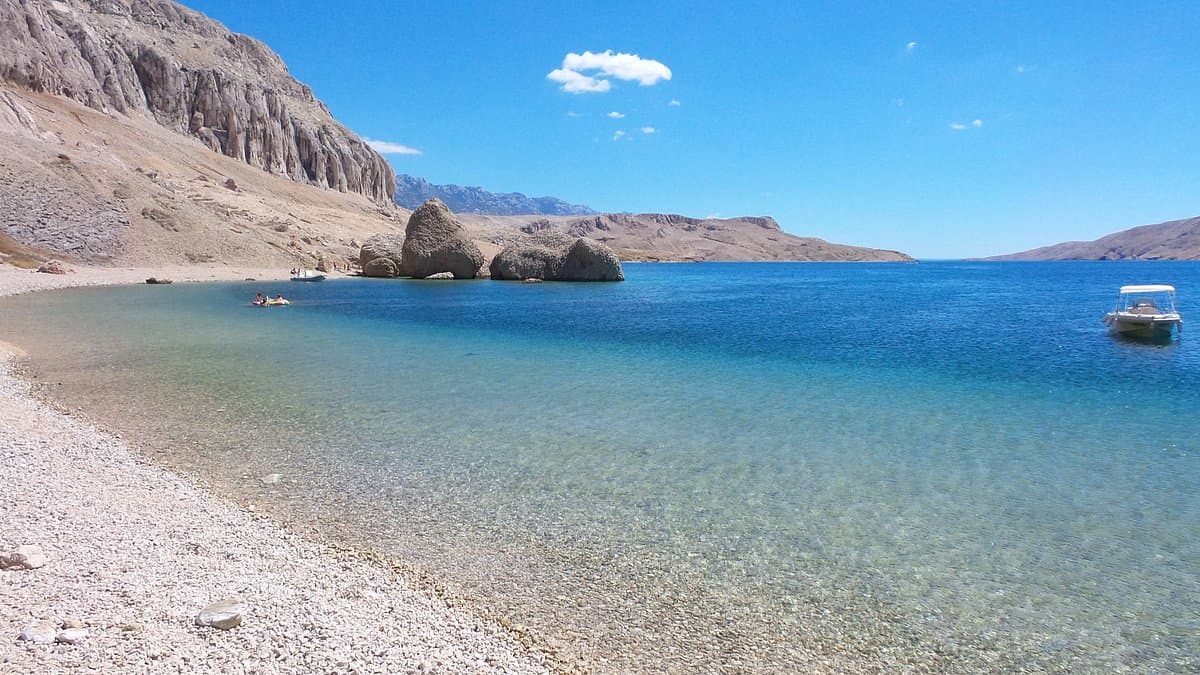
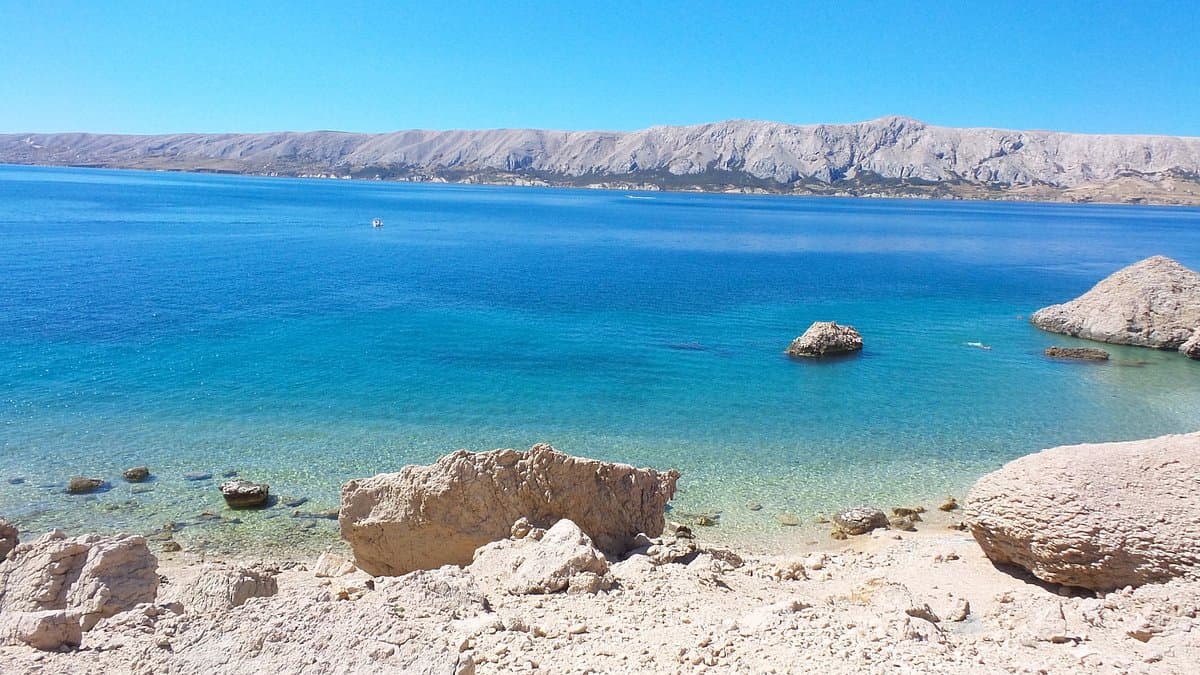
Beriknica Beach is especially famous because of the large natural rocks standing in the shallow sea. Above it rises Stogaj, a striking rock formation that has become one of the most photographed symbols of the trail. The area is also popular with climbers, with marked climbing routes around Stogaj.

This is what makes hiking here so rewarding: one moment you feel like you are walking across Mars, and the next you are looking down at a perfect Adriatic beach.

Bring swimwear if the weather is warm. It is very hard to look at that water and not want to jump in.

Beriknica beach on the island of Pag with natural rock formations and turquoise Adriatic water
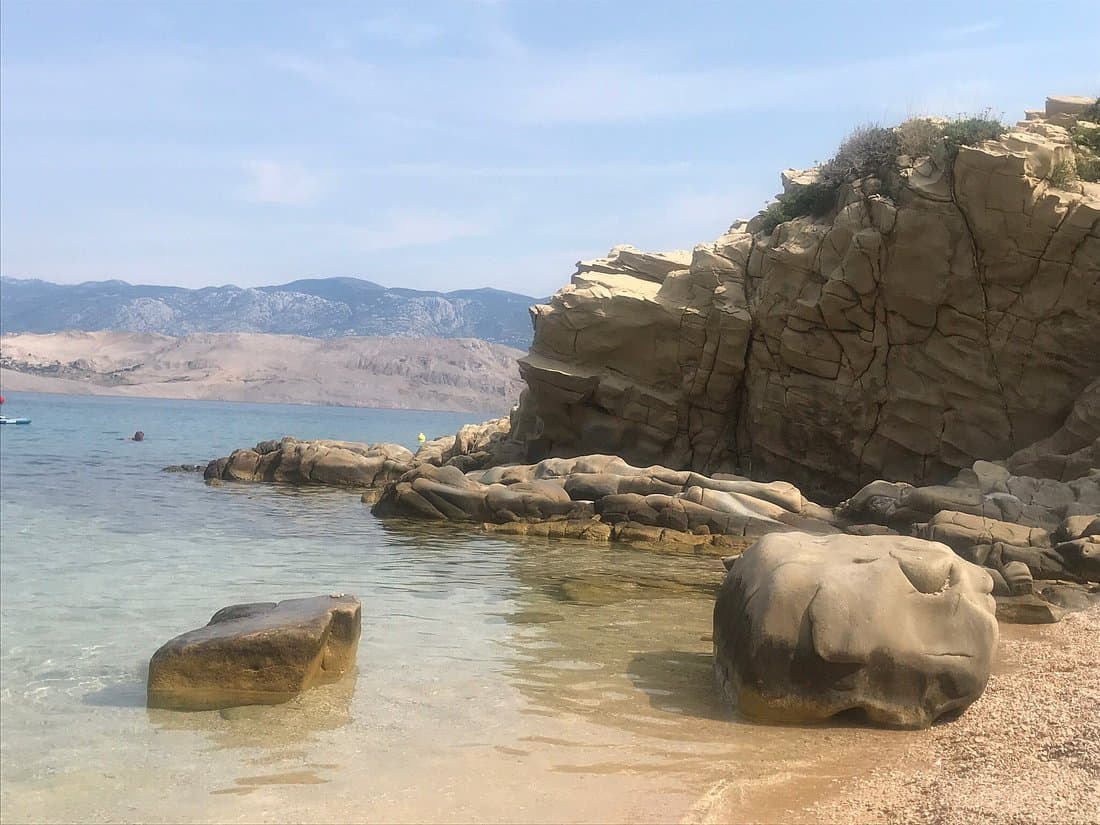
Ručica beach near Metajna on the island of Pag, Croatia — rocky cove with clear blue water

The Via Ferrata Above the Sea

For more adventurous visitors, the Life on Mars area also has something very special: a short via ferrata above the sea.

Added in 2020, this was the first Croatian via ferrata built directly over the sea. It connects the area between Slana Bay and Cape Sušac and is about 100 meters long. It is not just a casual walking section — it is intended for active climbers and requires proper equipment, including a helmet, harness, absorber, and gloves.

This is important: if you are just hiking, you do not need to do the via ferrata. The trail itself is already beautiful. But if you are experienced, properly equipped, and looking for something more exciting, this section adds a completely different level of adventure.

Walking above the sea, attached to the rock, with the Adriatic below you — it is hard to imagine a more Pag-like experience.

The dramatic white karst rocks of the Life on Mars Trail on the island of Pag, Croatia

Is the Life on Mars Trail Difficult?

The Life on Mars Trail is not technically difficult if you stay on the regular hiking paths, but it should not be underestimated.

The terrain is rocky, uneven, and exposed to the sun. There is very little shade, and in summer the heat can be intense. Good shoes are important, because the stone can be sharp and loose in places. You should also bring enough water, especially outside the cooler months, as there are no reliable water points along the trail. Hikers often describe the route as beautiful but demanding because of the rough terrain and lack of shade.

The best time to hike is spring or autumn. March, April, May, September, and October are ideal months, especially if you want to enjoy the trail without extreme heat. Summer is possible, but only if you start very early in the morning and carry plenty of water.

This is not a trail where you should arrive in flip-flops with one small bottle of water and hope for the best.

Pag looks empty and quiet, but the sun and stone can be serious.

What to Bring

For the Life on Mars Trail, bring:

  • Proper hiking shoes or strong trainers
  • Plenty of water
  • Sun protection
  • A hat
  • Swimwear
  • Snacks
  • A charged phone
  • A downloaded map or GPX route
  • A light wind jacket outside summer

If you plan to do the via ferrata, you need proper climbing equipment and experience. Do not attempt it casually.

Metajna: The Gateway to the Trail

Metajna is a small village on the eastern side of Pag and the natural starting point for the Life on Mars Trail. It is quieter than Novalja and much more connected to the landscape around it.

This is not a place of big hotels or loud nightlife. Metajna feels simple, local, and close to nature. It is a good base if you want to hike, swim, explore the nearby beaches, or experience the more peaceful side of Pag.

From Metajna, you can easily reach Ručica Beach, which is often used as a starting point for exploring the trail. The road down to the beach already gives you a feeling of what is coming: bare hills, white stone, and the sea opening in front of you.

Pag Beyond the Trail

Pag Town

Pag Town is the cultural heart of the island. It is known for its old stone streets, salt history, lace-making tradition, and views over the bay. The town has a calmer feeling than Novalja and is a good place to understand the island's older identity.

Pag's salt production has been important for centuries, and salt is still one of the symbols of the island. The salt pans near Pag Town are part of the landscape and part of the island's story. Pag lace is another important tradition, made with incredible patience and detail.

If the Life on Mars Trail shows you Pag's wild nature, Pag Town shows you its culture.

The historic old town of Pag with stone architecture and the bay, Croatia

Novalja and Zrće Beach

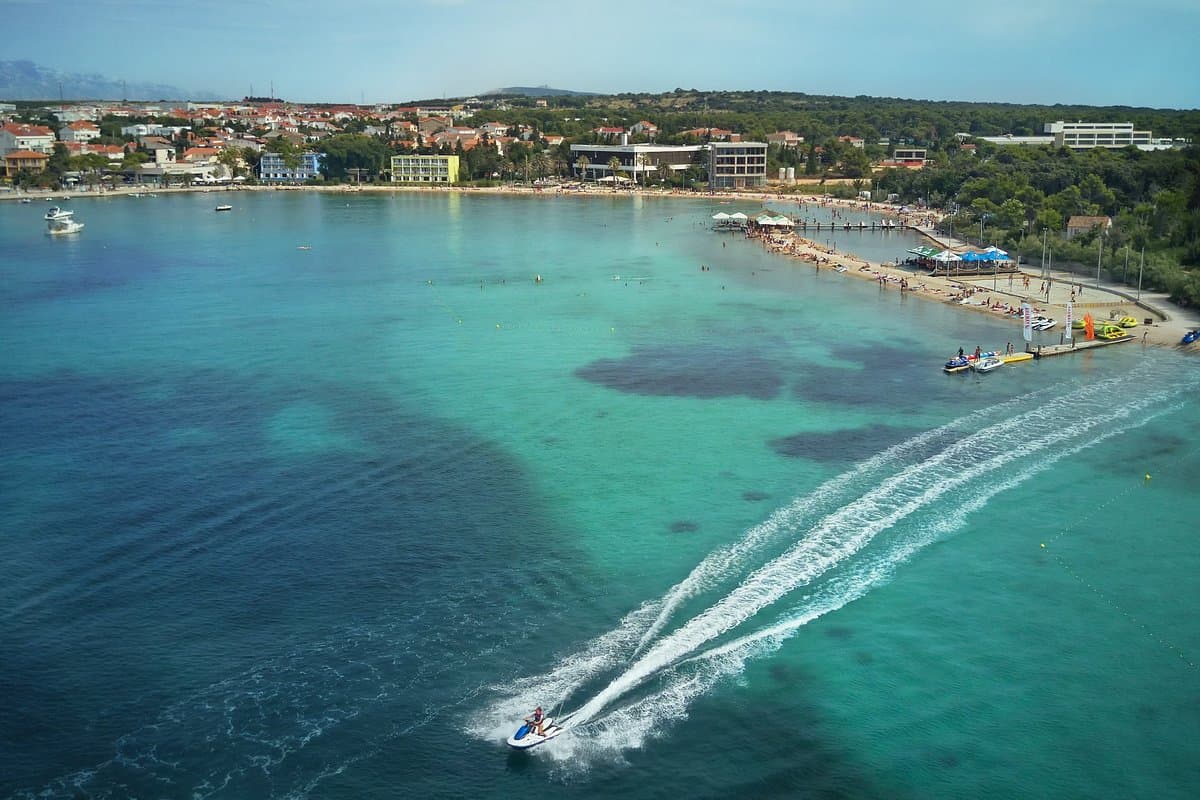
Novalja is the busiest town on the island and the main base for many visitors, especially in summer. Nearby Zrće Beach is famous for open-air clubs, beach parties, and music festivals.

This is the side of Pag that many younger travelers know first. Zrće is loud, energetic, and international. But what makes Pag interesting is that this party scene exists on the same island as silent stone landscapes, sheep pastures, and empty coves.

You can dance all night in Novalja and hike through Mars-like terrain the next morning.

That contrast is very Pag.

The town of Novalja on the island of Pag, Croatia, with its harbour and clear Adriatic water

Kolan and Pag Cheese

If you love food, Pag is one of the best islands in Croatia to visit. The island's most famous product is Paški sir, a hard sheep cheese with a salty, rich flavor.

The taste comes from the island itself. Pag sheep graze on herbs and grass touched by sea salt carried by the bora wind. That combination gives the milk, and later the cheese, its special character.

Kolan is especially known for cheese production, and visiting a local dairy or tasting Pag cheese should be part of any trip to the island. Pag lamb is also famous, for similar reasons: the animals graze in this salty, herb-filled environment, which gives the meat a distinctive flavor.

On Pag, food is not separate from the landscape. It tastes like the island.

Traditional Pag lamb roasted under the peka — one of Croatia's most celebrated island dishes

Lun Olive Groves

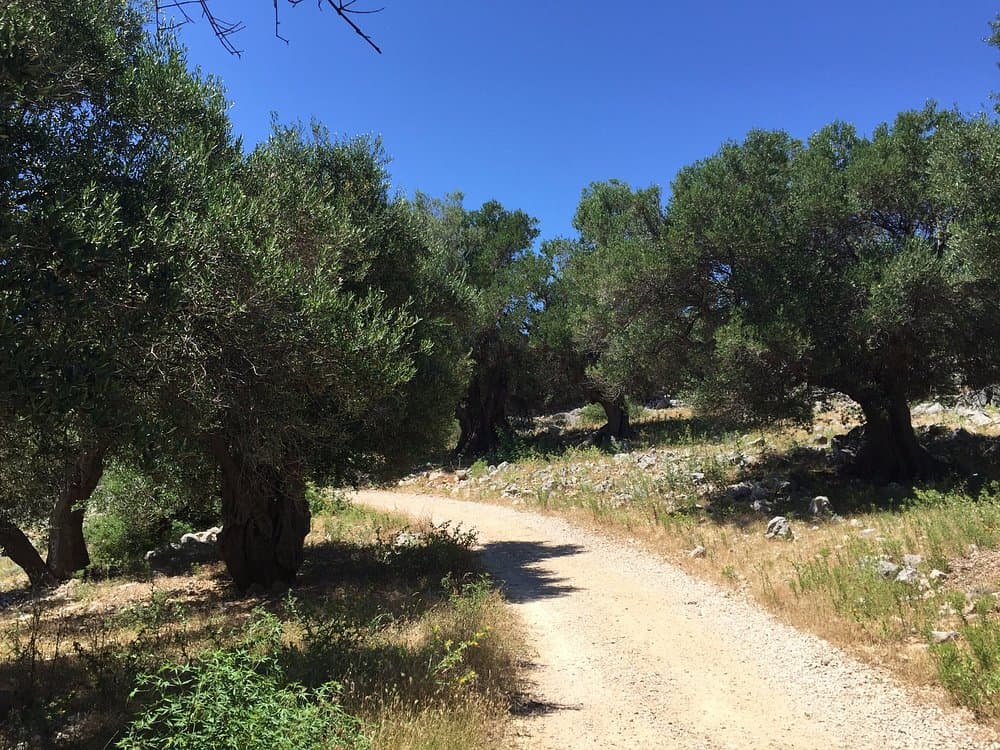
In the far north of Pag, near Lun, the island changes again. Here you can find ancient olive groves, with thousands of olive trees, some of them believed to be extremely old. This part of the island feels quieter and softer than the rocky landscapes around Metajna, but still very distinct.

It is worth visiting if you want to see another side of Pag — one that is slower, greener, and deeply Mediterranean.

Ancient olive groves near Lun in the north of the island of Pag, Croatia

Why Pag Feels Different From Other Croatian Islands

Many Croatian islands are beautiful because they feel lush, romantic, or historic. Pag is beautiful because it feels elemental.

Stone. Wind. Salt. Sea. Sun.

Everything on the island seems connected to these forces. The landscape shapes the sheep pastures. The sheep shape the cheese. The salt shapes the economy and history. The wind shapes the stone. The stone shapes the trails. And the sea gives everything its color.

That is why Pag stays with you.

It is not just another island stop between Zadar and the northern Adriatic. It has a personality. A strong one.

Some people come for Zrće. Some come for cheese. Some come for the beaches. Some come for hiking. But the people who really understand Pag are the ones who see how all these pieces fit together.

Pag is not polished. It is not trying to please everyone. And that is exactly why it is so fascinating.

How to Get to Pag

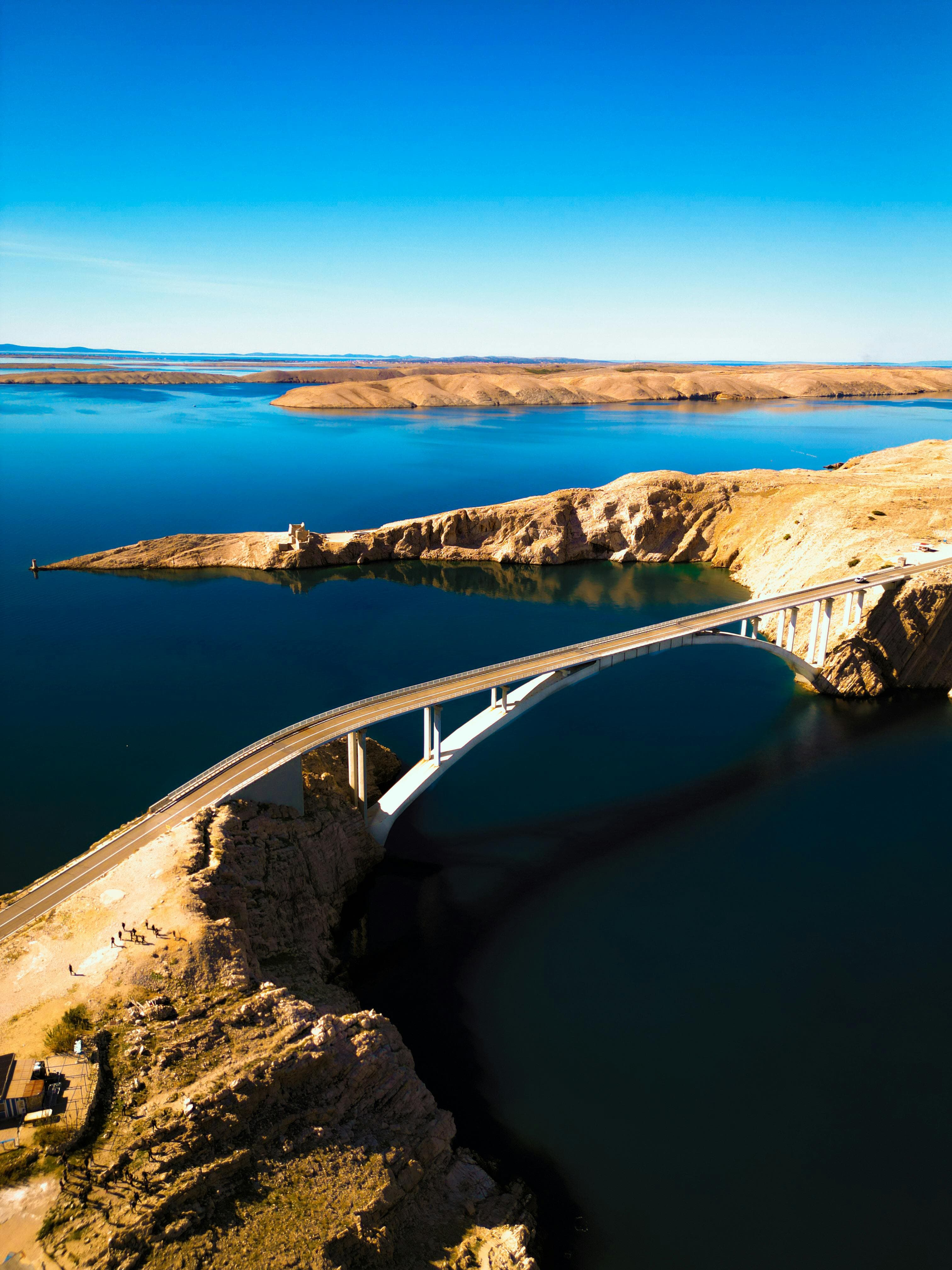
Pag is one of the easiest Croatian islands to reach because it is connected to the mainland by a bridge in the south. You can drive onto the island without taking a ferry.

There is also a ferry connection between Prizna on the mainland and Žigljen on the northern part of Pag, which is useful if you are coming from the direction of Rijeka, Kvarner, or northern Croatia.

The closest major city is Zadar, making Pag a very realistic day trip or weekend trip from the Zadar region. However, if you want to hike the Life on Mars Trail, visit Pag Town, taste cheese in Kolan, swim at several beaches, and maybe explore Lun, it is better to stay at least two or three days.

Pag is not an island to rush.

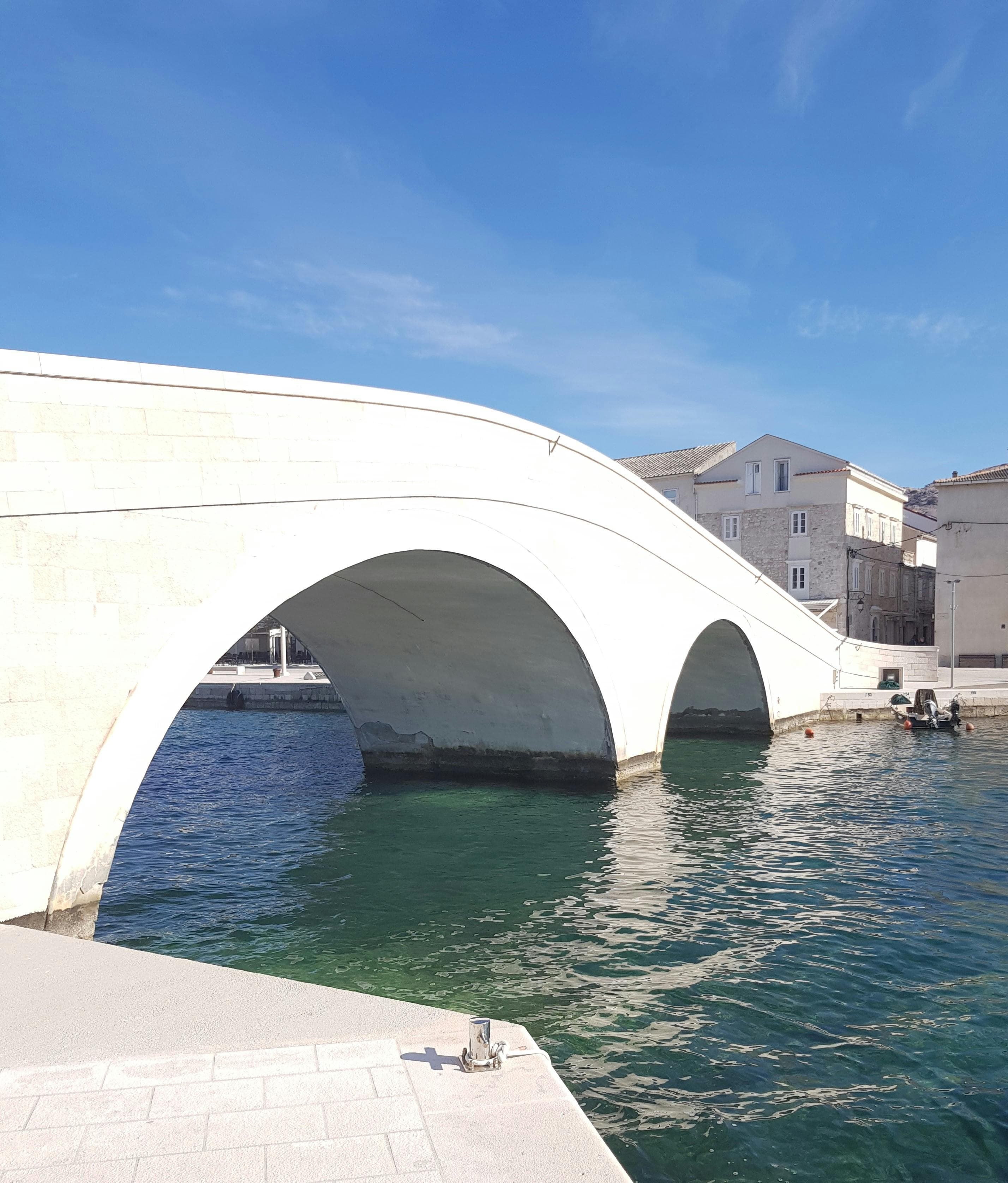
The bridge connecting the island of Pag to the Croatian mainland, surrounded by turquoise water

Best Time to Visit Pag

The best time to visit Pag depends on what you want.

For hiking, outdoor activities, and the Life on Mars Trail, spring and autumn are the best. The weather is milder, the light is beautiful, and the rocky landscape is much easier to enjoy without summer heat.

For swimming and nightlife, July and August are the busiest months. This is when Novalja and Zrće Beach are at their peak, and the island has the most energy.

For a quieter trip with warm weather, June and September are excellent. You can swim, hike early in the day, eat well, and experience the island without the strongest crowds.

Who Should Visit the Life on Mars Trail?

The Life on Mars Trail is perfect for travelers who want something different from the usual beach holiday.

You should visit if you like:

  • Unusual landscapes
  • Hiking and coastal walks
  • Photography
  • Hidden beaches
  • Wild nature
  • Adventure travel
  • Places that feel different from everywhere else

It is also a great choice if you have already seen some of Croatia's classic destinations and want to experience a side of the country that feels more raw and unexpected.

This is not the green Croatia of waterfalls and forests. This is the Croatia of stone, wind, salt, and open space.

Final Thoughts: Pag Is Not Just an Island, It Is a Feeling

The Life on Mars Trail may be the reason many people first hear about this part of Pag, but the trail is only one expression of what makes the island special.

Pag is one of those places that proves Croatia is much more diverse than people expect. Yes, Croatia has medieval towns, turquoise beaches, national parks, and beautiful islands. But it also has landscapes that look like the moon. It has trails that feel like Mars. It has sheep grazing on salty herbs, lace made by hand, salt pans shining in the sun, and beaches hidden between bare stone hills.

Pag is strange in the best possible way.

And if you walk the Life on Mars Trail, you will understand why this island is not just another stop on the Adriatic.

It is one of Croatia's most unforgettable places.

Frequently Asked Questions

Explore More of Croatia

Discover more stories, hidden gems, and travel inspiration to help you plan your perfect Croatian adventure.