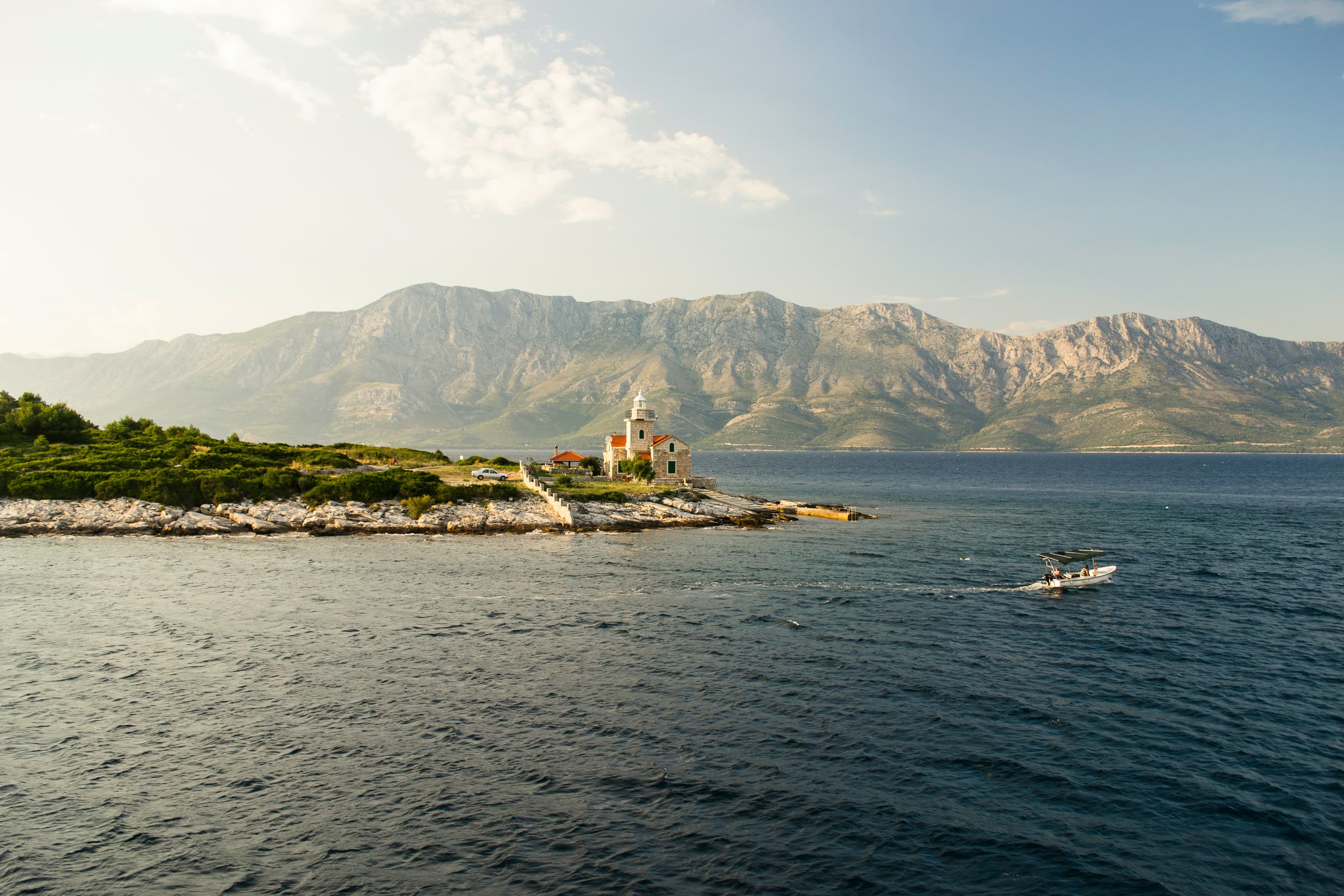
Stone lighthouse on a Croatian Adriatic cape with the lamp turning above the keeper's house.
Back to Get Inspired
Unique StaysAdriatic Coast

Lighthouse Stays in Croatia: Sleeping Inside the Adriatic's Beacons

Roughly ten of Croatia's working lighthouses double as holiday apartments, run by the state maritime authority Plovput. Some sit on inhabited capes, others on islets you can only reach by speedboat.

Adriatic Coast, Croatia

A Working-Lighthouse Holiday, Not a Theme Hotel

Croatia inherited a chain of monumental Habsburg-era lighthouses built between 1818 and the 1880s to light the Adriatic shipping lane to Trieste. Plovput, the state maritime authority, still operates every one of them; about ten of those stations now rent rooms in the keeper's quarters as self-catering apartments. The towers are not decommissioned museums — the optic above your bedroom turns every night, and a lighthouse keeper still lives on site at most stations.

What you get is closer to a remote stone villa than a hotel. Apartments are simply furnished, with kitchens, private bathrooms, and air conditioning at most stations, but you bring your own food, and the keeper is your only neighbour. Mobile signal ranges from full bars at Savudrija to almost none at Palagruža, and Wi-Fi is the exception rather than the rule.

You will need to plan around weather rather than wishlists. Transfers to the offshore lighthouses run only when the sea allows; a strong jugo or bora can delay arrivals and departures by a day, and your agency will tell you to keep the surrounding Saturday loose.

Why People Book Them Year After Year

Most guests come back. The combination is genuinely unusual: a stone building that has stood on the same headland for 150 years, no neighbours, swimming straight off the rocks, and the kind of silence that only exists where nothing else is built. It is a holiday for people who came for a place rather than a programme.

Quick Facts

Who runs them

Plovput, the Croatian state maritime safety company. Bookings via licensed agencies (Adriatic.hr, Conte Adriatic, Lighthouses Croatia, Bookalighthouse).

How many

Around ten lighthouses are currently available, from Savudrija on the Slovenian border to Palagruža between Croatia and Italy.

Typical price

Roughly €130–€300 per night per apartment in shoulder season; remote stations such as Palagruža add a one-off speedboat transfer of around €700 per apartment.

Minimum stay

Saturday-to-Saturday at most stations from June to mid-September; shorter stays are common in spring and autumn.

Capacity

Most lighthouses sleep 4–8 across two apartments. Struga on Lastovo is the largest with four apartments and 14 beds.

Nearest airports

Pula for the Istrian lighthouses, Zadar for Veli Rat, Split or Dubrovnik for the southern Dalmatian outliers.

Best time to visit

Late May to mid-June and mid-September to early October — sea warm, bora rare, weeks easier to book.
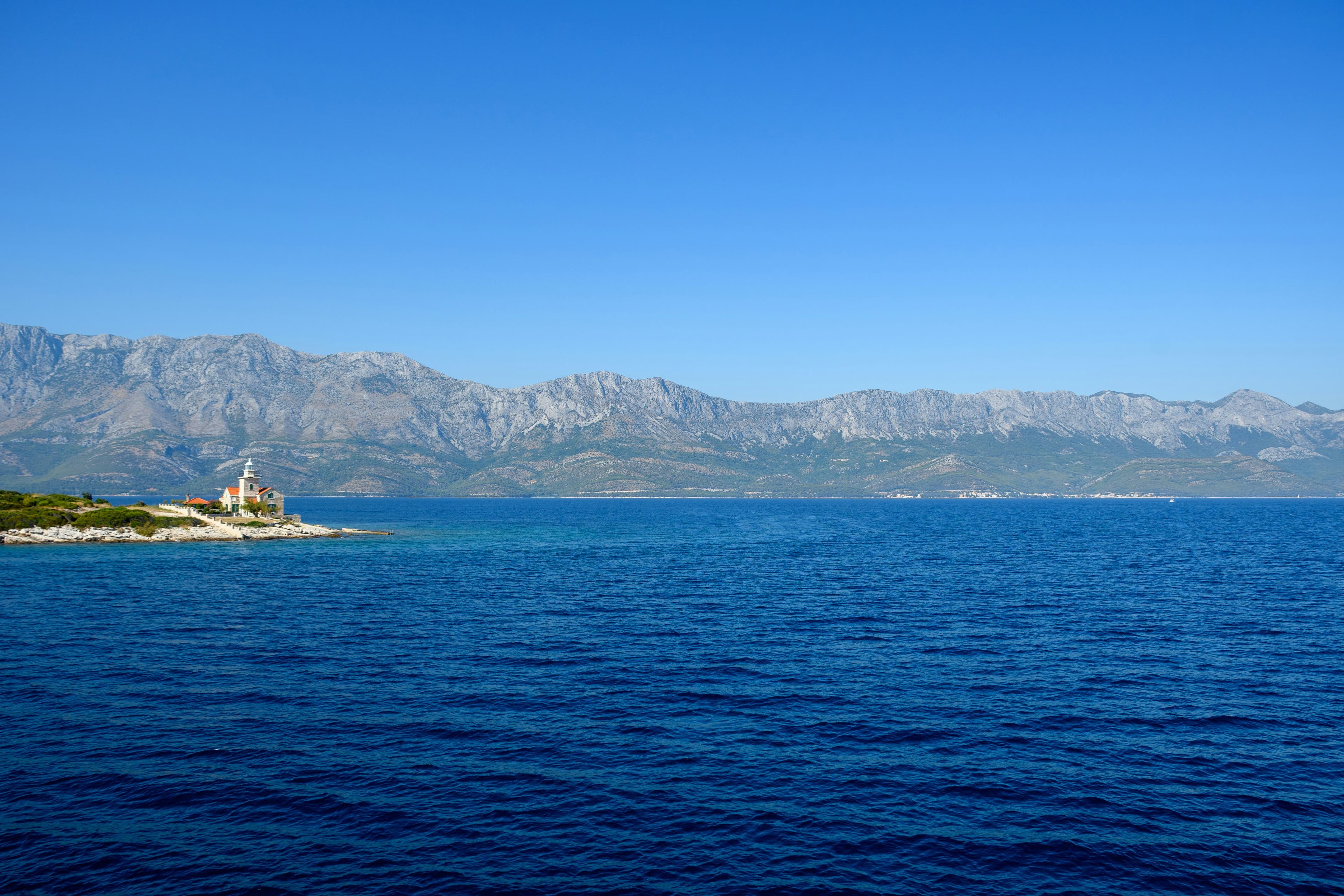
Croatian Adriatic coastline with a working lighthouse on a distant cape.
The Lighthouses

The Lighthouses You Can Actually Book

Five stations cover the spectrum, from drive-up Savudrija on the Slovenian border to remote Palagruža halfway to Italy. The rest of the rental fleet sits between these in style and difficulty.

Savudrija

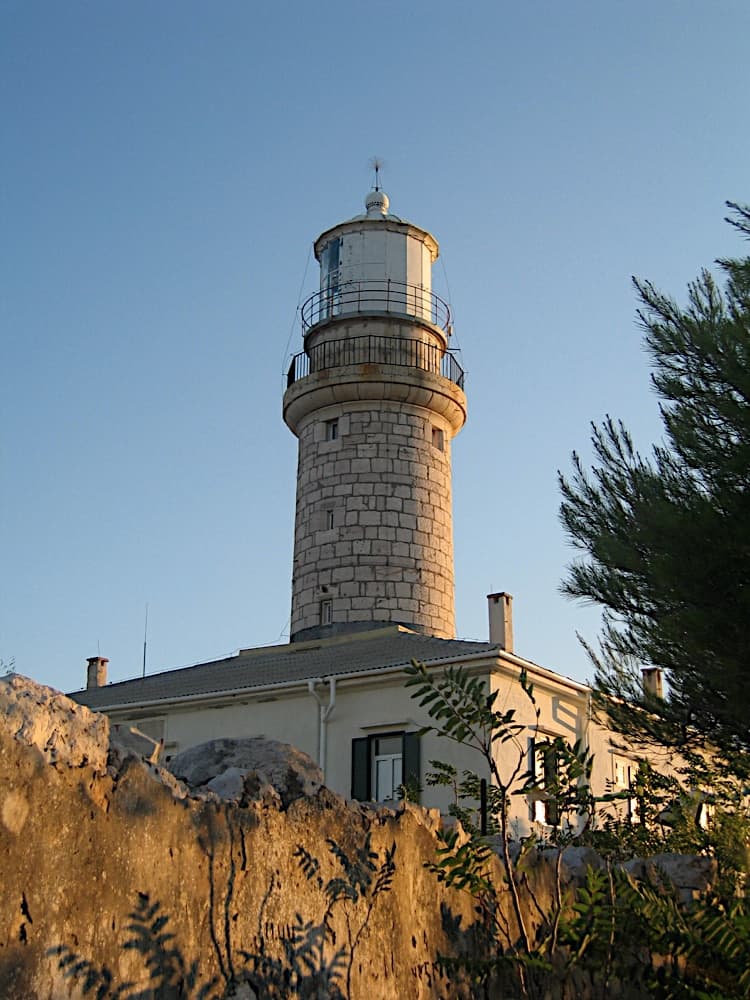
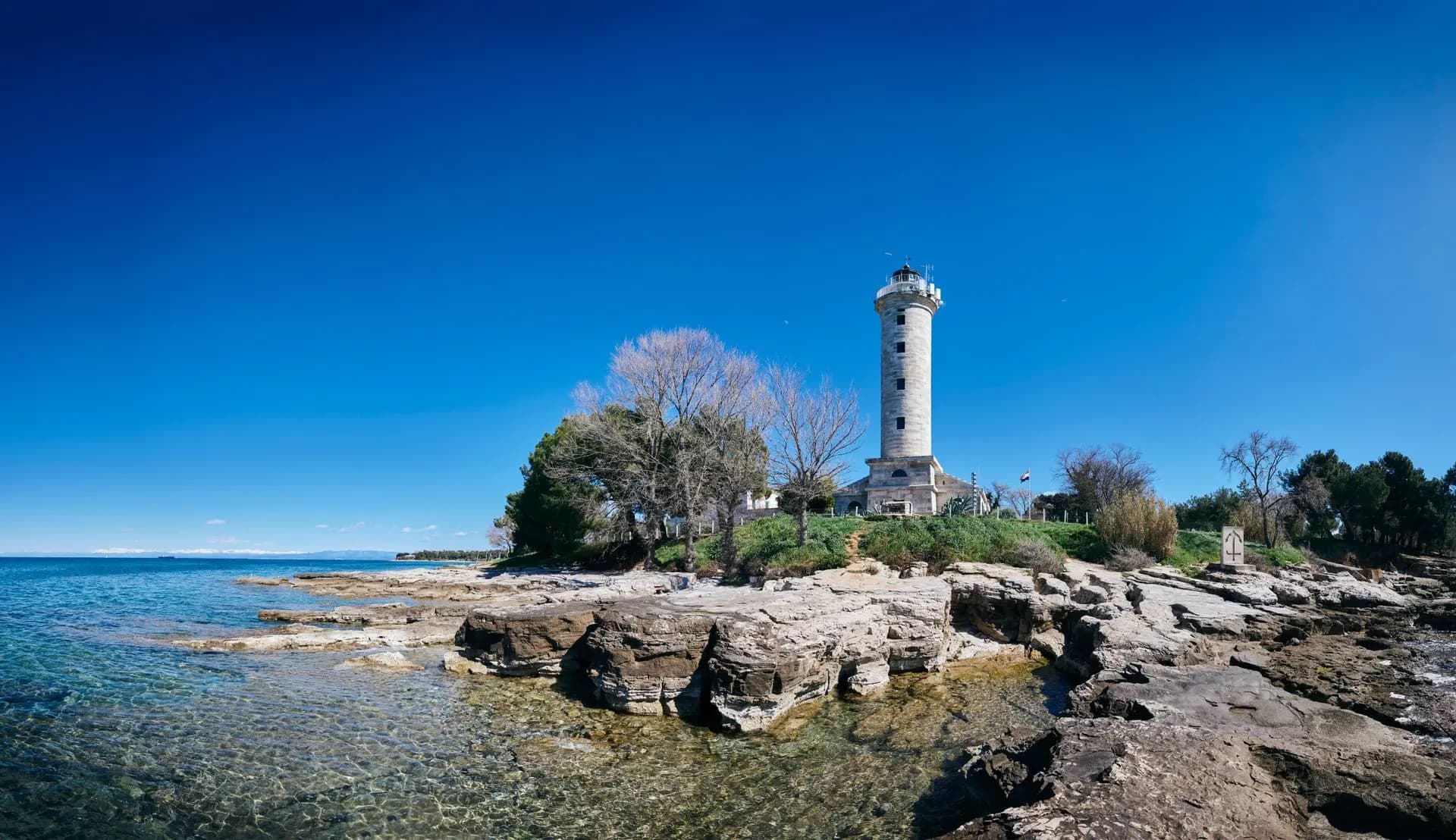
Savudrija, on Istria's northwestern tip nine kilometres from Umag, is the oldest operational lighthouse on the Adriatic. Pietro Nobile designed the 29-metre stone tower for Francis I of Austria in 1818; it was the first lighthouse anywhere lit by gas distilled from coal mined near Labin.

Four of the five apartments inside the keeper's house are rented to guests, and the surrounding cape is reachable by car or bicycle, which makes Savudrija the easiest of the Croatian lighthouses to combine with a wider Istrian trip.

Savudrija lighthouse on the northwestern tip of Istria, the oldest operational lighthouse on the Adriatic.

Porer

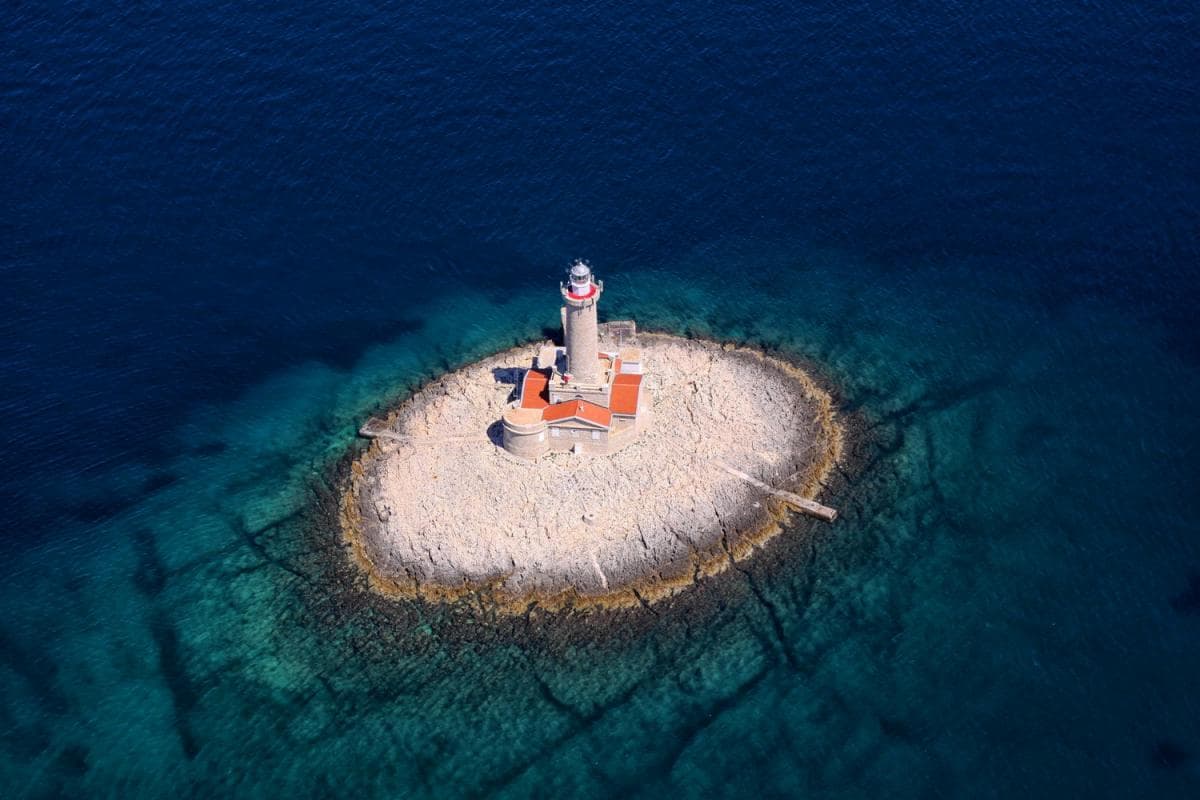
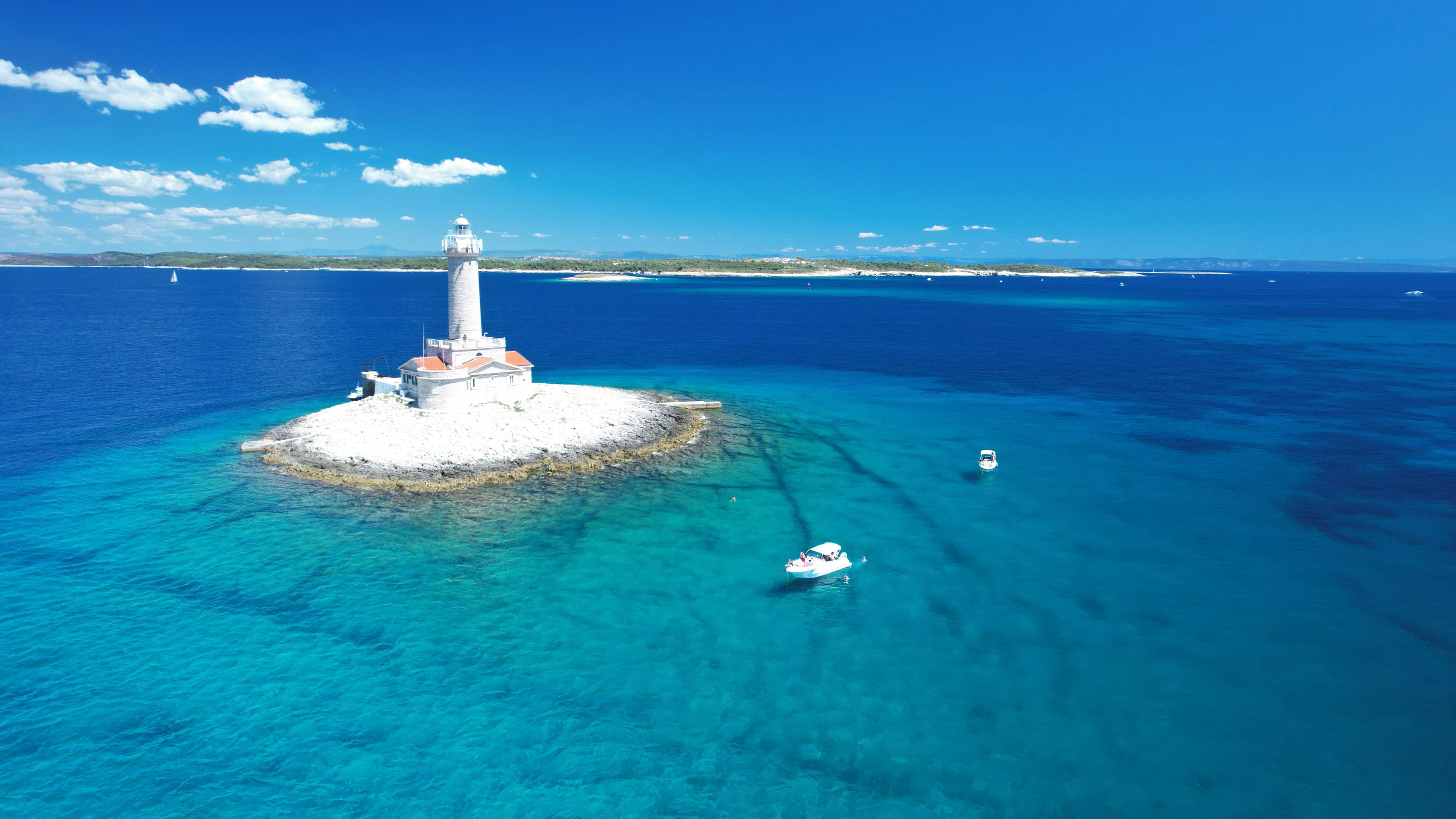
Porer, off Cape Kamenjak in southern Istria, is the photogenic one. The 35-metre round tower, built in 1833, occupies an islet barely larger than its own footprint, 1.5 nautical miles southwest of mainland Istria.

Two four-person apartments share the building; the skipper transfer from Medulin takes 25 to 35 minutes and costs around €100 per apartment each way. There is no harbour, no shop, and no shade — which is exactly the point.

Porer lighthouse on a small islet off Cape Kamenjak in southern Istria, surrounded by open Adriatic sea.

Veli Rat

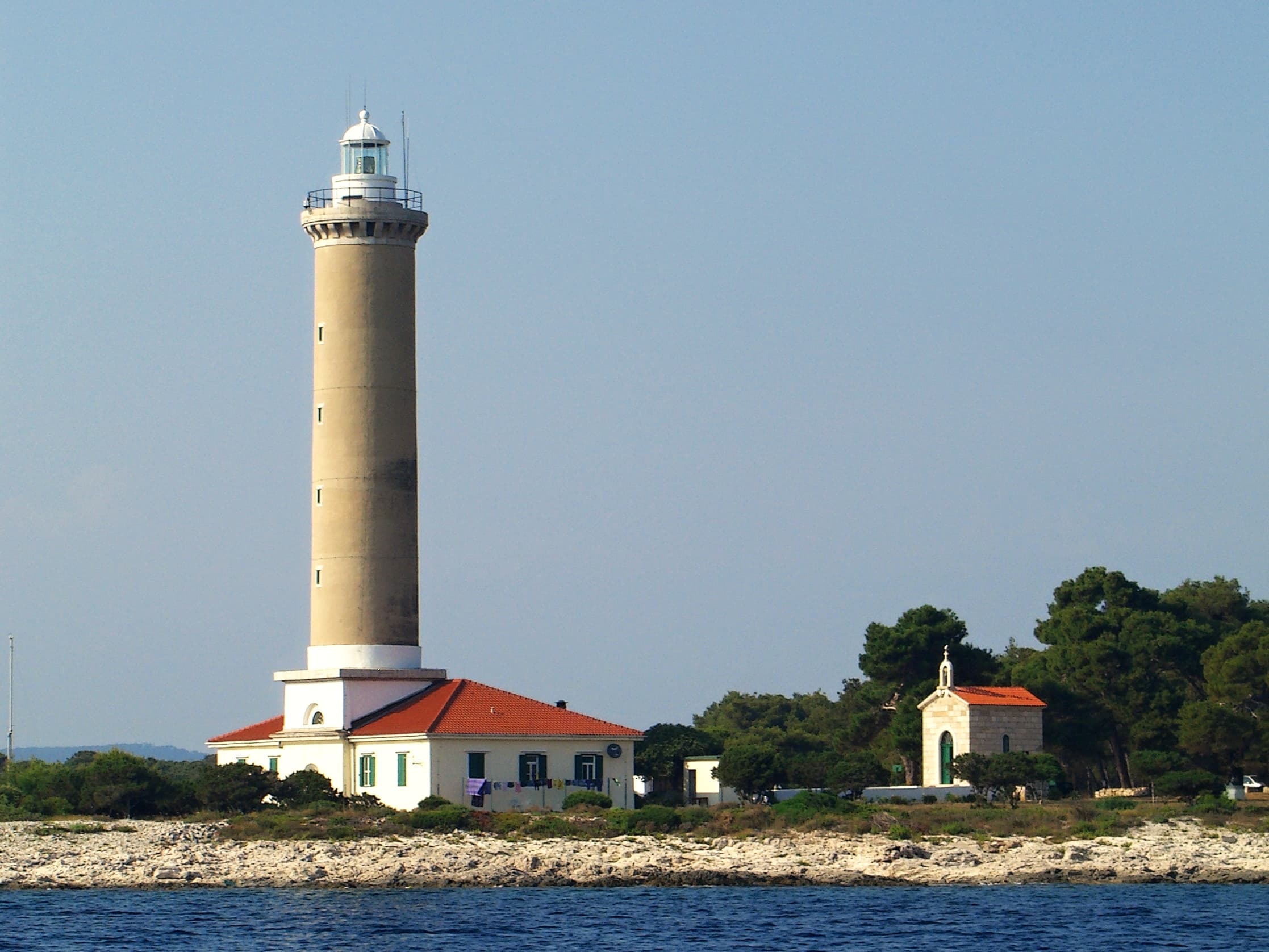
Veli Rat sits on the northwestern cape of Dugi Otok, 35 kilometres west of Zadar. The 40-metre tower, the tallest of the Adriatic lighthouses, was built in 1849 and is recognisable for its faintly ochre walls — a colour the keepers attribute to the egg whites mixed into the original lime mortar.

Two apartments accommodate three or four guests each; the famous white-pebble Sakarun beach is a ten-minute drive, and Zadar is reachable by ferry to Brbinj.

Veli Rat lighthouse on the northwestern cape of Dugi Otok, the tallest lighthouse on the Adriatic with faintly ochre walls.

Palagruža

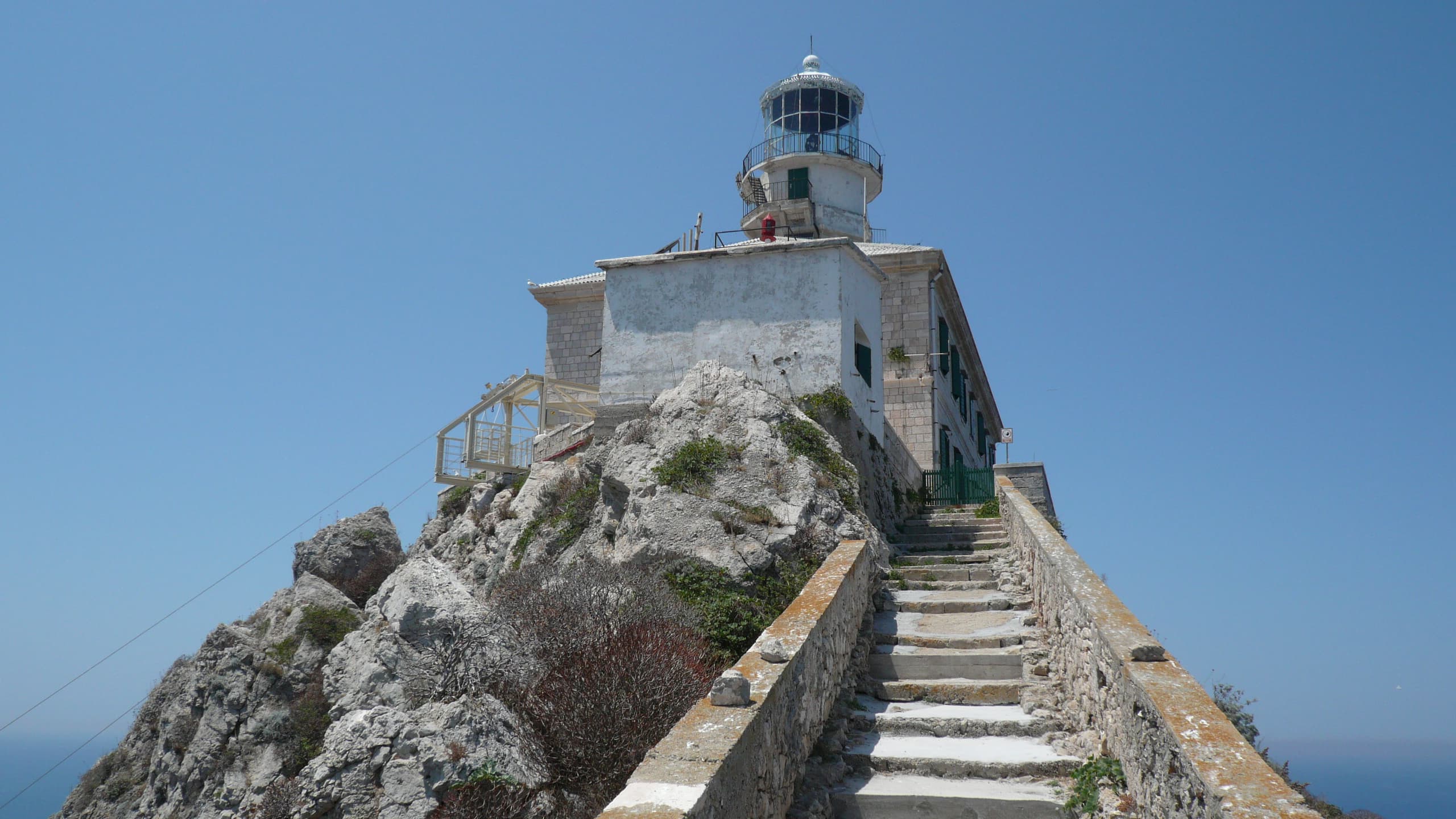
Palagruža, 68 nautical miles south of Split and only 26 from Lastovo, is the most remote inhabited point in Croatia. Its 1875 lighthouse caps a steep ridge halfway to Italy; archaeologists have linked the island's prehistoric finds to the cult of the Greek hero Diomedes.

Two apartments share the keeper's house, transfer is by speedboat from Korčula (around three hours, roughly €700 per apartment in summer), and you should plan on buying a week's groceries in Korčula before you leave.

Palagruža lighthouse perched on a steep ridge on Croatia's most remote inhabited island.

Struga

Struga, on the southern coast of Lastovo above the entrance to Skrivena Luka bay, is the most family-friendly of the offshore stations. The 1839 tower stands on a 70-metre cliff and the keeper's house has been split into four apartments for a total of 14 beds — the only lighthouse where multi-family bookings are practical.

The Kvinta family has tended Struga for three generations and now runs the guest apartments; unlike most stations, Struga is heated and rents year-round.

Struga lighthouse on a 70-metre cliff above Skrivena Luka bay on the southern coast of Lastovo.
How to Plan

How to Plan a Lighthouse Week

Four practical steps separate a lighthouse week that works from one that does not. Get the booking, the food, the practicalities and the side-trips right, and the rest of the holiday looks after itself.

Book a year ahead

Bookings open roughly twelve months in advance, and the popular weeks at Savudrija, Veli Rat and Porer go quickly between January and March. You will not find lighthouses on Booking.com or Airbnb in any complete way; book direct with one of the Plovput-licensed agencies, which handle transfer logistics, keeper communication and the contract.

Provision in one go

Provisioning is the part most first-timers underestimate. At drive-up stations you can simply do a supermarket shop on the way; at Porer, Palagruža and the Lastovo lighthouses you should plan a single large run in the embarkation port — Medulin, Korčula or Lastovo town — because no shops exist on site, and a forgotten ingredient cannot be replaced. Most agencies will arrange a provision delivery for an extra fee if you send a list a few days ahead.

Read the practicalities

Some stations have rainwater cisterns rather than mains supply, which means short showers and no dishwasher; electricity at a few stations runs on generators with quiet hours; pets are allowed at some lighthouses (Savudrija, Veli Rat) and not at others. Your agency confirmation will spell this out — read it.

Treat the lighthouse as a base

From Savudrija you can drive to Rovinj, Pula and the Istrian wine roads in under an hour; from Veli Rat you can reach Telašćica nature park and the Kornati islands by small boat; from Struga you can hike Lastovo's interior and snorkel the Skrivena Luka coves. From Palagruža you do almost nothing — and that is the booking.

The Four Booking Agencies

Adriatic.hr, Conte Adriatic, Lighthouses Croatia and Bookalighthouse hold the Plovput licences. They share the same lighthouse inventory but differ on package extras — provision delivery, transfer skipper, English-speaking concierge — and on which weeks they release first.

Compare two before you commit, especially for the offshore stations where the transfer cost is significant.

Plan a Loose Saturday

Transfers to Porer, Palagruža and the Lastovo lighthouses run only when the sea allows. A strong jugo or bora can delay arrival or departure by a day, and your agency will tell you to keep the surrounding Saturday loose.

Avoid booking a tight onward flight from Split or Dubrovnik on the day you are due to leave a remote lighthouse. The Plovput skipper has the final say.

When To Go

What to Bring, and When to Go

The Adriatic shoulder seasons are kinder to a lighthouse stay than midsummer. Late May into mid-June gives you sea temperatures around 21–23 °C, daylight to 21:00, and a real chance the bora will leave you alone; mid-September to early October offers the same swimming weather with quieter ferries.

July and August are warm and sociable but harder to book and prone to afternoon thunderstorms on the offshore islets. If your dates are flexible, choose the shoulder.

Calm shoulder-season Adriatic light around a stone lighthouse on the Croatian coast.

Pack for a Remote Cottage, Not a Hotel

The kit list is short and unglamorous. Get these six things right and you will not need much else.

Reef shoes

The swimming entries at most lighthouses are off rocks rather than sand. A pair of reef shoes saves your feet at every station.

Torch

Cape paths and stairs are not lit after sunset. A head-torch or small hand torch makes the walk back from a swim safe rather than guesswork.

Mosquito repellent

Pine-shaded stations such as Veli Rat are mosquito country in summer. Bring repellent and a plug-in if you sleep with the windows open.

Seasickness tablets

If you have any doubt about the long transfer to Palagruža or the Lastovo lighthouses, take them an hour before boarding.

Paper books

Wi-Fi is rare and weather is the schedule. A paper book or two reads better in the evening light than a depleted phone.

Patience with the rhythm

The keeper says hello on arrival and then leaves you alone; the lamp turns through your sleep; provisions run out on day six. None of it is a problem if you came for it.

FAQ

Common Questions About Lighthouse Stays in Croatia

Yes. Every lighthouse you can rent is operated by Plovput as a navigational aid. The light flashes through the night, and a keeper or technician is on site at most stations. The guest apartments are carved out of the historic keeper's quarters, not the tower itself, and you will not normally be allowed up the spiral staircase to the optic.

Booking is done through one of the agencies that holds a Plovput licence — Adriatic.hr, Conte Adriatic, Lighthouses Croatia and Bookalighthouse are the main four. You pick a station and a Saturday-to-Saturday week, pay a deposit, and receive the transfer instructions a few weeks before arrival. The popular weeks at Savudrija, Veli Rat and Porer are usually gone by April for the following summer.

Rarely in high season. Most lighthouses require a full Saturday-to-Saturday week from June to mid-September. In April, May, October, and at some stations through winter, three- or four-night stays are sometimes available — Veli Rat occasionally takes summer weekends, and Struga on Lastovo, which is heated, rents year-round.

It depends on the station. Savudrija, Sveti Ivan and Veli Rat have decent mobile coverage and at least one of the apartments will usually have basic Wi-Fi; Porer and Struga have patchy mobile signal and no reliable Wi-Fi; Palagruža has effectively neither. Treat it as a feature rather than a bug, and download what you need before transfer.

Some are; some emphatically are not. Savudrija and Veli Rat are easy choices: car access, calm coves and shops within a short drive. Porer and Palagruža sit on cliffs with no fenced perimeter and no quick way off the islet, which makes them risky with toddlers. Struga, with four apartments around a shared garden and a small swimming bay below, is the family pick of the offshore stations.

At remote stations the agency builds a small buffer into the schedule; if a bora prevents a Saturday transfer, you will usually leave on Sunday. Travel insurance that covers weather-related delays is worth taking out, and you should not book a tight onward flight from Split or Dubrovnik on the Saturday you depart Palagruža or the Lastovo lighthouses. The Plovput skipper has the final say, and there is no negotiating with the wind.

Explore More of Croatia

Discover more stories, hidden gems, and travel inspiration to help you plan your perfect Croatian adventure.