Hum
The world's smallest town — fewer than 30 residents, medieval walls intact, and the best biska brandy in Istria.
The World's Smallest Town
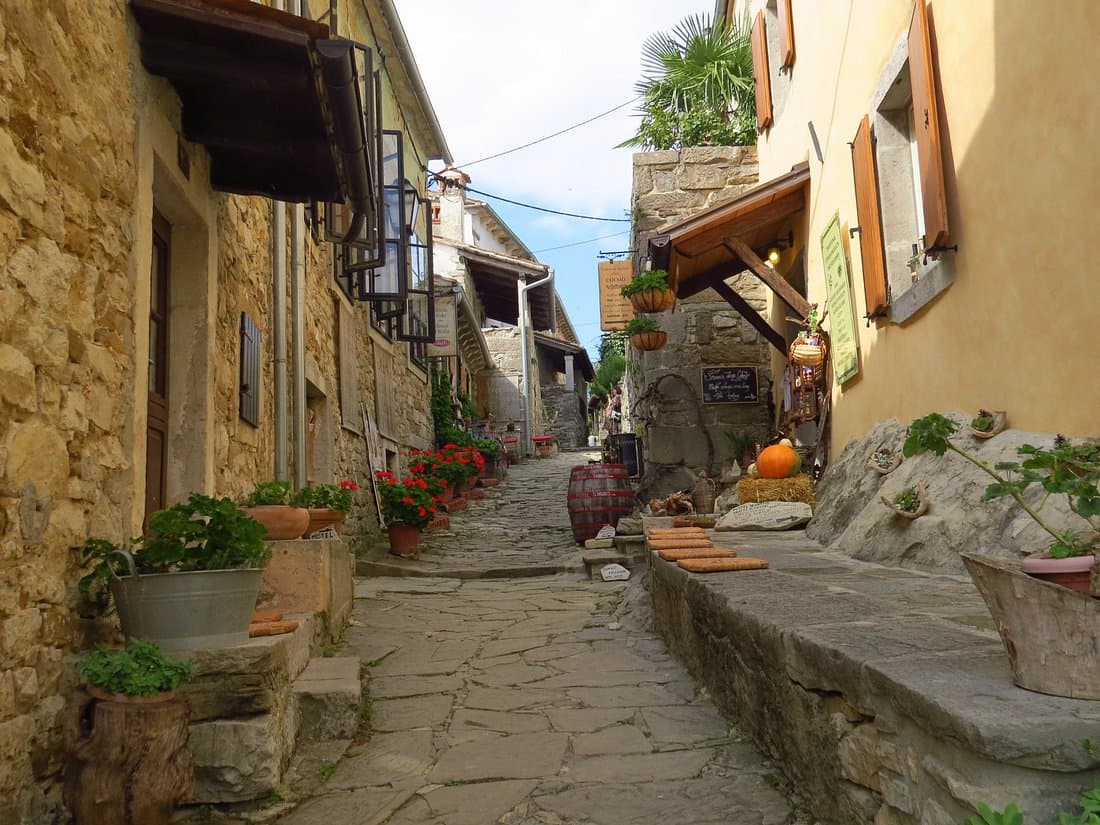
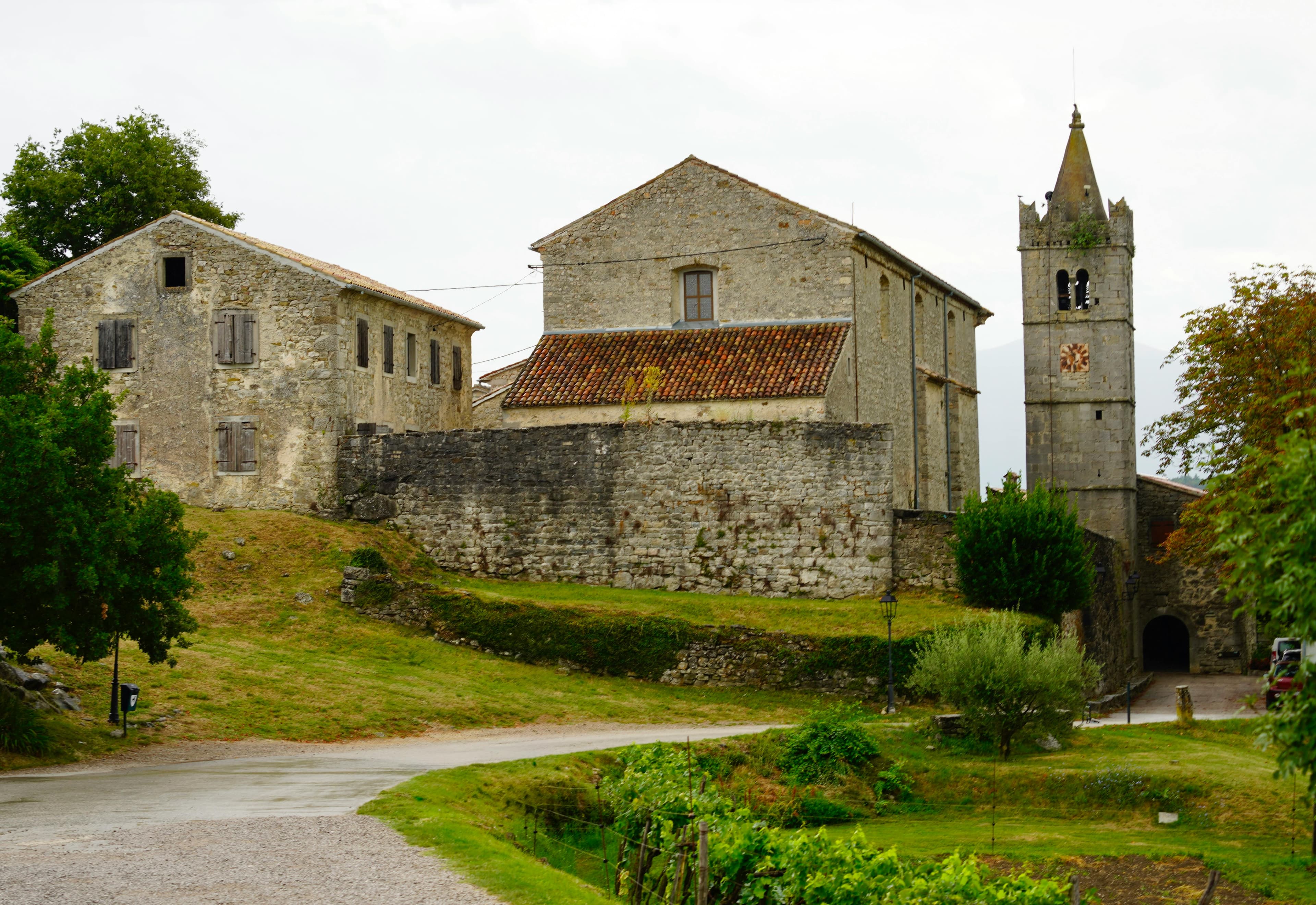
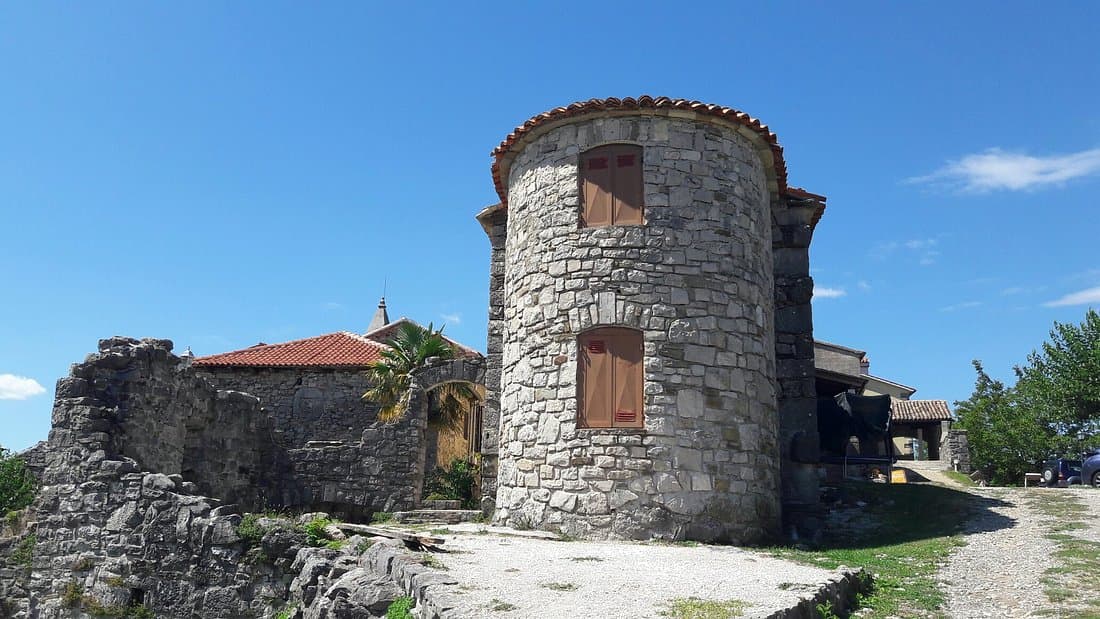
Hum sits in the hills of inland Istria, six kilometres east of Buzet along a ridge that has been inhabited since pre-Roman times. The town walls, the Romanesque bell tower, and the church of the Assumption all date from the 12th century. Fewer than 30 people live here permanently, which is why Hum carries the unofficial but widely accepted title of the world's smallest town.
A visit to Hum combines easily with the Glagolitic Alley, a seven-kilometre open-air monument running along the road from Roč. Eleven sculptures installed in 1977 mark key moments in the history of the Glagolitic script — the oldest Slavic alphabet — which Istrian priests preserved long after it fell out of use elsewhere.
What to See in Hum
A village this small has no wasted space. Every corner carries something worth your attention.
The Village Itself
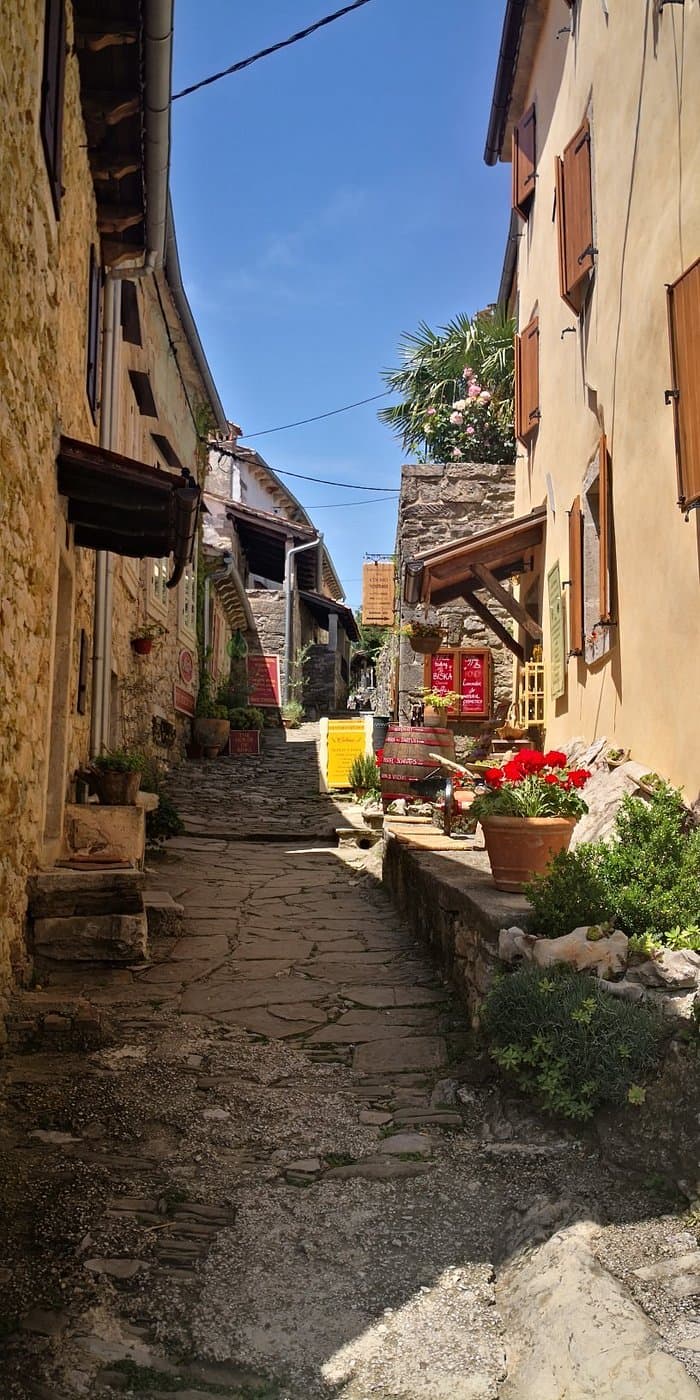
Walk the single cobblestone street from the gate to the church and back. The route takes no more than ten minutes, but the stone houses, vaulted cellars, and views across the Mirna valley reward a slower pace. A guestbook inside the town gate records the names of every visitor who has passed through.
Biska Brandy
Hum is the home of biska, a mistletoe brandy made by infusing the local grappa-style spirit with white mistletoe. The small shop near the gate sells bottles to take home. The taste is dry and herbal — quite different from ordinary Istrian grappa.
Glagolitic Alley
The seven-kilometre road from Roč to Hum is lined with eleven stone sculptures celebrating the Glagolitic alphabet. Each marker references a different moment in the script's history. Walking or cycling the full alley takes around two hours; driving takes under ten minutes.
Konoba Hum
The only restaurant in town occupies a stone building near the gate and serves a short menu of Istrian staples: maneštra, fuži with truffles, lamb, and local wines. There are no more than a handful of tables. Booking ahead is essential on summer weekends.
When to Visit Hum
Hum is best in spring and autumn, though the village itself never feels crowded at any time of year.
Spring
Mild weather, wildflowers on the surrounding hills, and quiet roads into the village. The konoba reopens after winter and the Glagolitic Alley is at its most pleasant for walking.
Summer
The busiest period for the Glagolitic Alley and the konoba. Evenings are warm and the light on the stone walls is beautiful. Book the restaurant well ahead for weekends.
Autumn
Truffle season brings extra energy to the surrounding area. The light turns golden, crowds thin out, and the drive through Istria's interior is at its finest.
Winter
Weekdays in winter can be entirely empty. The konoba may close or have reduced hours. A good choice for those wanting genuine solitude in a medieval setting.
Getting to Hum
Hum is accessible only by car. Allow time to walk the Glagolitic Alley on the way in from Roč.
From Buzet
Hum lies 6 km southeast of Buzet along a signposted road. The drive takes around 10 minutes. Buzet is the nearest town with fuel and services.
From Motovun
Head northeast through Livade and follow signs for Roč and Hum. The journey is around 20 km and takes 25–30 minutes on winding but well-surfaced roads.
From Roč
Roč sits 7 km west of Hum at the start of the Glagolitic Alley. Arriving from Roč lets you drive or walk the full alley, stopping at each sculpture before reaching the Hum gate.
Public Transport
There is no regular bus service to Hum. The nearest connections run through Buzet. From there, a taxi or hire car is the only practical option for reaching the village.
Explore More Destinations in Croatia
Buzet
Istria's truffle capital, perched on a hilltop above the Mirna valley.
Motovun
A walled hilltop town with sweeping views over Istria's wine country.
Grožnjan
A medieval hilltop village turned artists' colony in the Istrian interior.
Roč
The quiet village at the start of the Glagolitic Alley, just 7 km from Hum.