Labin
Eastern Istria's hilltop art colony — medieval Venetian walls, mining history, and views over the Kvarner coast
About Labin
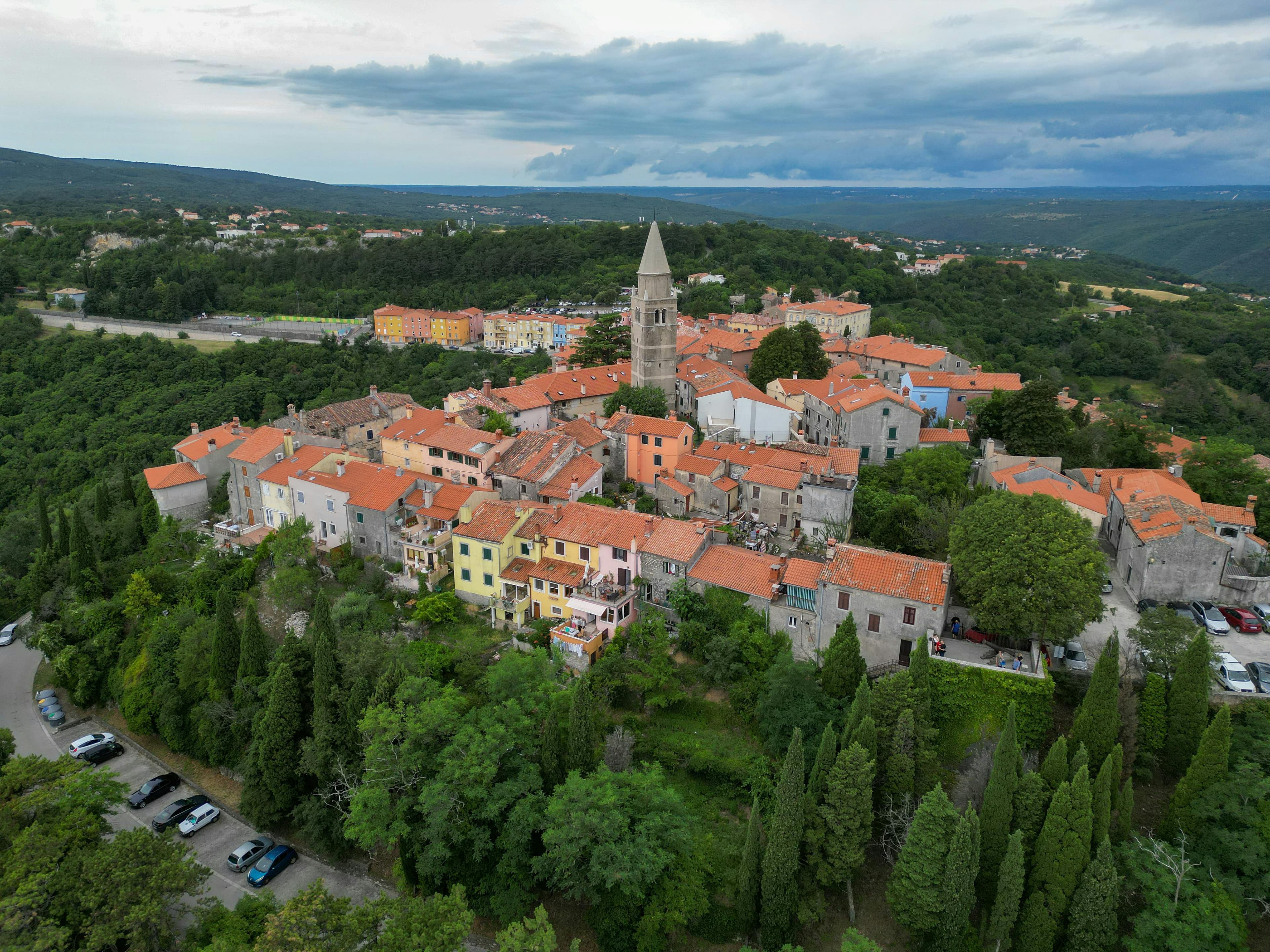
Labin divides naturally into two parts: Stari Grad, the old hilltop town with Venetian stone streets, Renaissance palaces, and views over the Kvarner bay, and Podlabin below it, the modern lower town where most residents live. Rabac, the coastal resort area, sits at the foot of the hill.
The upper town is compact enough to explore in an hour, but the quality of what is there — the old loggia, the town walls, galleries, churches, and city museum — rewards a slower visit. Unlike many hilltop towns in Istria, Labin carries a strong industrial history alongside its medieval appearance.
For most of the 20th century, Labin was a coal mining centre. When the mines closed in the late 1990s, artists and craftspeople gradually moved into the abandoned buildings of the old town. Today the result is part medieval town, part informal art colony — quieter than Rovinj, less polished than Motovun, and more interesting because of it.
Key Highlights
- Venetian hilltop old town
- Mining museum and industrial history
- Art galleries and artist studios
- Fortica coastal viewpoints
- Rabac beaches nearby
- Good base for eastern Istria
From Venetian Stronghold to Mining Town
Iron Age settlement to modern art colony
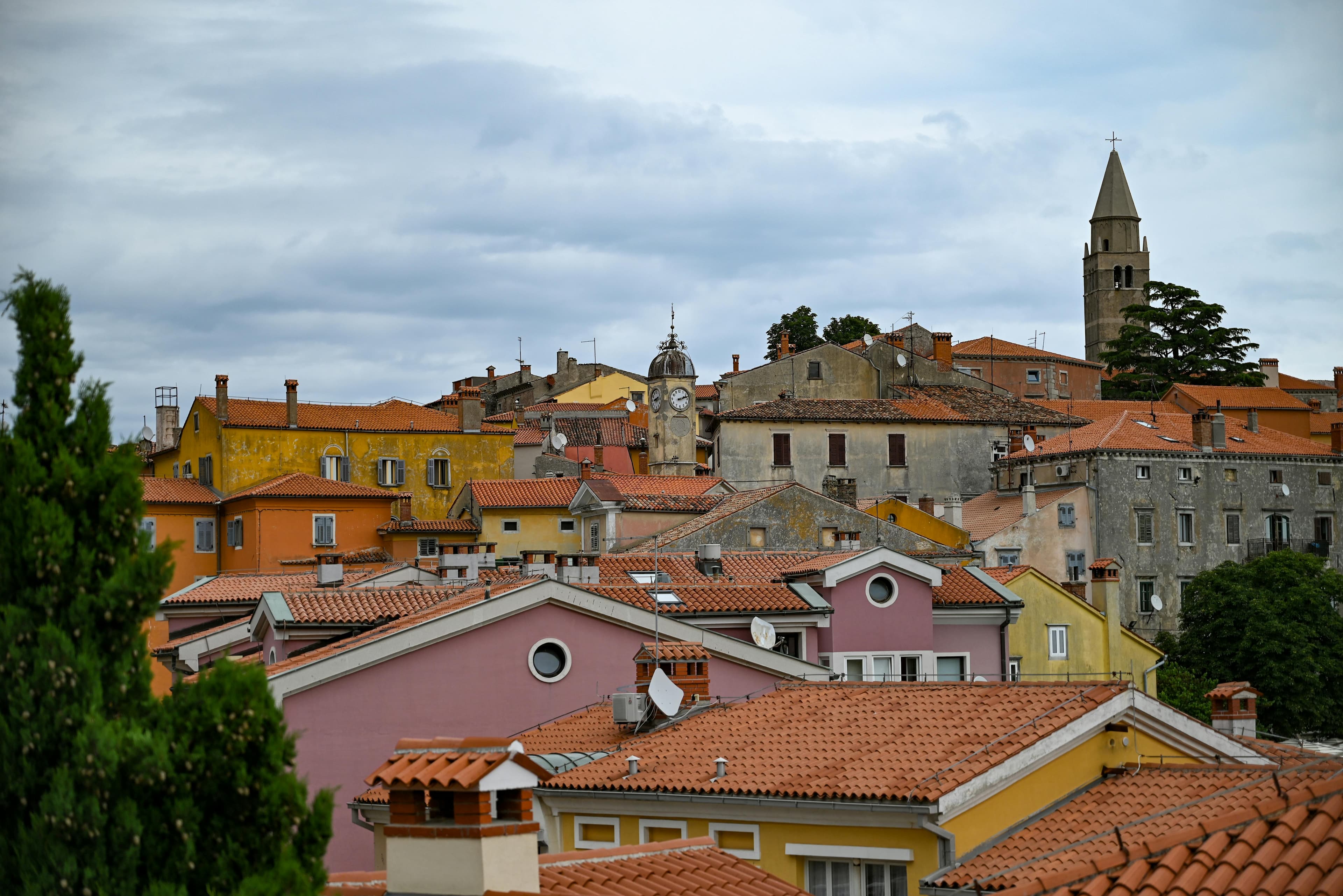
Labin has been inhabited since at least the Iron Age and was known to the Romans as Alvona before becoming a Venetian-administered hill town during the medieval period. Much of the upper town's current layout dates from Venetian rule, including the loggia, defensive walls, and several palaces.
Coal was discovered in the surrounding hills during the 18th century, and by the early 20th century mining had become the region's dominant industry. In 1921, miners in Labin organised the short-lived 'Labin Republic' in protest against fascist repression — an event that remains an important part of local identity.
Mining activity gradually declined during the second half of the 20th century. The last major mine in the Labin area closed in 1999. Rather than collapsing after the industry disappeared, the upper town slowly reinvented itself through art studios, galleries, and cultural spaces.
What to See and Do
Medieval streets, mining history, coastal views
Stari Grad (Old Town)
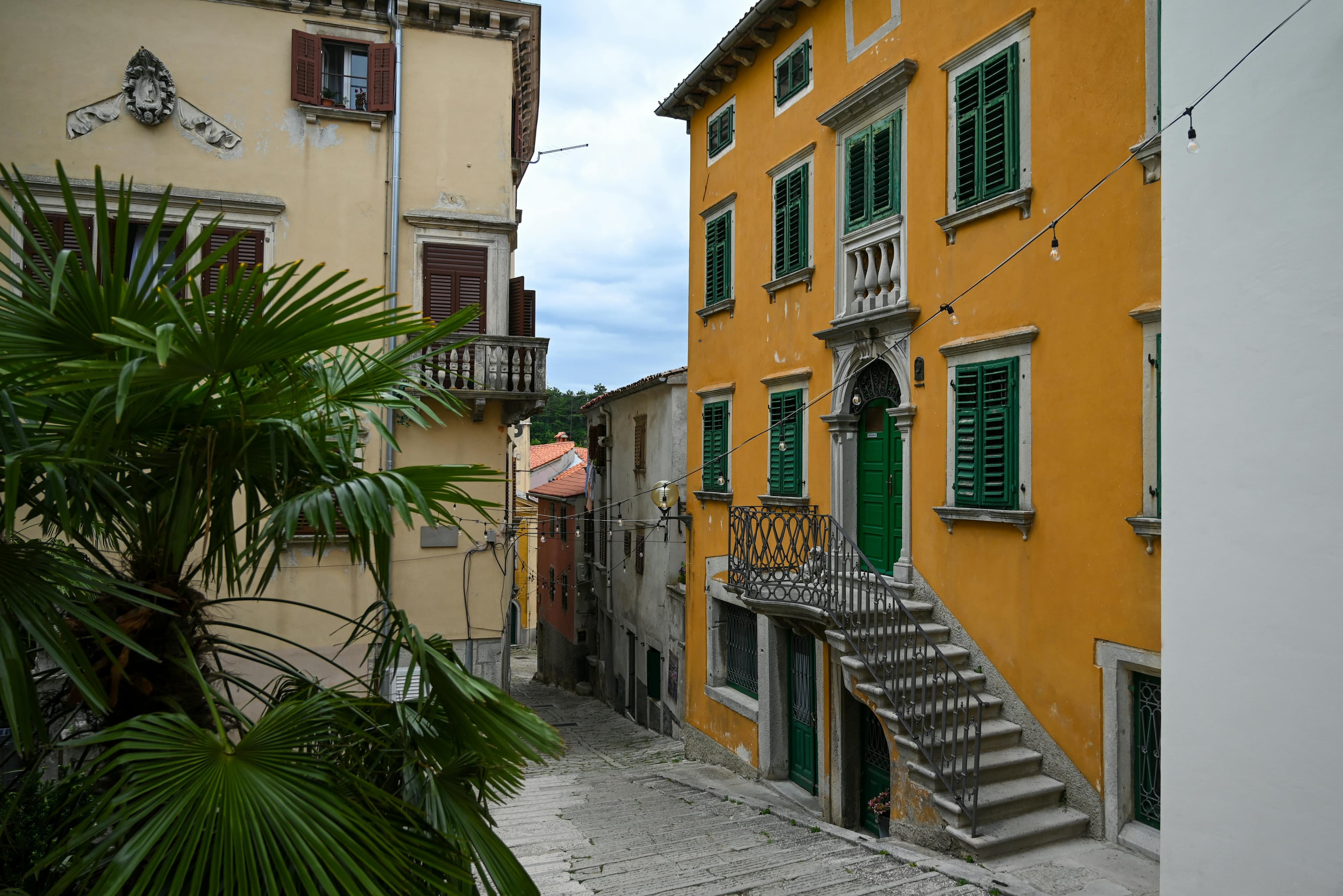
The old town remains the main reason to visit Labin. Walk through the stone gate into narrow Venetian streets lined with galleries, cafés, churches, and small squares. The town walls and viewpoints overlooking the Raša valley and Kvarner coast are among the best in eastern Istria.
Labin Town Museum
Covers local history from prehistoric settlement through the Venetian period and into the mining era. The reconstructed mining tunnel section is particularly well done and gives useful context to the town's identity. Opening hours vary seasonally — check before visiting.
Art Galleries and Studios
Labin developed into an artists' colony during the 1970s as creatives began moving into empty buildings in the old town. Today galleries and small studios are spread throughout Stari Grad. There is no single must-see gallery — the appeal comes from wandering and discovering spaces naturally.
Fortica Viewpoint
At the far edge of the old town, Fortica provides wide views over the Raša valley, Rabac, and the Kvarner islands. Late afternoon is the best time to visit for softer light over the coast.
Churches and Bell Tower
The Church of the Nativity of the Blessed Virgin Mary dominates the skyline with its separate bell tower. The square around it is one of the quieter parts of the old town and worth visiting even for non-religious travellers.
Rabac
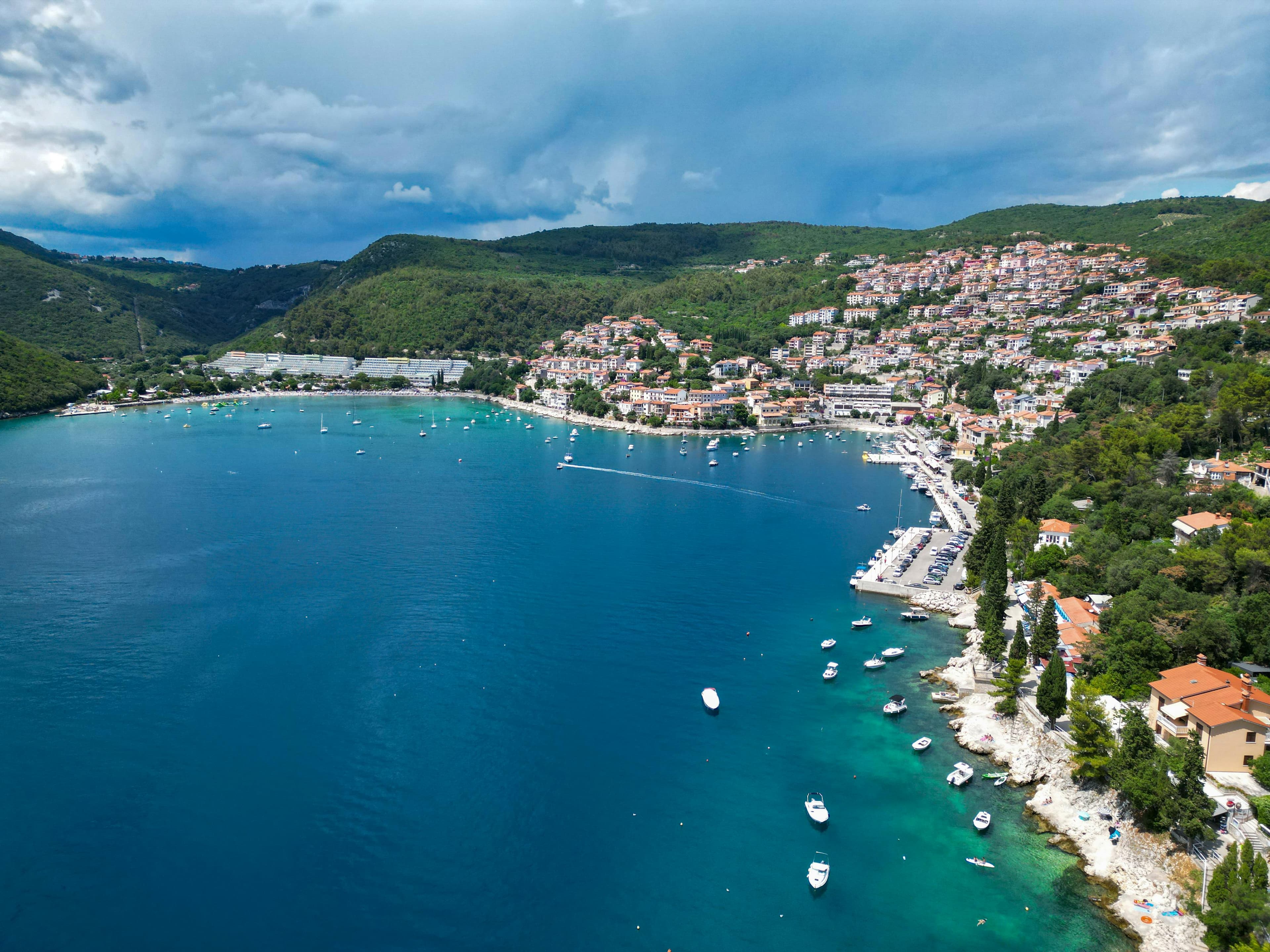
Rabac lies directly below Labin and functions as its coastal counterpart — pebble beaches, hotels, swimming areas, bars, and summer tourism infrastructure. Most visitors combine the two: Labin for the old town and culture, Rabac for the sea.
Food & Wine
Labin's food scene reflects eastern Istria rather than the more tourist-heavy western coast. Expect handmade pasta, truffles in season, local olive oil, wild asparagus in spring, and seafood closer to Rabac.
Several konobas around Labin serve traditional inland Istrian dishes, while Rabac focuses more on seasonal seafood restaurants aimed at summer visitors.
Why Visit Labin?
A More Authentic Hilltop Town
Labin receives fewer visitors than Rovinj or Motovun while offering equally strong historical character.
Mining Heritage
Few towns in Istria combine medieval architecture with meaningful industrial history.
Art Without Pretension
The gallery scene feels informal and local rather than heavily commercialised.
Rabac Nearby
You can combine hilltop town exploration with beaches and swimming in the same day.
When to Visit Labin
A rewarding destination in every season
Spring
April–May
Excellent for walking, photography, and quieter exploration. The hills around Labin are green and temperatures remain comfortable.
- Green hillside landscapes
- Wild asparagus season
- Quieter old town
Summer
June–September
Labin itself stays manageable, but Rabac becomes busy during peak season. Best for combining culture with beach time.
- Beach time in Rabac
- Long summer evenings
- Galleries open daily
Autumn
October–November
One of the best seasons to visit. Truffle season begins, temperatures stay mild, and the autumn light along the eastern coast is excellent.
- Truffle season begins
- Softer autumn light
- Fewer visitors
Winter
December–March
Quiet and atmospheric. Some galleries and restaurants reduce opening hours, particularly in Rabac.
- Atmospheric old town
- No crowds
- Local character
How to Get to Labin
Labin is well connected by road from across Istria and beyond.
From Pula
Approximately 45 km, around 45–50 minutes by car.
From Rovinj
Approximately 65 km, around 1 hour 15 minutes by car.
From Zagreb
Approximately 260 km, around 3 hours by car via Rijeka.
Public Transport
Regular buses connect Labin with Pula, Rijeka, and other towns. Schedules vary seasonally — a car remains the easiest option for eastern Istria.
From Rabac
The old town is about a 5-minute drive or 20-minute uphill walk from Rabac.
Frequently Asked Questions about Labin
Yes. It combines a genuine medieval hilltop town with unusual mining history and a growing art scene, while remaining less crowded than many western Istrian destinations.
Half a day is enough for the old town and museum. A full day works well if combined with Rabac.
Yes. The old town is compact and walkable, while Rabac offers family-friendly beaches and swimming areas.
Yes, buses connect Labin with Pula and Rijeka, but a car makes inland exploration of eastern Istria significantly easier.
Rabac is a typical Adriatic beach resort with pebble beaches, hotels, restaurants, and seasonal tourism infrastructure. It pairs naturally with a visit to Labin's old town.
Explore More Destinations in Croatia
Pula
Istria's largest city with a 1st-century Roman amphitheatre and Adriatic coastline.
Motovun
Istria's most iconic hilltop town — medieval walls, truffles, and Mirna valley views.
Grožnjan
Artists' village in northern Istria with stone alleys, galleries, and valley views.
Lovran
Elegant Kvarner coastal town known for Art Nouveau villas and its chestnut festival.