Lovran
Kvarner's most complete small town — medieval streets, Habsburg-era villas, a 12km coastal walk, and one of Croatia's best autumn festivals
About Lovran
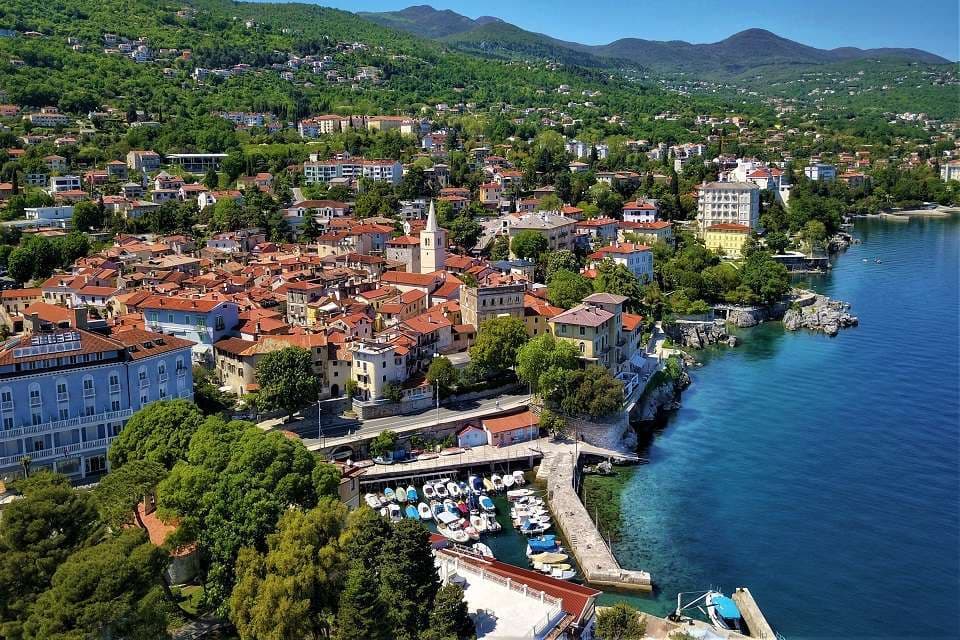
Lovran is a small town on the Kvarner Riviera, four kilometres south of Opatija and around 30 kilometres from Rijeka. It has a properly medieval core — the Stari Grad — surrounded by the grand villas and parks that went up during the Habsburg period, when this stretch of coastline became a fashionable destination for Central European aristocracy and convalescents seeking sea air.
Most people who stop in Lovran do so on their way to or from Opatija, and most of them wish they had stayed longer. The old town is compact but genuinely historic: the Church of St George, the Kula tower, the Kaštel gateway. The Lungomare promenade connects Lovran to Opatija along the seafront in one of the best coastal walks in Croatia. The beach is modest by Dalmatian standards, which is fine — most people who come here are not primarily here for the beach.
Two things bring people back specifically for Lovran: cherry season in spring, when the hillside orchards bloom and the town celebrates with a small market, and the Marunada in October — a chestnut festival that has been running for over 50 years and is one of the few Croatian autumn events worth planning a trip around.
Quick Facts
Lovran sits 4km south of Opatija on the Kvarner Riviera. The medieval Stari Grad dates to the 13th century. The Lungomare promenade runs approximately 12km to Opatija. The Marunada chestnut festival takes place across three Sundays in October. Učka Nature Park and Vojak peak (1,396m) are accessible directly from town.
Why Visit Lovran?
More character than Opatija
Lovran has the same Habsburg-era architecture without Opatija's larger crowds and package-tour footprint. Quieter, more personal, easier to navigate.
One of Croatia's best coastal walks
The Lungomare to Opatija is the kind of walk that reminds you why this stretch of coast became a resort destination. Accessible in most seasons, no special equipment required.
The Marunada
October in Lovran is excellent. The chestnut festival has kept a genuinely local character. If you are in Croatia in autumn, this is worth your attention.
A base for Učka
Most people visit Učka as a day trip from Rijeka or Opatija. Staying in Lovran puts you at the foot of the mountain and shortens everything.
From Habsburg Riviera to Kvarner Coast
The layers beneath Lovran's compact old town
The Kvarner Riviera's rise as a resort destination began in the mid-19th century, when Opatija attracted the attention of the Viennese bourgeoisie and the Habsburg railway eventually made the journey from Central Europe practical. Lovran, four kilometres further south, benefited from the same wave of development — but at a smaller scale, which is why it has kept more of its character.
The town itself is considerably older than the grand villa era. The medieval core dates to the 13th and 14th centuries, built on the remains of a Roman settlement. The Church of St George, with its well-preserved frescoes, is the oldest significant building in the old town. The Kula tower — now part of a restaurant — was a defensive structure protecting the port.
After World War I, the whole Kvarner Riviera became part of Italy. Lovran was known as Laurana during this period. After World War II it returned to Yugoslavia and became part of the Croatian coast. The town retains traces of all these layers: Venetian loggia, Austro-Hungarian parkland, Italian-era street names still used colloquially, and the occasional Yugoslav-era monument that nobody quite knows what to do with.
What to See & Do
Five reasons to slow down in Lovran
Walk the Lungomare
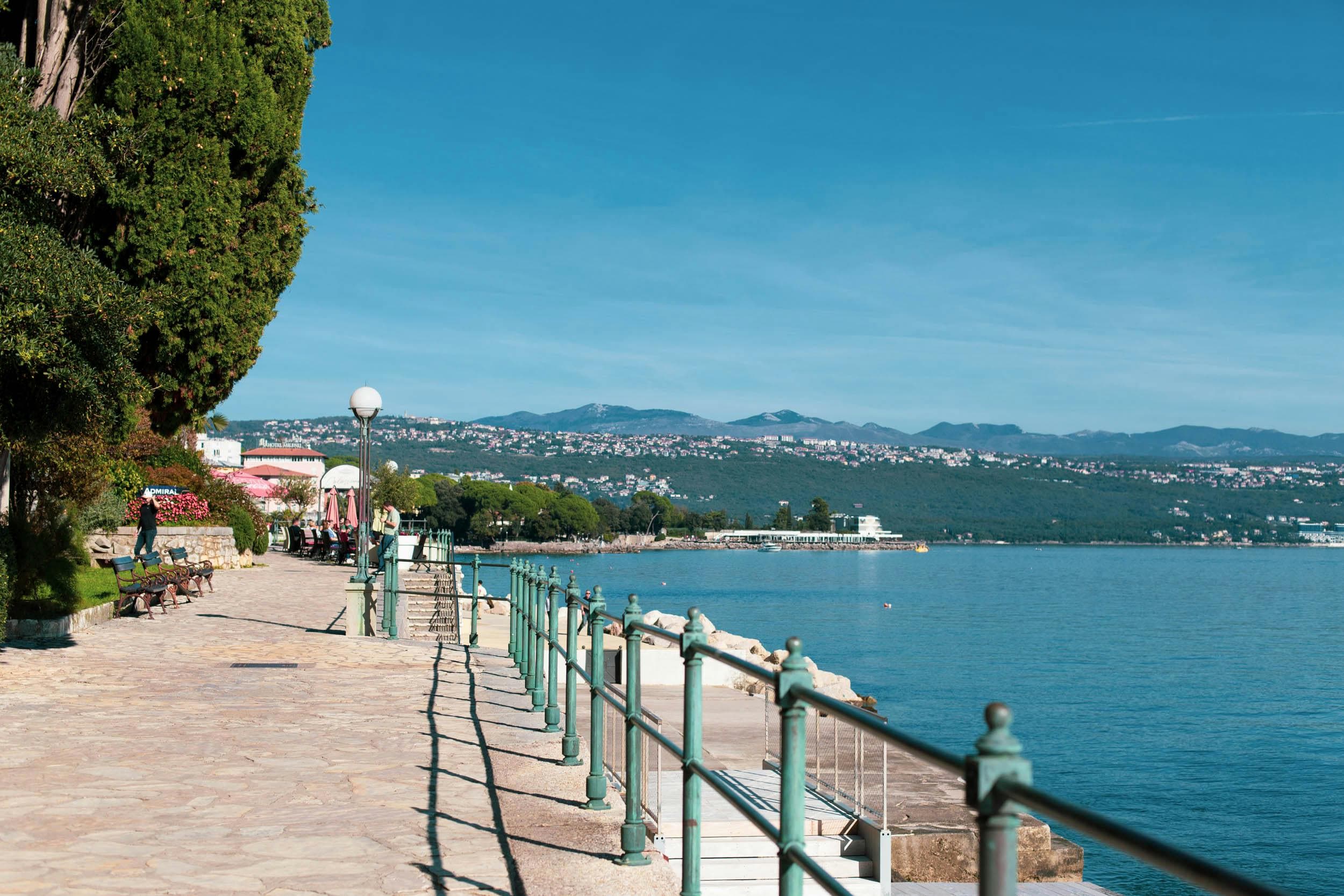
The coastal promenade between Opatija and Lovran is one of the best walks on the Croatian coast — about 12 kilometres of seafront path through parks, past villa gardens, and along low cliffs above the Kvarner bay. The section between Lovran and Opatija takes around 90 minutes at a relaxed pace. It works in both directions and in most seasons; in winter it is quieter and often beautiful.
Stari Grad (Old Town)
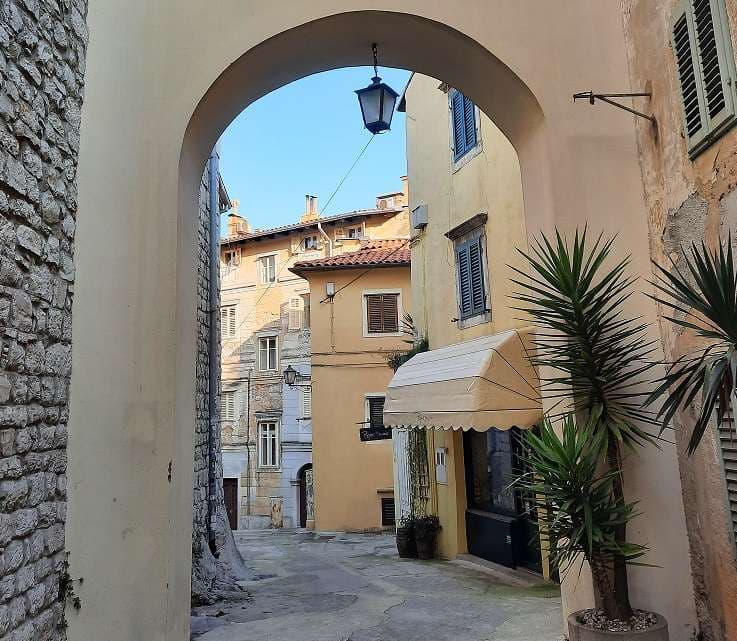
Lovran's medieval centre is small enough to cover in 30 minutes but worth more than that if you take it slowly. The Church of St George has frescoes from the 15th century. The Kula tower marks the old town boundary. The Kaštel gate leads down toward the seafront. Wander the narrow streets behind the main square — it does not take long and is genuinely atmospheric.
Učka Nature Park
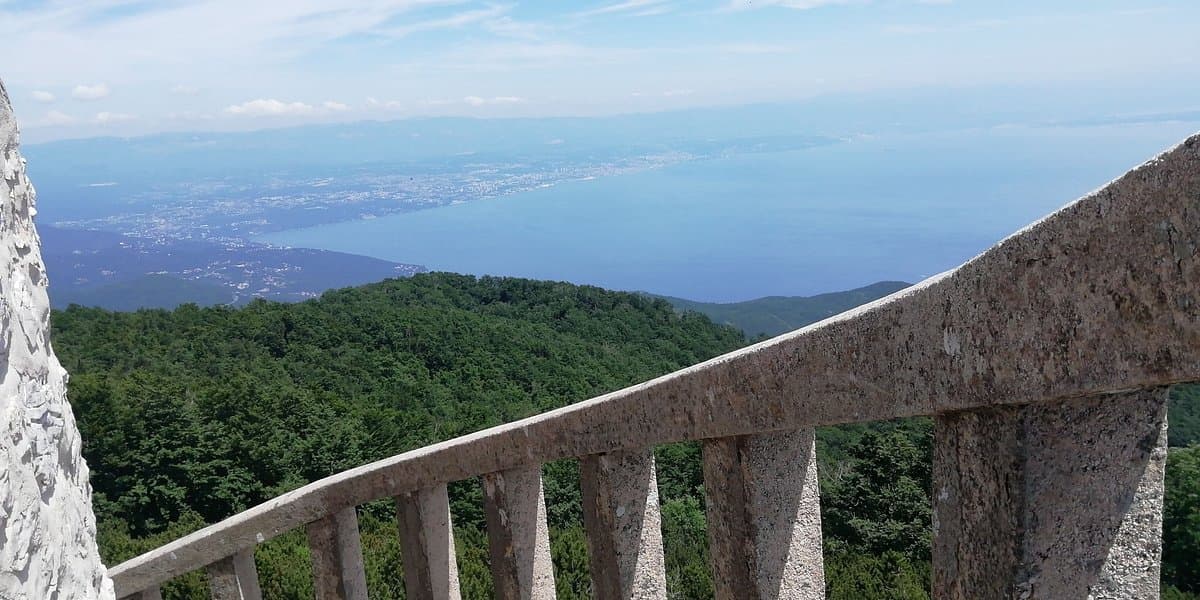
The mountain ridge directly above Lovran is part of Učka Nature Park, one of the most undervisited nature areas near the coast. The peak (Vojak, 1396m) can be reached by a marked trail from Lovran or by car via the mountain road. The views from the top take in the Kvarner islands, the Istrian peninsula, and on clear days the Alps. A half-day round trip from Lovran to Vojak is possible for reasonably fit walkers.
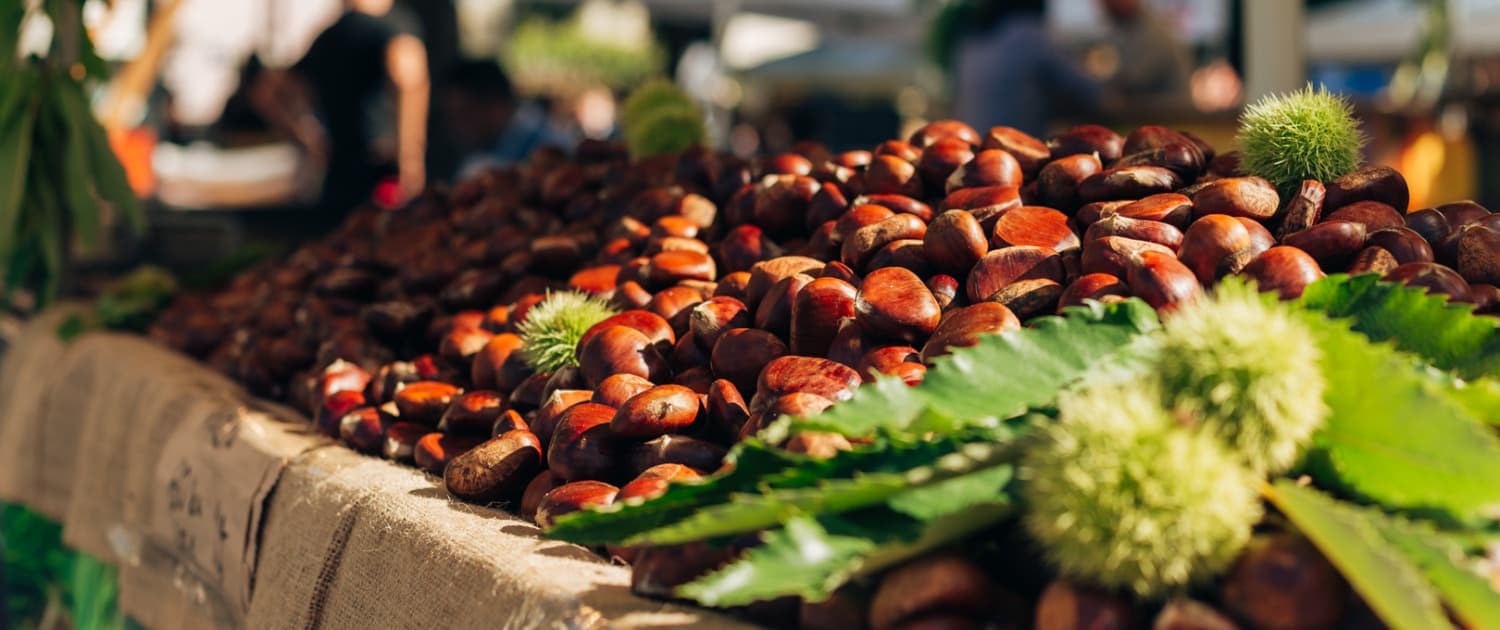
Marunada (October)
Lovran's chestnut festival has been running for more than 50 years and takes place across three Sundays in October. The surrounding hills produce the Lovranska maruna — a local sweet chestnut variety. During Marunada, the old town fills with roasted chestnuts, local wine, honey, and autumn food. It is genuinely local in atmosphere rather than tourist-packaged. Worth planning around if you are in Kvarner in October.
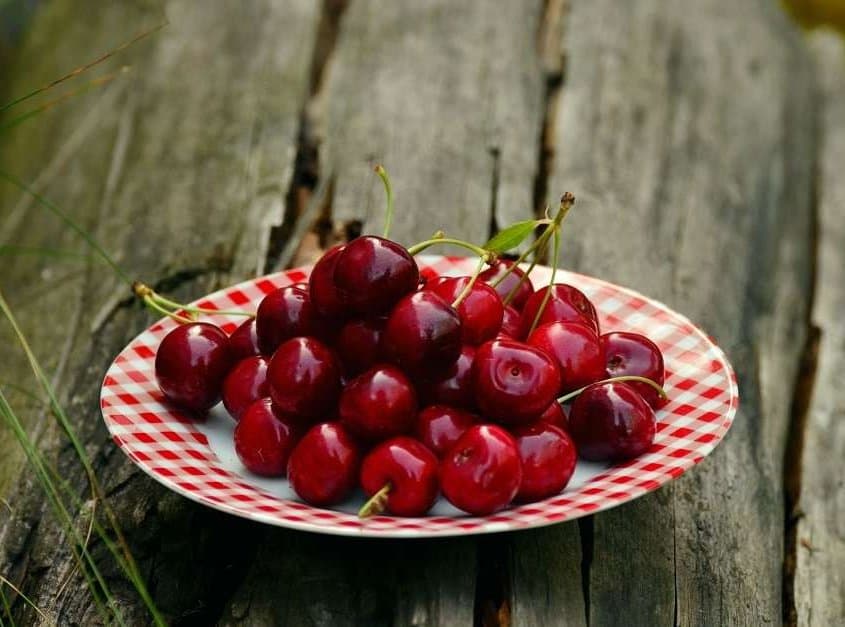
Cherry Season (April–May)
Lovran and the surrounding villages have produced cherries — Lovranske trešnje — for centuries, and the hillside orchards are remarkable in bloom. In late April and early May a small market and celebration accompany the harvest. If you are in Kvarner in spring, this is a reason to route through Lovran rather than just Opatija.
Food & Wine
Lovran has a handful of good restaurants for its size. The focus is on Kvarner seafood — scampi, John Dory, sea bass — combined with Istrian and mountain influences from the Učka hinterland. Wild asparagus appears in spring, truffles from the Istrian side are not uncommon, and the chestnut dishes during Marunada range from simple roasted chestnuts to more elaborate restaurant preparations.
The local wines are mostly from Kvarner and northern Istria. Malvazija is the dominant white. There are fewer tourist restaurants here than in Opatija, which is one of the reasons to base yourself here rather than there.
Key Highlights
- Lungomare coastal promenade (Lovran to Opatija, ~12km)
- Stari Grad medieval core
- Church of St George with 15th-century frescoes
- Učka Nature Park and Vojak peak (1396m)
- Marunada chestnut festival (October)
- Lovranske trešnje cherry season (April–May)
Lovran Through the Seasons
Each season brings something worth coming for
Spring
April – May
Cherry blossom season and the Lovranske trešnje festival make April and May particularly good. The Lungomare is uncrowded.
- Cherry blossom
- Trešnje festival
- Quiet promenade
Summer
June – September
The beach and promenade are busiest. Lovran is less crowded than Opatija but still noticeably more active than in other seasons. Book accommodation early for July and August.
- Swimming
- Lungomare walks
- Long evenings
Autumn
October
The best time for the Marunada and the chestnut forests. Warm enough for walking, cool enough for comfort. One of the most enjoyable times to be in Kvarner.
- Marunada festival
- Chestnut forests
- Hiking weather
Winter
November – March
Quiet. Some restaurants and accommodation close. The Lungomare is beautiful on clear winter days and mostly empty.
- Peaceful walks
- Local atmosphere
- Low prices
How to Get There
Lovran is on the coastal road between Opatija and Mošćenička Draga
By Car
Lovran is on the coastal road (D66/D8) between Opatija and Mošćenička Draga. From Rijeka, allow 30–35 minutes. From Zagreb, the A6 motorway reaches Rijeka, then the coastal road — total about 2.5 hours.
By Bus
Buses run between Rijeka and Lovran regularly; the journey is around 45 minutes from Rijeka. Some visitors take the bus to Opatija and walk the Lungomare to Lovran. There is no train connection.
Parking
There is a car park at the edge of the old town. Street parking in Stari Grad is very limited.
Frequently Asked Questions about Lovran
A full day is the right amount if you want to walk the Lungomare to Opatija and back, explore the old town, and have a proper lunch. Half a day works if you are connecting it with Opatija. For the Marunada, an afternoon in the old town is enough.
It depends on what you are looking for. Opatija has more restaurants, more hotels, and a slightly grander scale. Lovran has more character and fewer tourists. For a quiet stay on the Kvarner Riviera, Lovran is generally the better base.
Yes. The Lungomare connects them along the seafront. From Lovran's old town to Opatija's main promenade is about 6km — around 90 minutes at a relaxed pace. The path is well-maintained and mostly flat.
Yes. There are marked hiking trails from the town leading up to Vojak (1396m); the round trip is a full-day hike. The mountain road also provides car access, though conditions should be checked in winter.
The Marunada typically takes place across the first three Sundays of October. Exact dates shift slightly each year. Check the Lovran tourism office website before planning.
Book Tours & Experiences in Kvarner
Find guided walks, boat trips, and activity experiences around Lovran and the Kvarner Riviera.
Explore More Destinations in Croatia
Opatija
The Kvarner Riviera's grandest resort — Belle Époque villas, the full Lungomare, and refined coastal atmosphere 4km north.
Kvarner
The broader Kvarner region — islands, mountains, and one of Croatia's most varied coastlines.
Rijeka
Croatia's third-largest city, 30km from Lovran — maritime heritage, a celebrated carnival, and a lively cultural scene.
Crikvenica
A family-friendly Kvarner coast town with sandy beaches and a relaxed atmosphere, further south along the riviera.