Baška
Krk island's best-known beach — a long sheltered pebble bay, clear Kvarner water, and the Velebit mountains across the channel
About Baška
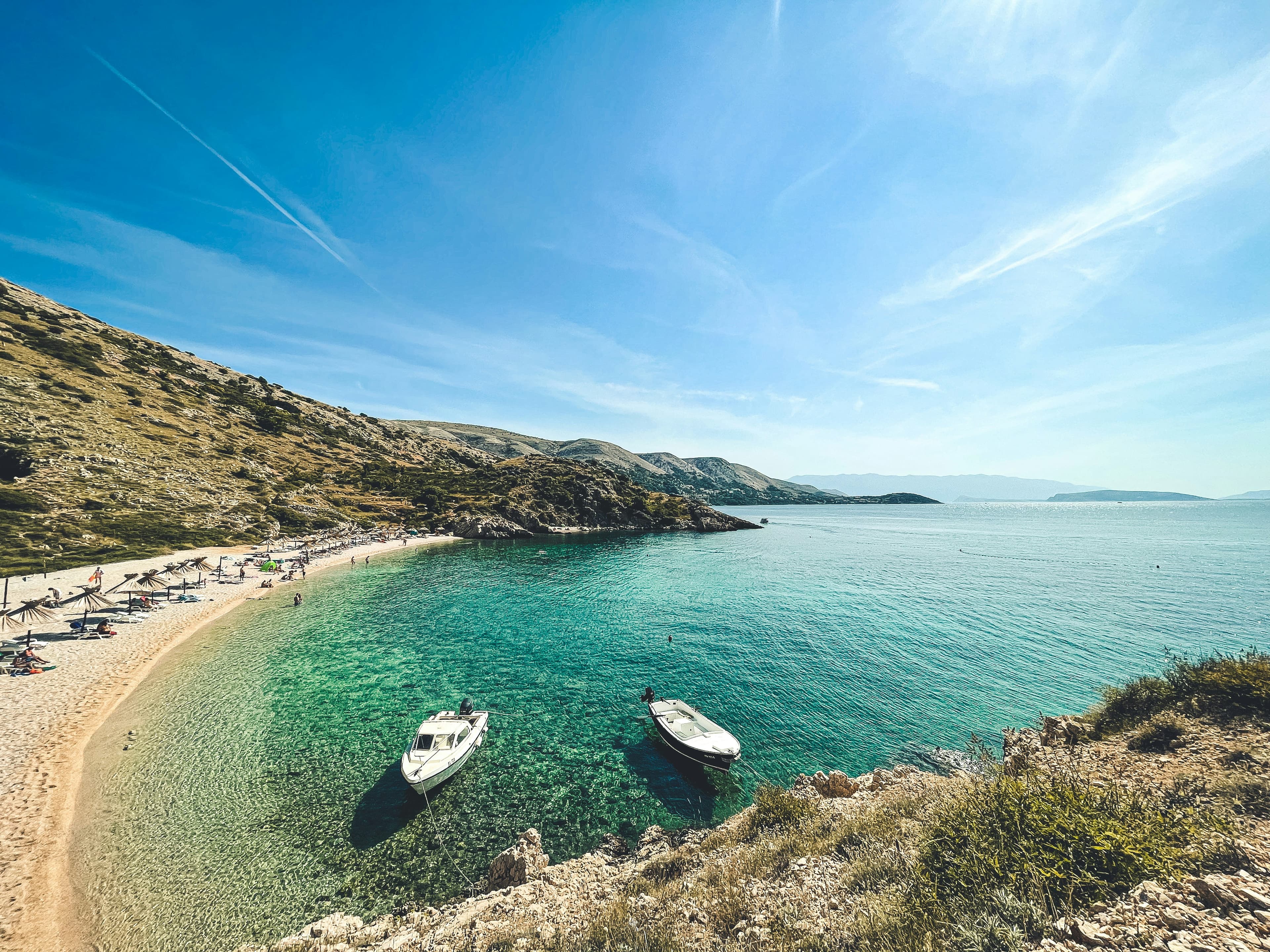
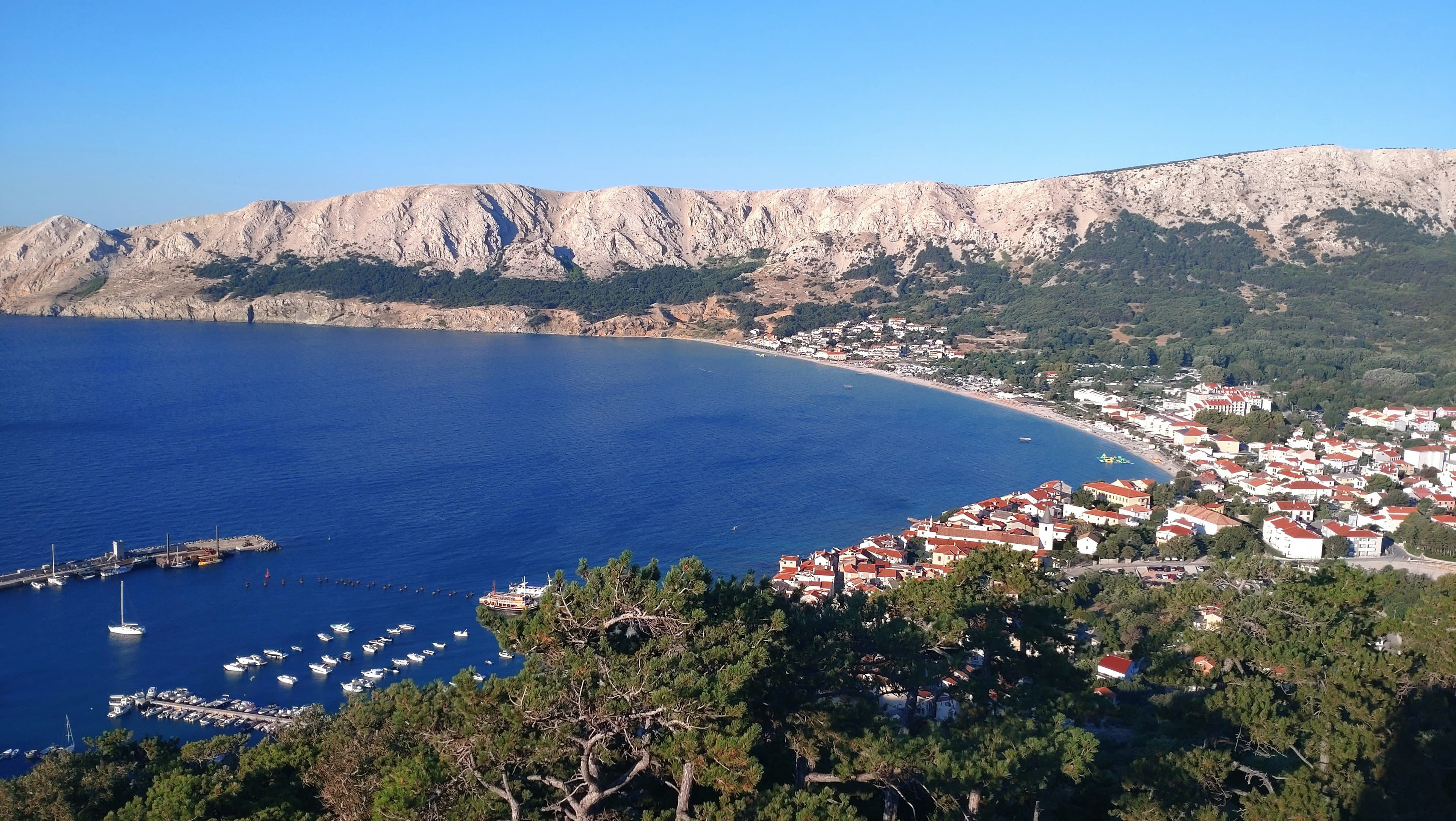
Baška is a small town at the southern end of Krk island, built around a wide bay with one of the most recognisable beach settings in the Kvarner region. Vela Plaža — the main beach — is about 1.8 kilometres of coarse pebble, sheltered from the north and facing south, with the Velebit mountain range visible across the Velebitski Kanal. The water is clean and the setting is scenic, which explains why Baška has been popular since the Austrian era and remains busy in July and August.
The town behind the beach is small but pleasant — a compact knot of stone streets worth a short walk after the beach. The area also has cultural significance most visitors miss: the Baška Tablet (Bašćanska ploča), one of the oldest and most important Glagolitic inscriptions in existence — dating from the 11th century — was found in this area. The original is in Zagreb, but a replica is displayed in the local church. For one of Croatia's most important medieval artefacts to sit quietly in a beach town is somewhat characteristic of Croatia in general.
What to Visit For
The beach, primarily. Everything else is secondary — and that is fine.
Vela Plaža
About 1.8 kilometres of coarse pebble, sheltered from the north, facing south. Clean water, the Velebit range visible across the channel. One of the better beach settings in Kvarner. In July and August it fills up; June and September offer the same beach with noticeably fewer people.
Boat Trips to Nearby Coves
Boats depart from the harbour to smaller coves on Krk's rugged southern coast — Oprna bay is the closest and easiest to reach. These are harder to get to on foot and the water tends to be even cleaner.
The Old Town
A compact cluster of stone streets behind the beach. Small, pleasant, worth 20 minutes. The harbour area has the better cafes and restaurants.
The Baška Tablet
The Bašćanska ploča — an 11th-century Glagolitic inscription and one of Croatia's most important medieval artefacts — was found near Baška. The original is in Zagreb; a replica is on display in the local church of St Lucy. Worth a look if you are already here.
When to Visit
Peak summer (July–August) is liveliest and most crowded. The beach and all facilities are fully operational, but parking is difficult and the town is at capacity. June and September offer essentially the same beach experience with notably fewer people — the water is warm enough and the atmosphere is more relaxed.
Outside the summer season most facilities close. Baška is not really an off-season destination — the beach is the draw, and without the beach season it becomes a quiet small town.
How to Get There
Baška is at the southern tip of Krk island, about 30km from Krk town. Parking fills quickly in July and August.
~30 km
35–40 minutes
Via the island's main road south. Use the car park above the town in peak season.
~95 km
about 1h 30 min
Via the Krk bridge onto the island, then south to Baška.
~215 km
about 2h 30 min
Via A6 motorway to Rijeka, then Krk bridge and island road south.
~340 km
about 3h 30 min
Via A1 north to Rijeka, then Krk bridge and south.
Buses connect Krk town and Baška year-round, with more frequent services in the main season — journey time is about 45 minutes. The regular Krk–Rab ferry connection is the Jadrolinija service from Valbiska (on Krk) to Lopar (on Rab), not from Baška.