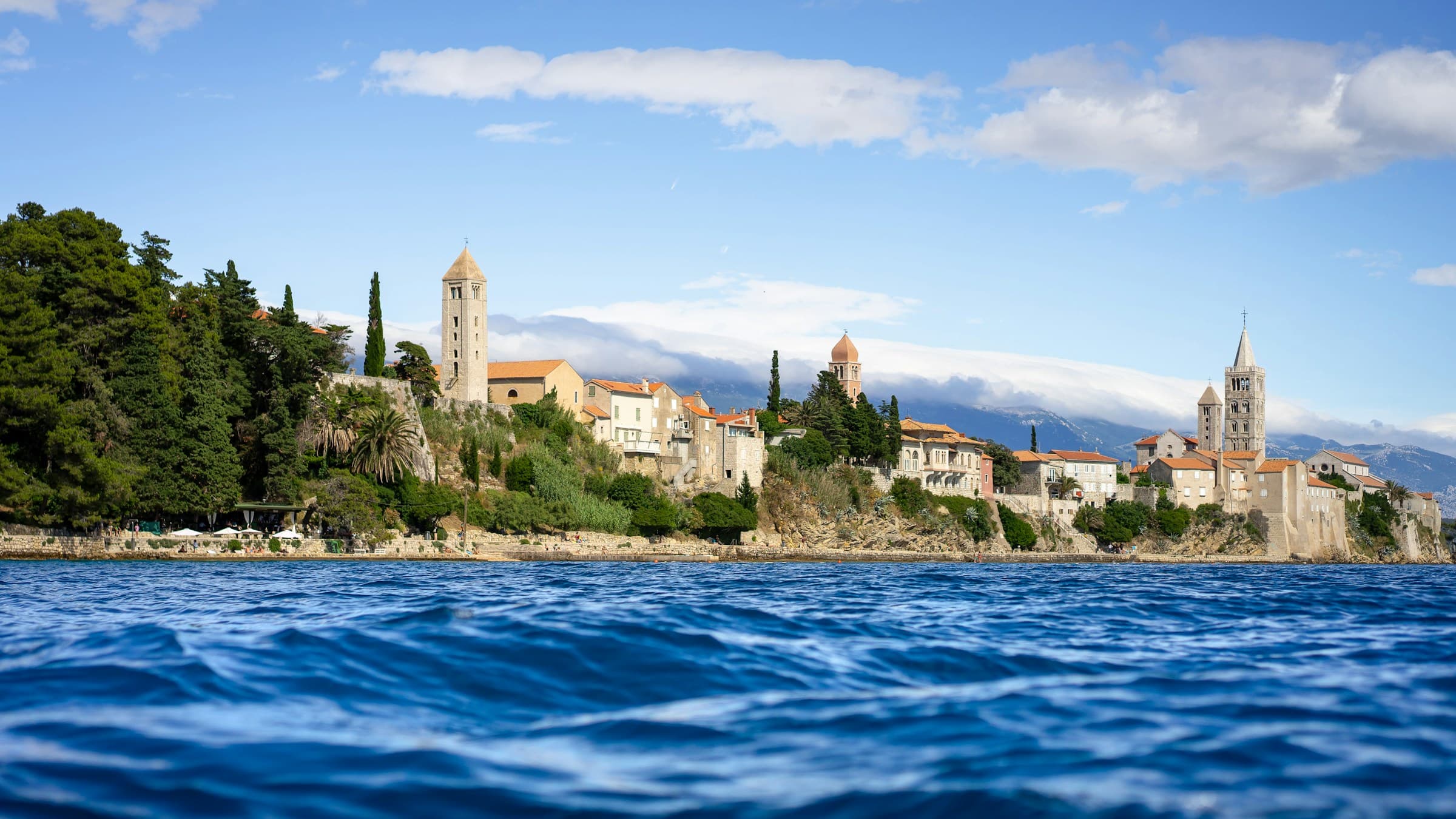
Rab
Rare sandy beaches, a medieval town crowned by four bell towers, and lush green forests on one of Croatia's most charming islands.
About Rab
Rab is one of Croatia's most charming islands, set in the northern Adriatic and often called the Island of Happiness. It combines rare sandy beaches, a compact medieval old town and green landscapes in a way few Croatian islands can match.
With more than 30 sandy beaches, clear shallow water and a skyline shaped by four bell towers, Rab works especially well for families, couples and travellers who want a relaxed island base with history close at hand.
Why Visit Rab?
Choose Rab when you want soft sand underfoot, historic streets to explore and an easy Mediterranean rhythm.
Sandy Beaches
One of Croatia's best islands for rare sandy beaches.
Medieval Old Town
A handsome historic centre with four landmark bell towers.
Lush Forests
Shaded trails and old Mediterranean woodland on the Kalifront Peninsula.
Family-Friendly
Shallow water, calm beaches and a gentle evening pace.
Key Highlights
Top Things to See
Medieval landmarks and natural beauty
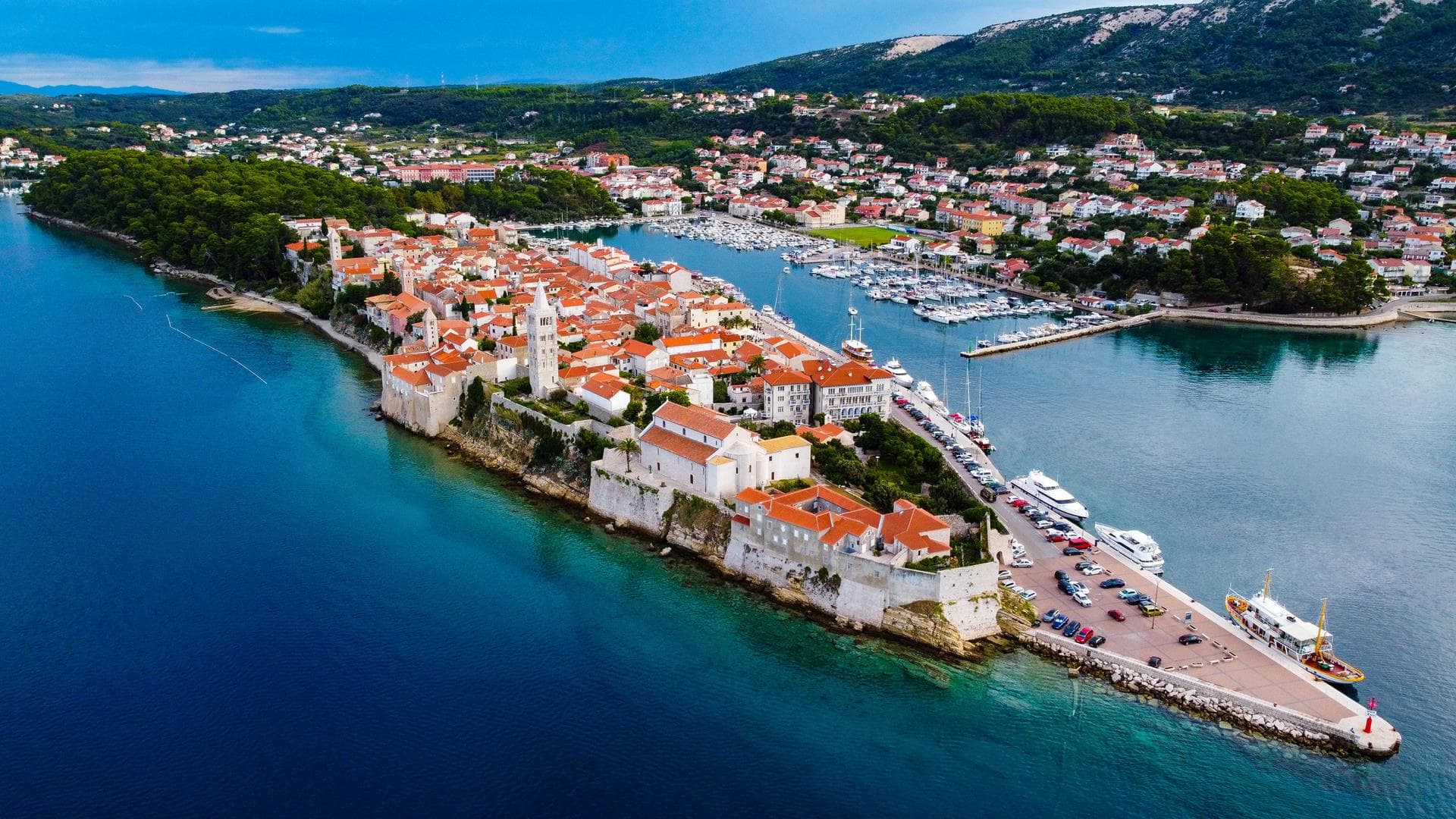
Rab Old Town
A beautifully preserved medieval town of narrow stone lanes, historic squares and lively waterfront promenades.
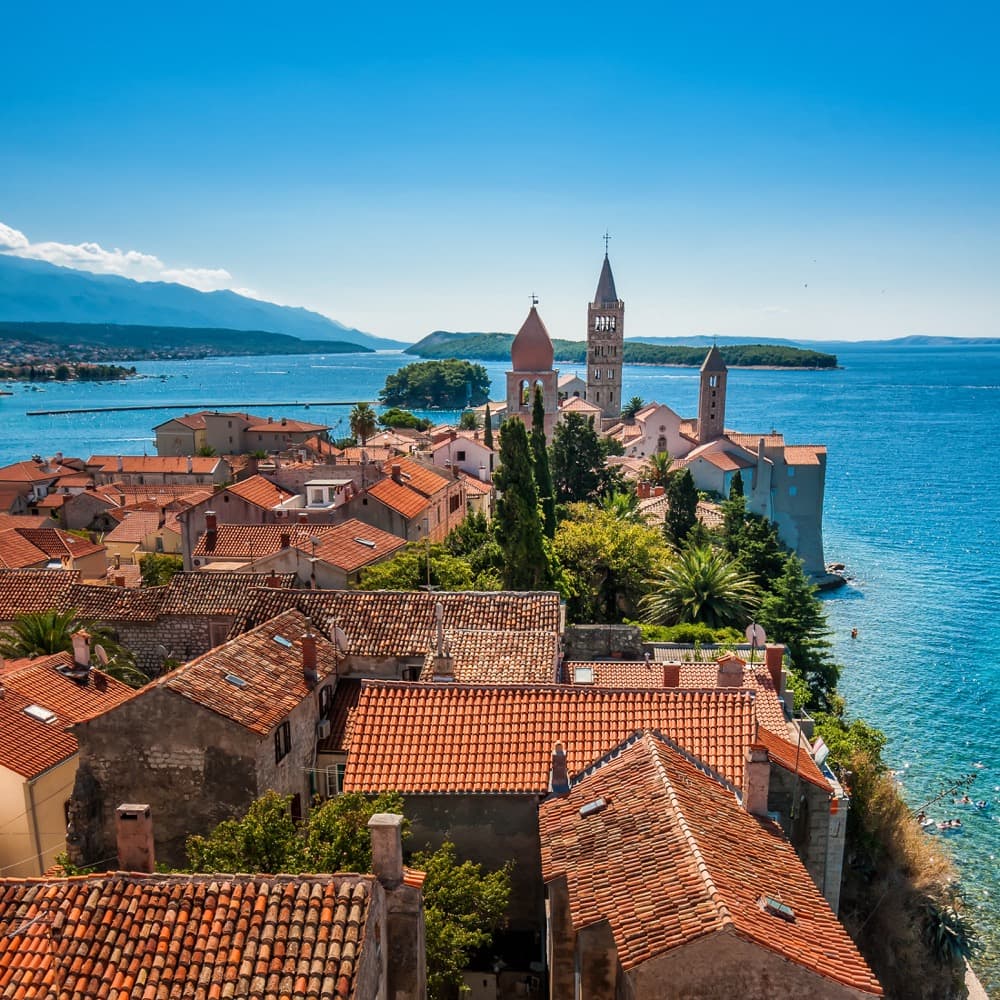
The Four Bell Towers
Rab's signature skyline, marking centuries of religious and architectural heritage above the old town.
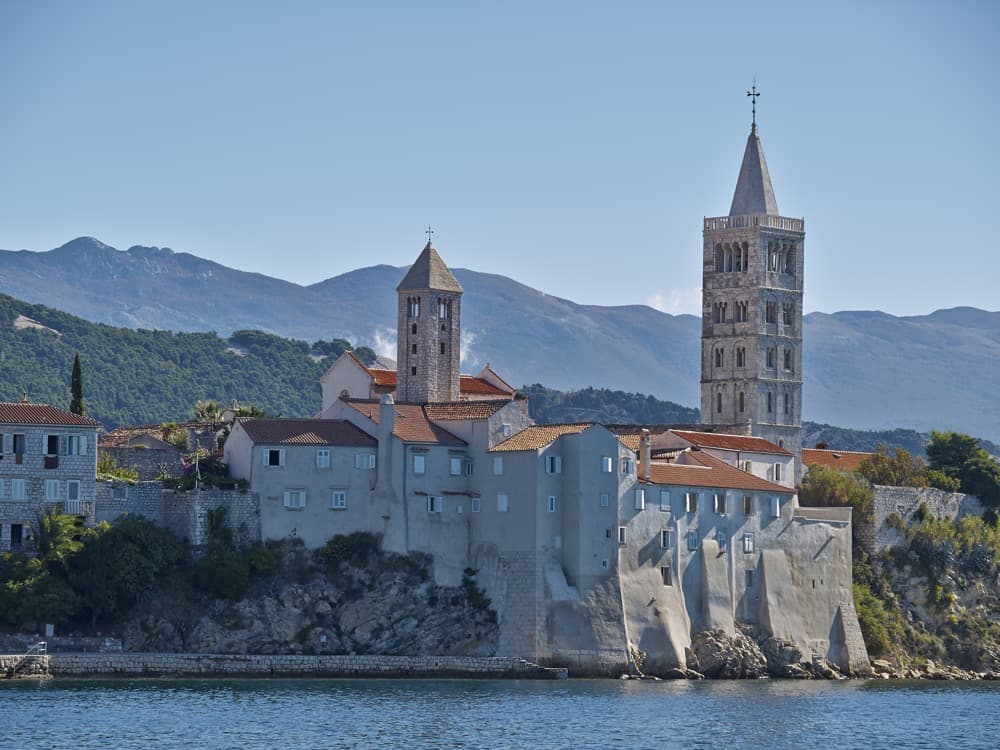
Cathedral of St Mary
A Romanesque cathedral with roots in the 12th century and wide views from its bell tower.
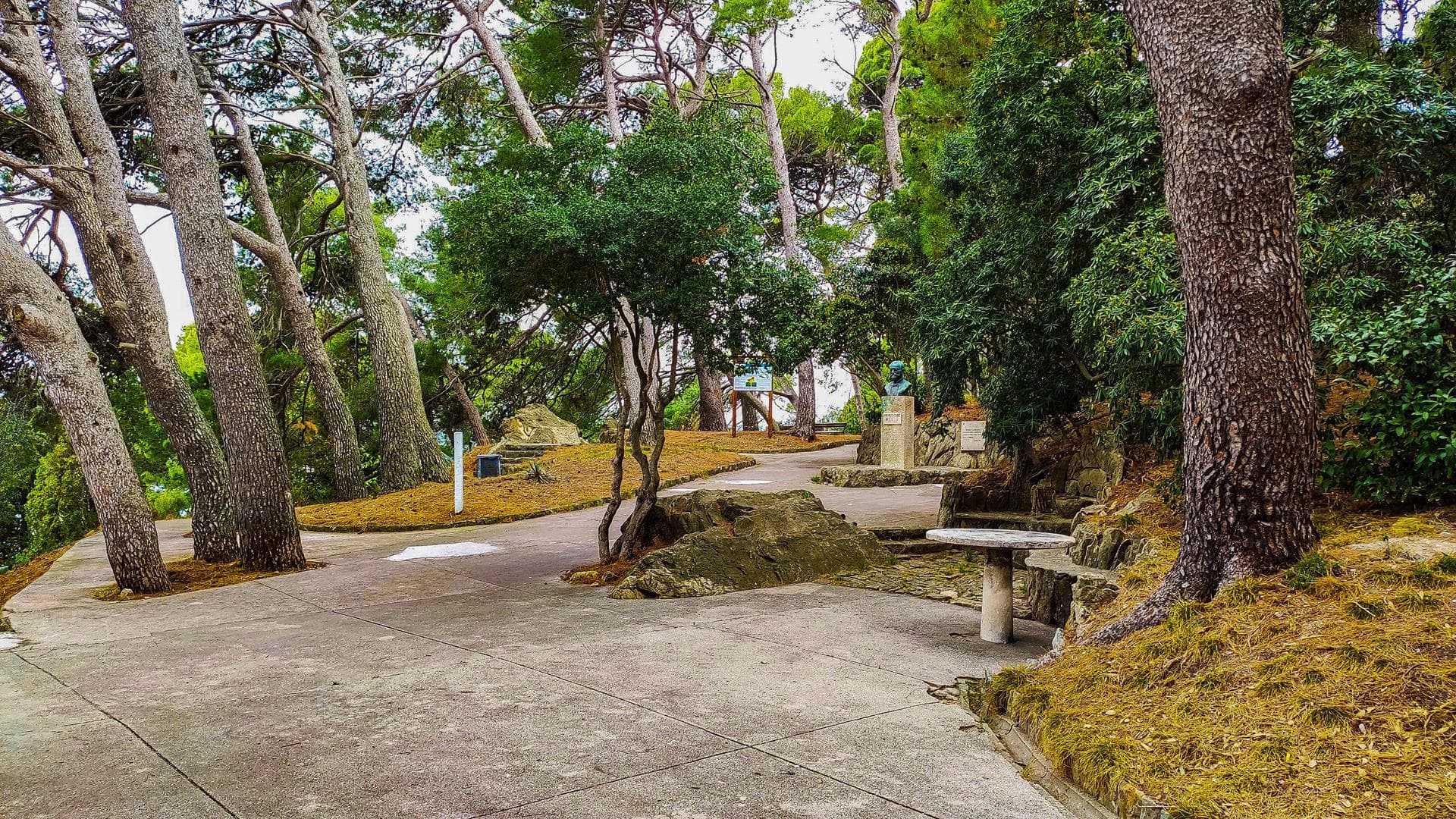
Komrčar Park
A green park beside the old town, ideal for shaded walks and sea views.
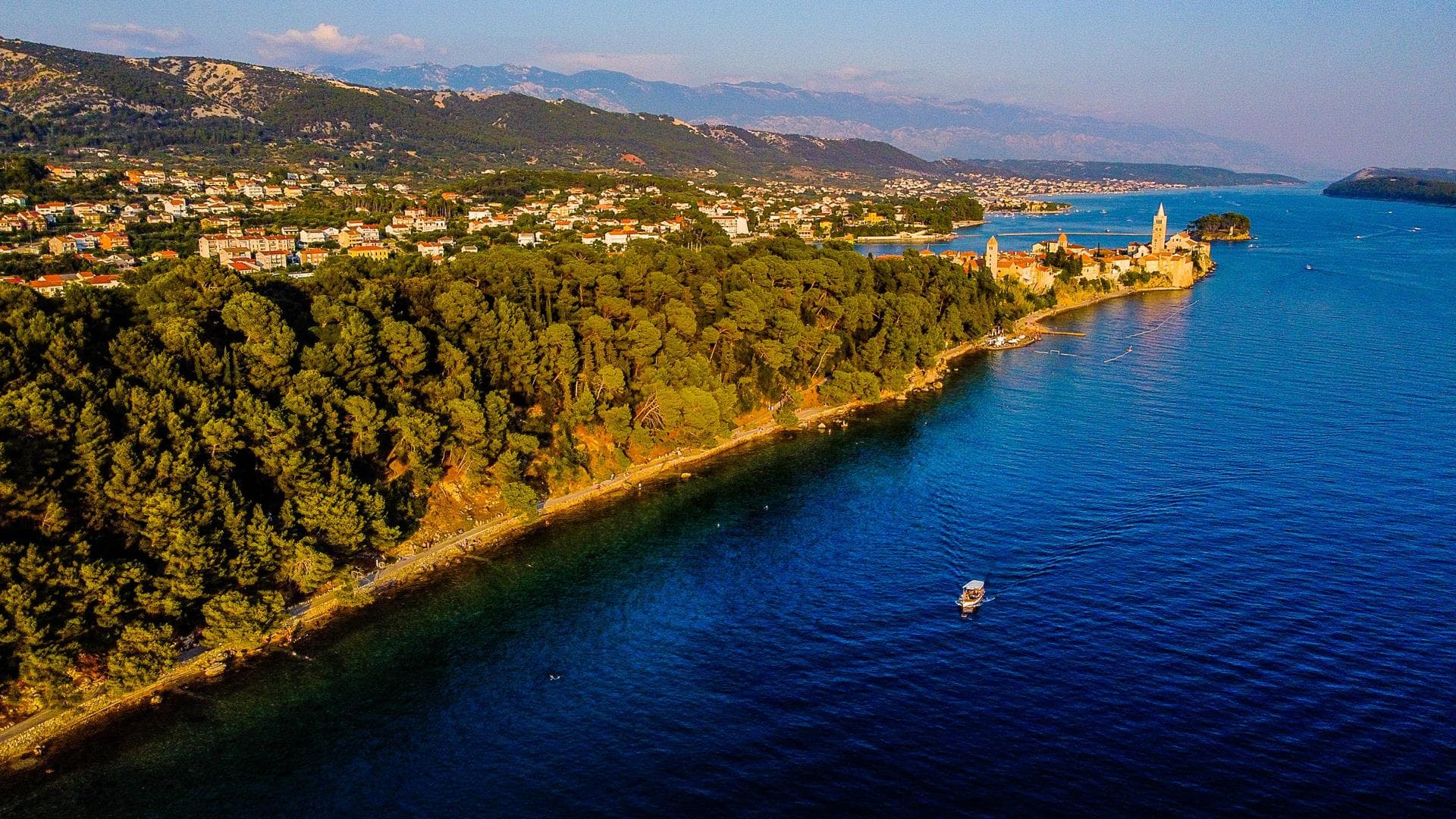
Dundo Forest Reserve
One of the Adriatic's oldest holm oak forests, best explored on foot or by bike.
Best Beaches
More than 30 sandy beaches, a Croatian rarity
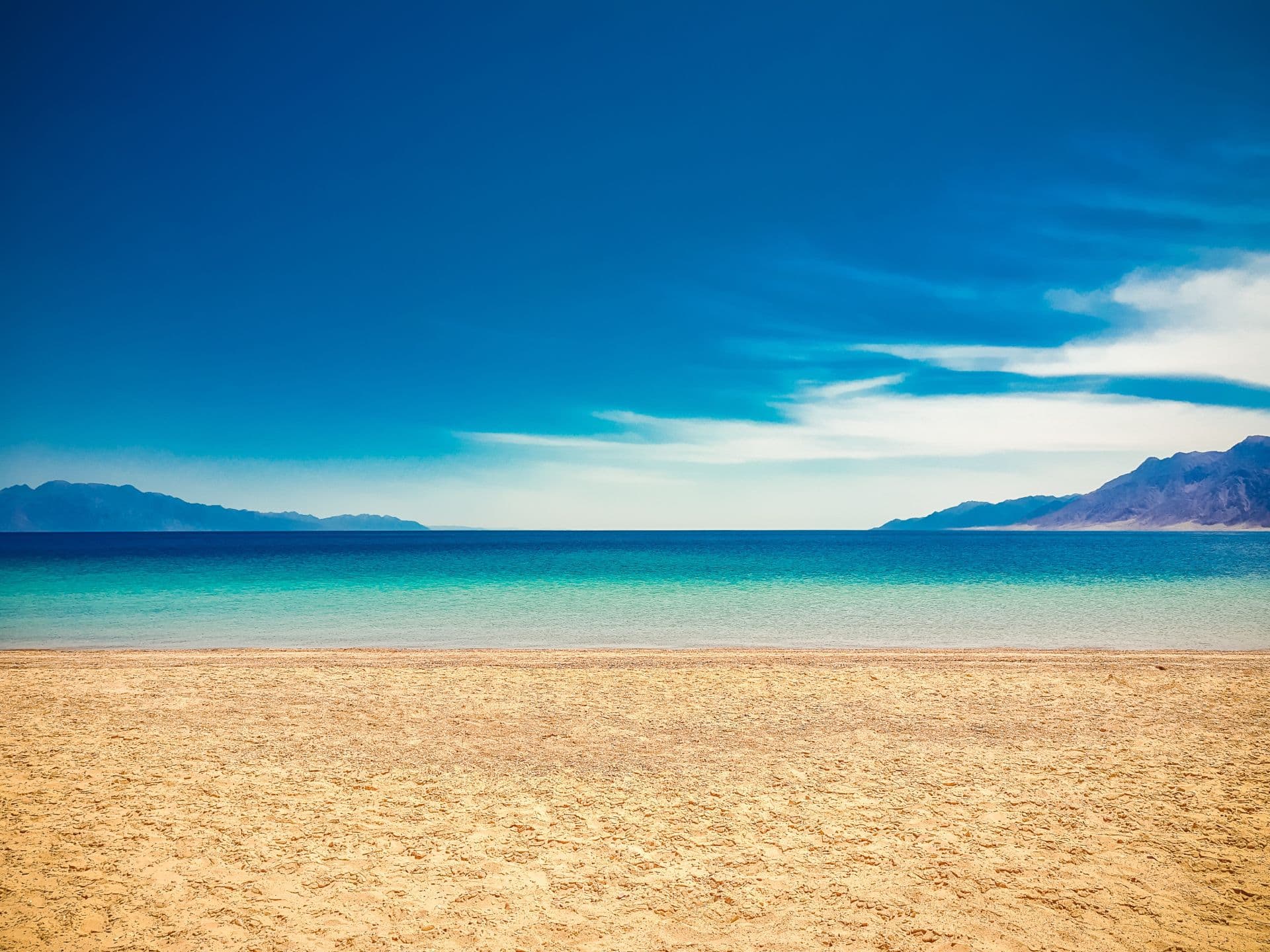
Paradise Beach, Lopar
A 1.5 km sandy beach with shallow water, excellent for families and first-time visitors.
Family-Friendly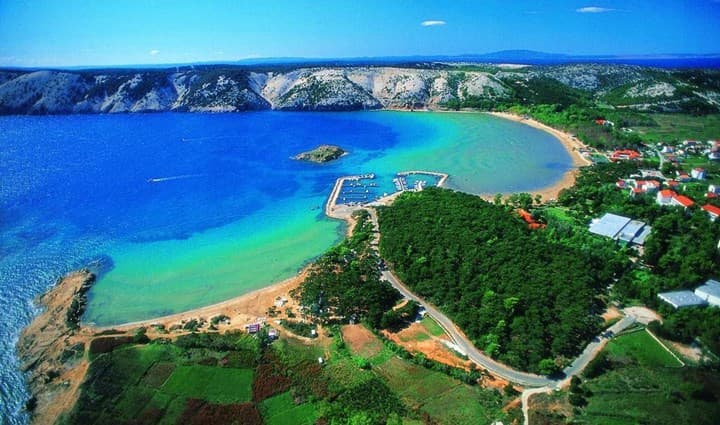
Livačina Beach
A lively sandy beach near Paradise Beach, with water sports and easy beachside facilities.
Water Sports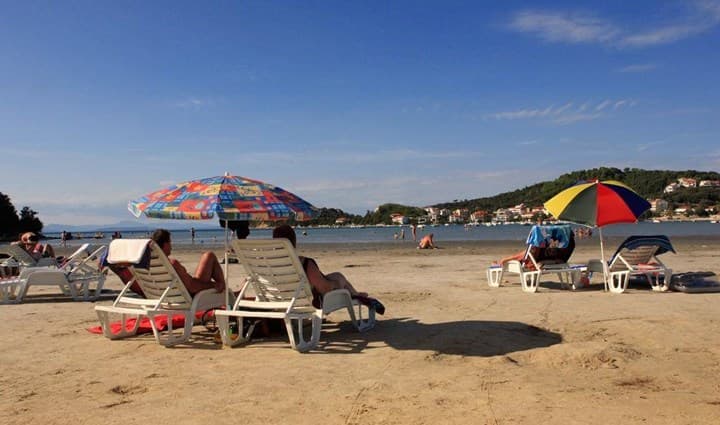
Mel Beach, Kampor
A long, shallow sandy beach suited to children and relaxed swimming.
Shallow Water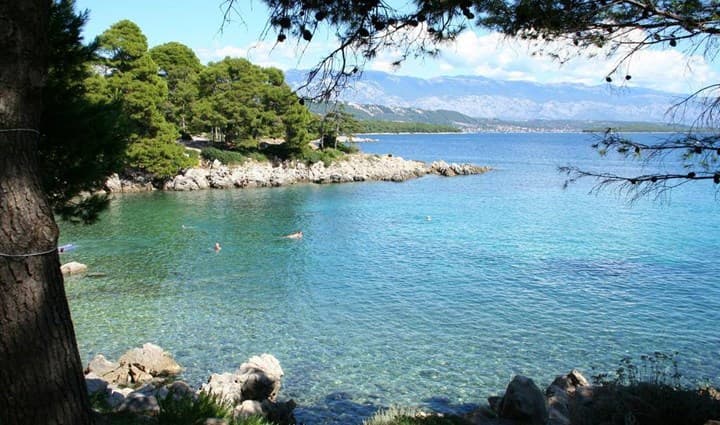
Suha Punta
Pebble and rocky beaches wrapped in pine forest, good for swimming and snorkelling.
ScenicCroatia's sandy beach paradise
Rab is renowned for having more than 30 sandy beaches, a true rarity on Croatia's mostly rocky coast. Soft sand, shallow water and family-friendly swimming make it one of the country's easiest islands for beach-focused holidays.
A Glimpse into Rab's History
Roman roots and medieval grandeur
Rab's history reaches back to Roman times, when the island was known as Arba. Its position in the northern Adriatic made it an important regional centre through antiquity and the Middle Ages.
The island later flourished under Venetian rule, leaving churches, monasteries and fortified structures that still shape Rab Town. The four bell towers remain the clearest symbol of its long religious and cultural life.
Roman Heritage
Known as Arba in Roman times, Rab was an important Adriatic settlement.
Four Bell Towers
The skyline reflects centuries of religious and architectural heritage.
Venetian Influence
Venetian rule left churches, monasteries and fortifications in the old town.
Culture & Cuisine
Seafood, Rab cake and a relaxed Mediterranean atmosphere
Food and drink
Traditional konobas
Look for fresh fish, lamb and island specialities in Rab Town and coastal villages.
Seafood restaurants
Adriatic fish and shellfish are prepared simply with herbs and local olive oil.
Rab cake (Rapska torta)
The island's famous almond dessert is a sweet tradition with centuries of history.
Old Town cafés
Sunset drinks along the promenade come with views of the bell towers and the Adriatic.
Events & Festivals
Rab Fjera - Medieval Festival
Held in July, this famous historical festival fills the old town with medieval costumes, crafts, music and reenactments.
Rab Music Festival
A long-running August classical music festival staged in historic venues around the island.
When to Visit Rab
Enjoy sandy beaches, medieval charm and island festivals throughout the warmer months.
Spring
April-June
Warm weather, fewer crowds and good conditions for sightseeing, forest walks and early beach days.
- Quiet sandy beaches
- Pleasant walking weather
- Crowd-free old town
- Wildflowers in Dundo Forest
Summer
July-August
The best time for beach life, family holidays and Rab Fjera, with warm seas and the liveliest atmosphere.
- Rab Fjera festival
- Warm swimming water
- Beach activities
- Open-air dining
Autumn
September-October
Warm sea, fewer tourists and quieter beach days make early autumn one of Rab's most pleasant periods.
- Late-season swimming
- Lower visitor numbers
- Peaceful beaches
- Old town walks
Winter
November-March
A calm off-season for local atmosphere, old town wandering and forest walks, with limited beach services.
- Quiet island life
- Mild coastal days
- Dundo Forest walks
- Authentic local rhythm
Getting to Rab
Rab is reached by frequent ferries from the mainland and nearby islands.
Stinica-Mišnjak ferry
The quickest and most popular route links Stinica on the mainland with Mišnjak on Rab in about 15 minutes.
Valbiska-Lopar ferry
A scenic alternative connects Krk with Lopar and is useful when arriving from Istria or Slovenia.
Bus and airports
Buses from Zagreb and Rijeka connect with ferry terminals. Rijeka, Zadar and Zagreb are the nearest useful airports.
Travel Tips
Book ferries ahead
In July and August, reserve early if travelling with a vehicle.
Consider a car
A car helps with beaches and villages, while bikes work for shorter local distances.
Pick the right crossing
For Lopar and Paradise Beach, the Valbiska-Lopar route can be more convenient.
Check schedules
Jadrolinija frequency rises sharply in summer and changes outside the main season.
Book Tours & Experiences in Rab
Explore Rab's medieval towers, sandy beaches and forested parks with guided walks and island adventures.