Beyond the Coast
Vineyards, family cellars, baroque towns, and UNESCO lakes — a guide to wine and cultural travel in inland Croatia
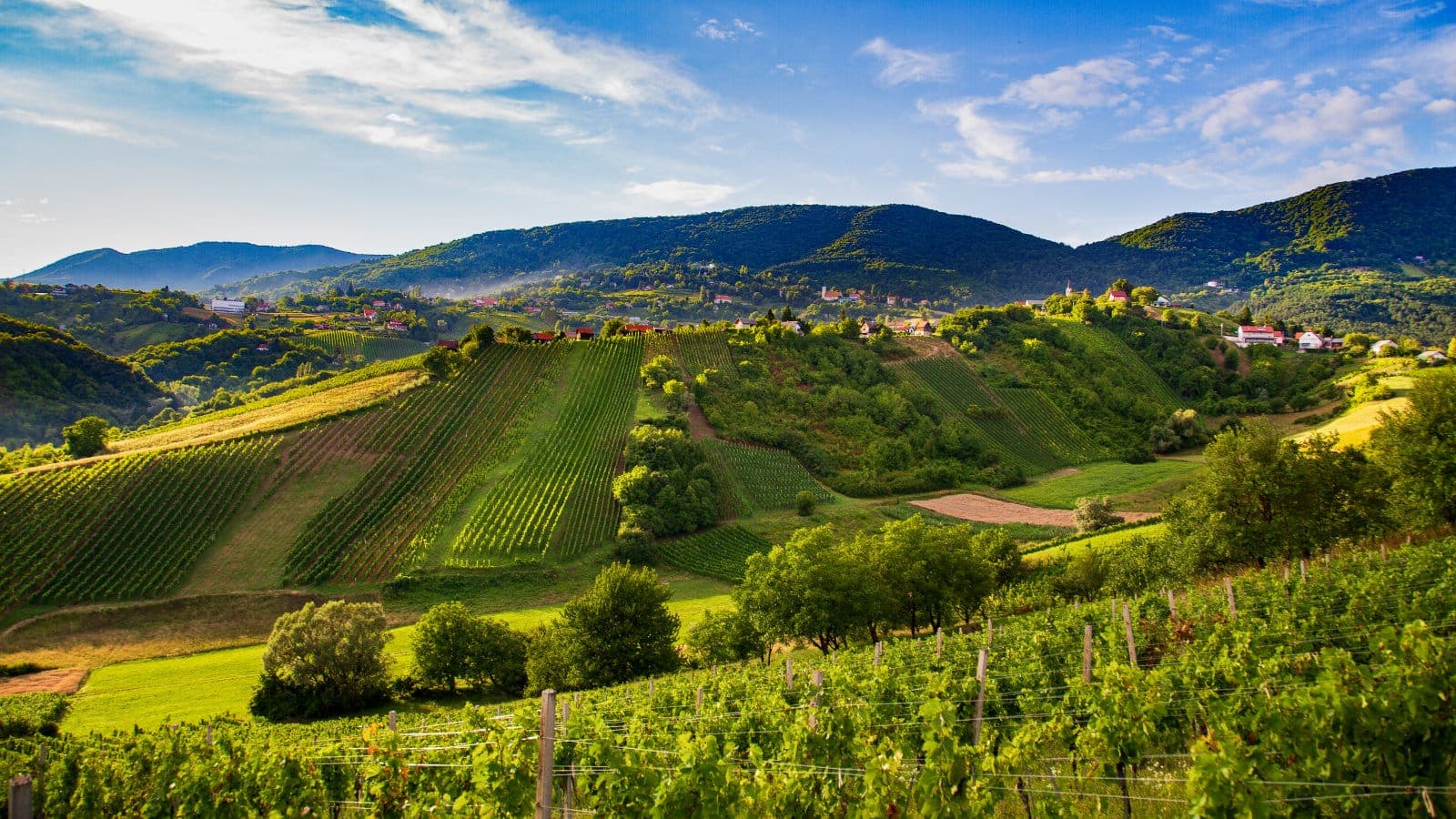
Most visitors to Croatia spend their time on the Adriatic. The islands, the old harbour towns, the long evenings by the sea — that part of the country earns its reputation. But just thirty minutes from Zagreb, a completely different Croatia exists: one of rolling vineyard hills, family-run wine cellars, and sparkling wines made from grape varieties found almost nowhere else in the world.
Travel built around wine, food, and culture moves at a different pace. There are no ferry schedules to chase. Mornings begin at a winery where the owner pours the first glass before noon. Afternoons drift between medieval castles, UNESCO-listed lakes, and river canyons that see a fraction of the summer crowds on the coast. This is a guide to that other Croatia — and to the people who know it best.
A Country Worth Exploring Beyond the Beach
Croatia has over 130 indigenous grape varieties — a figure that puts it among the most biodiverse wine nations in Europe, despite its modest size. Many of these varieties grow in a single region, and most are poured only in small, family-run cellars that rarely appear in international wine guides.
The inland wine regions sit alongside a remarkable concentration of cultural landmarks. Baroque towns, fairy-tale castles, waterfalls and national parks are all within easy driving distance of each other — and of Zagreb, which serves as a natural base for exploring this part of the country.
For travellers who want more than a beach holiday, combining the Dalmatian coast with a few days in the interior produces a trip with considerably more depth — and usually the memories that last longest.
Thirty minutes southwest of Zagreb, the Plešivica wine region climbs across a series of hills backed by the Žumberak mountains. The region is best known for its sparkling wines — produced using the traditional method — and for the density of small family producers who have been cultivating the same slopes for generations.
What makes Plešivica unusually approachable is the density of small family producers in a compact area. Tastings take place in working cellars rather than visitor centres. The winemaker pours the wine, explains the vintage, and usually invites you to stay for lunch. It is the kind of experience that is increasingly difficult to find in more commercially developed wine regions.
The dominant varieties — Graševina, Chardonnay, and the indigenous Portugizer — produce wines that reflect the cooler continental climate. The sparkling wines in particular have earned serious attention from those who follow European viticulture, though the region remains largely unknown to international travellers.
What a Wine Tour in Croatia Actually Looks Like
A guided wine tour in this part of Croatia is not a fixed programme of scheduled stops. It is a flexible journey built around your interests, the season, and how much you want to cover. The itinerary takes shape through a conversation — how many days, which regions, whether you want to add a day at Plitvice or a morning in Zagreb.
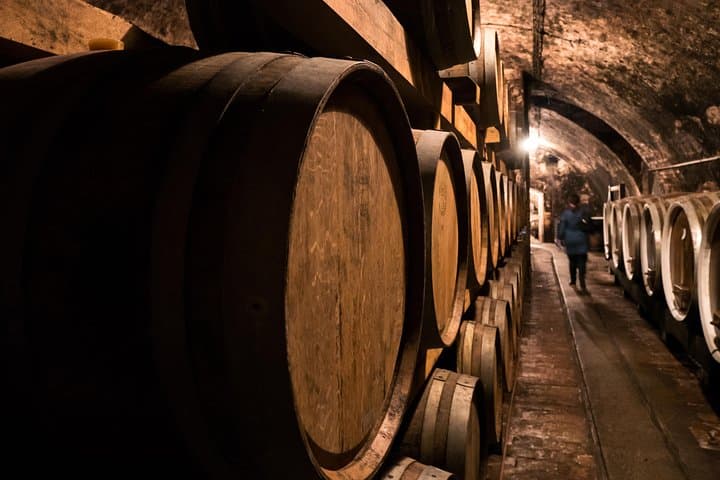
Days typically begin with a visit to one or two wineries, where the host walks through the cellar and the wines at an unhurried pace. Lunch follows naturally — often at the winery itself, which in Plešivica usually means a terrace table, a spread of local cheeses and cured meats, and another bottle opened without being asked.
Accommodation is arranged in selected hotels or private villas, and an English-speaking guide handles logistics, introductions, and the kind of local knowledge that makes the difference between a pleasant trip and one that genuinely reveals a place. The character of each day comes from the people you meet and the cellars you step into — not from a checklist.
Wine & Food Croatia organises this kind of travel — bespoke, small-group, built around the pace and interests of whoever is going. Their template itineraries (a long weekend, a five-day nature-and-wine circuit, a six-day grand tour) exist as starting points rather than fixed products.
Culture and Nature Along the Way
The wine region sits at the centre of a wider geography that rewards exploration. Within an hour or two of Plešivica, you have access to a concentration of landmarks that would sustain a week of travel on their own.
Plitvice Lakes National Park is a ninety-minute drive south — sixteen terraced lakes connected by waterfalls and wooden walkways through old-growth forest. It is Croatia's most visited natural site for good reason, and arriving early from a base near Plešivica is far more pleasant than the day-trip scramble from the coast.
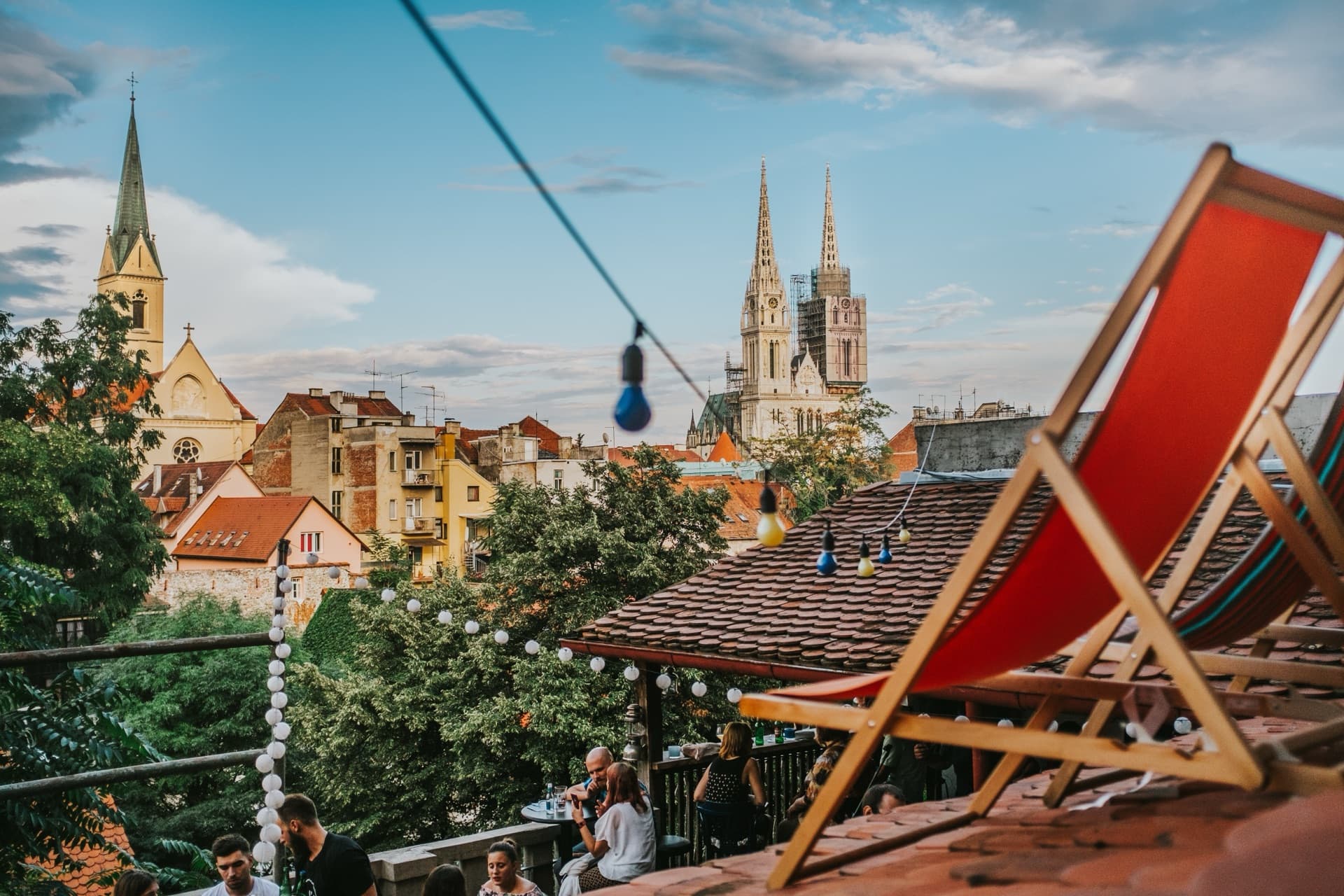
Zagreb needs at least a day — the Upper Town, the Dolac market, the Museum of Broken Relationships, and a long coffee on Tkalčićeva Street. It is a compact, walkable city that rewards an unhurried morning. Varaždin, an hour north, offers something different: a perfectly preserved baroque town with pastel façades, a medieval fortification, and a café culture that feels entirely its own.
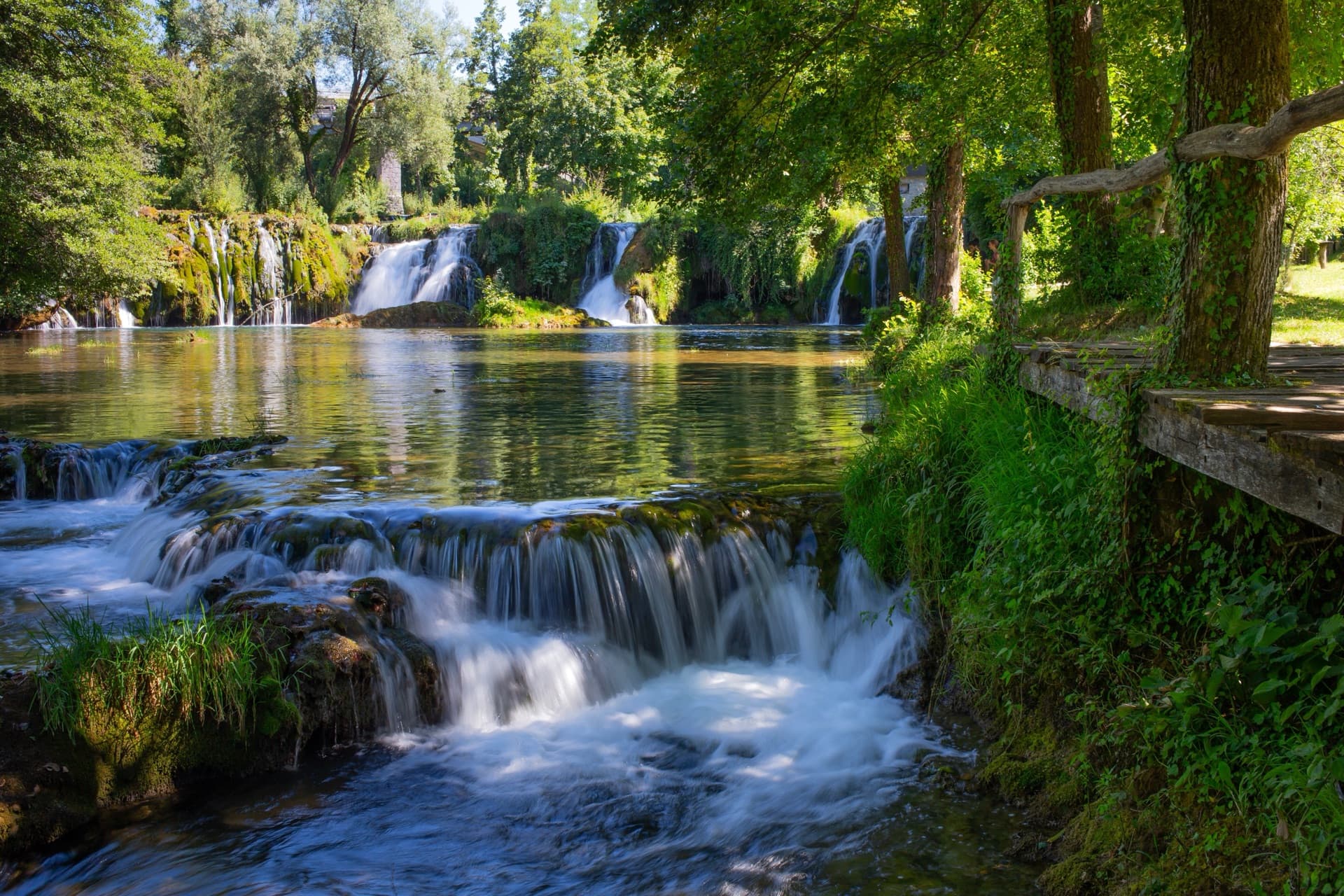
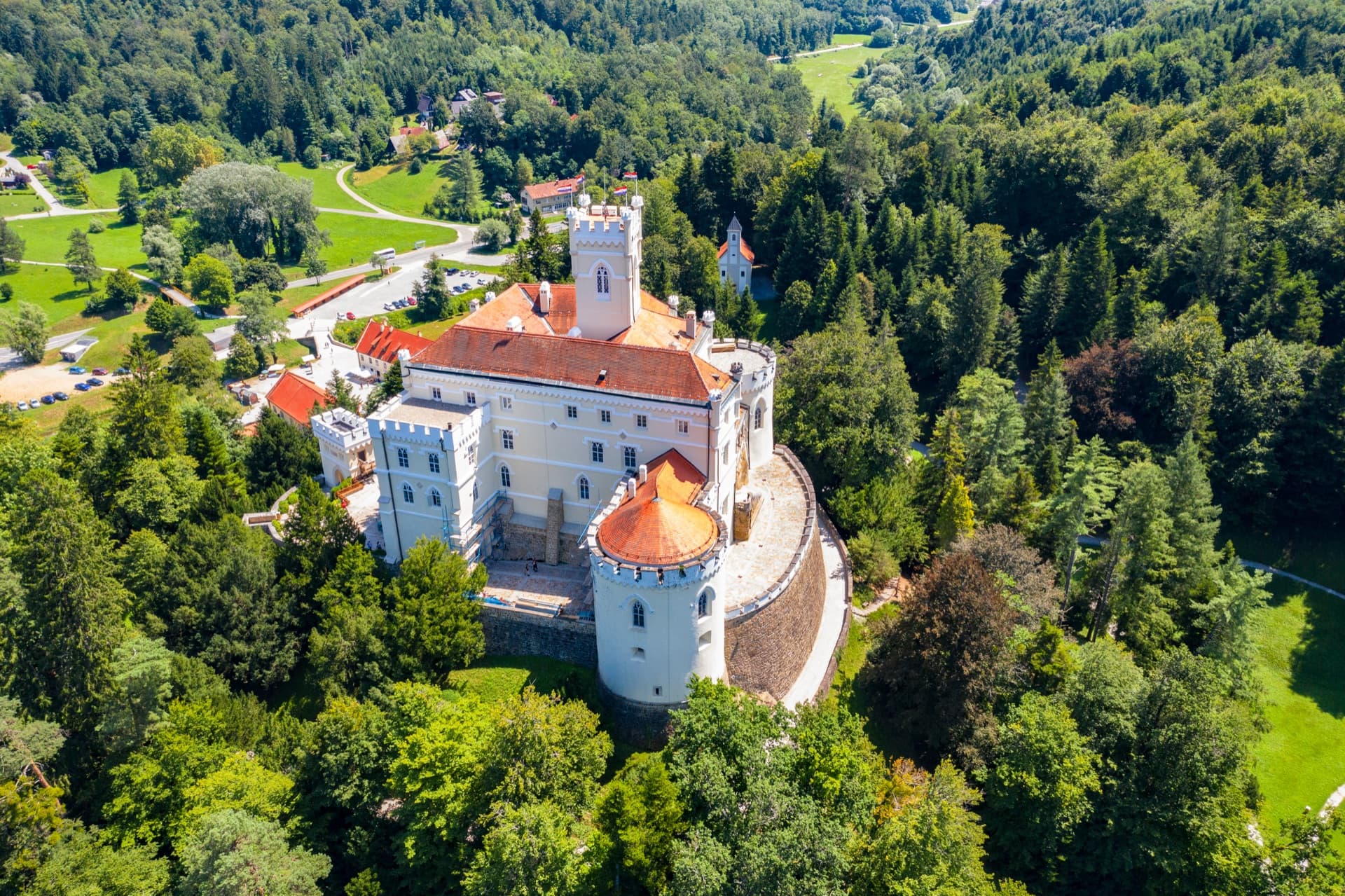
Trakošćan Castle rises above its lake in the hills of the Zagorje region — one of those places that looks almost too photogenic to be real. The Mrežnica river, with its waterfalls and clear swimming spots, adds the kind of nature day that balances out a run of winery visits. None of these require a long detour; they fit naturally into the rhythm of an inland itinerary.
A Different Way to Experience Croatia
The coast will always be there. But the travellers who come back to Croatia most often are usually those who spent time inland — at a winery table in Plešivica, on the walkways of Plitvice at first light, in the baroque squares of Varaždin on a quiet afternoon. These are the parts of the country that take longer to find and longer to forget.
For anyone interested in building this kind of trip — Wine & Food Croatia specialises in exactly this. The team handles the winery introductions, the logistics, and the local knowledge that turns a well-intentioned itinerary into something that actually works. Have a look at what they offer and get in touch if any of it resonates.
Frequently Asked Questions
Wine & Food Croatia puts together bespoke wine and cultural tours in inland Croatia, primarily centred on the Plešivica wine region near Zagreb. They handle winery introductions, accommodation, transfers, and guided excursions to nearby destinations like Plitvice Lakes, Varaždin, and Trakošćan Castle. Everything is built around what the client wants, rather than a fixed departure programme.
The itineraries on the site are ideas, not fixed products. Every tour is put together in conversation with the guest — duration, pace, which wineries to visit, whether to include a day at Plitvice or a morning in Zagreb. If something on the site looks close to what you have in mind, it is worth getting in touch to talk through the details.
Plešivica is around thirty minutes southwest of Zagreb by car. That proximity makes it easy to combine a night or two in the city with time in the wine region, without feeling like you are constantly travelling. It also means arriving directly from Zagreb airport is straightforward.
Yes, and many guests do exactly this. Plitvice Lakes is around ninety minutes from Plešivica and fits naturally into a longer inland itinerary. The coast is a full day's drive from the wine region, but a trip that starts or ends on the Adriatic and includes two or three days inland is a very workable combination — the contrast between the two halves is part of what makes it interesting.
Late September and October are the most atmospheric — harvest is under way, cellars are busy, and the hills turn golden. That said, the wineries are open year-round, and visiting in spring or early summer means the landscape is at its greenest and the roads quieter. Summer is perfectly fine, though July and August can be warm inland.
It works well for people who enjoy wine as part of a broader travel experience rather than as a dedicated pursuit. The cultural excursions — Zagreb, Varaždin, Plitvice, Trakošćan Castle, the Mrežnica river — give the trip substance beyond the cellar visits. If you are travelling with someone who is less interested in wine, there is plenty to hold their attention.
Explore More of Croatia
Discover more stories, hidden gems, and travel inspiration to help you plan your perfect Croatian adventure.