April–May
Good for sightseeing, national parks, road trips, cities and hiking. Accommodation is usually cheaper than in July and August, and Plitvice Lakes tickets are lower.
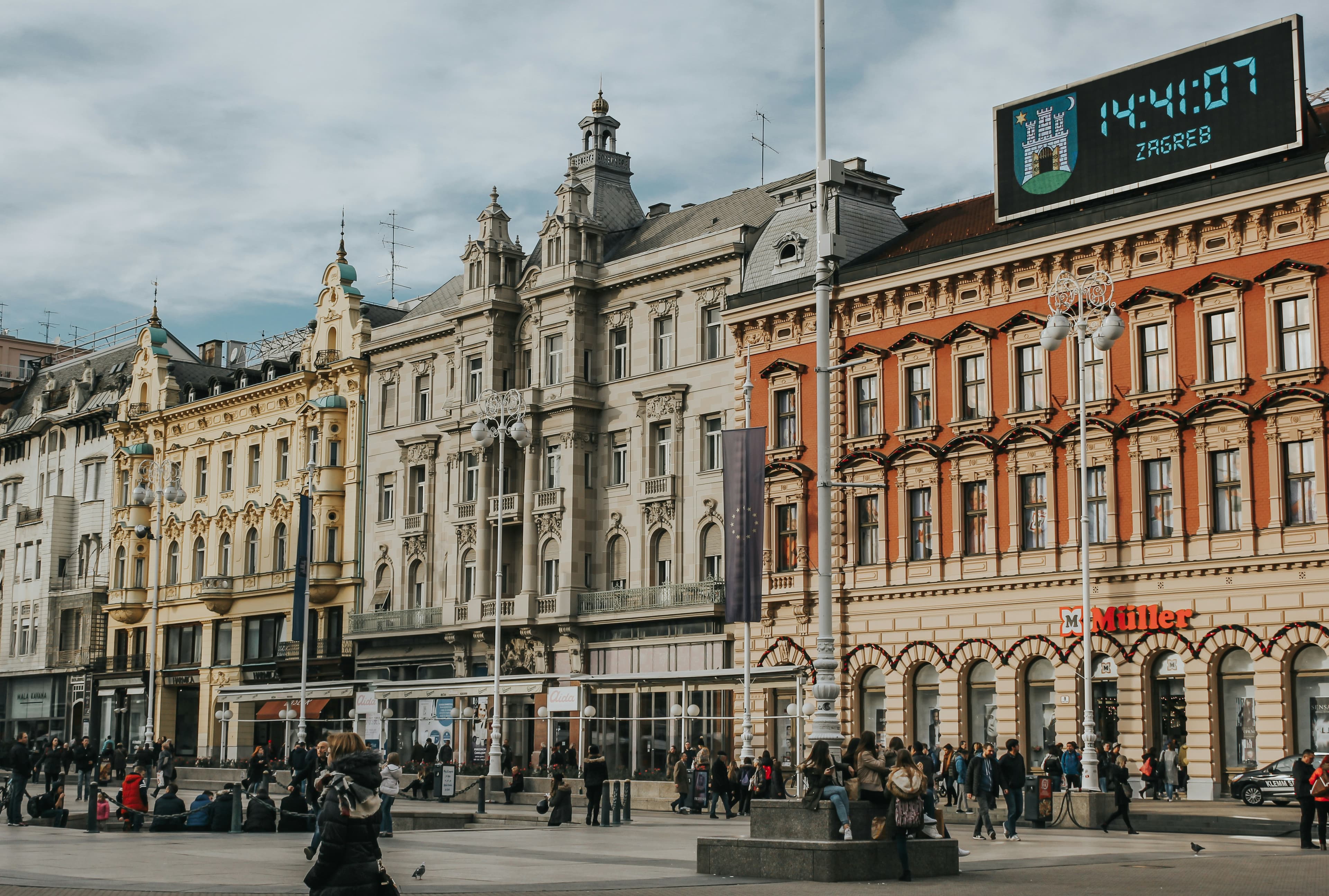
A practical budget guide, from accommodation and meals to ferries, parks and a week away.
Croatia is no longer the bargain destination it was 10 or 15 years ago, but a holiday here does not have to be expensive. The answer depends most on when you travel and how you choose to travel.
A week in Dubrovnik in August, in a hotel with every meal at a restaurant, is a different trip from a September stay in Istria or Dalmatia in an apartment, mixing restaurants with bakeries, supermarkets and markets.
Croatia is not a hotel-only destination. Private apartments and other short-stay accommodation make up a large part of the market, so comparing hotels alone can leave out some of the best-value places to stay. These 2026 figures are planning ranges, not fixed tariffs.
For two people sharing accommodation, excluding flights, use these daily planning ranges:
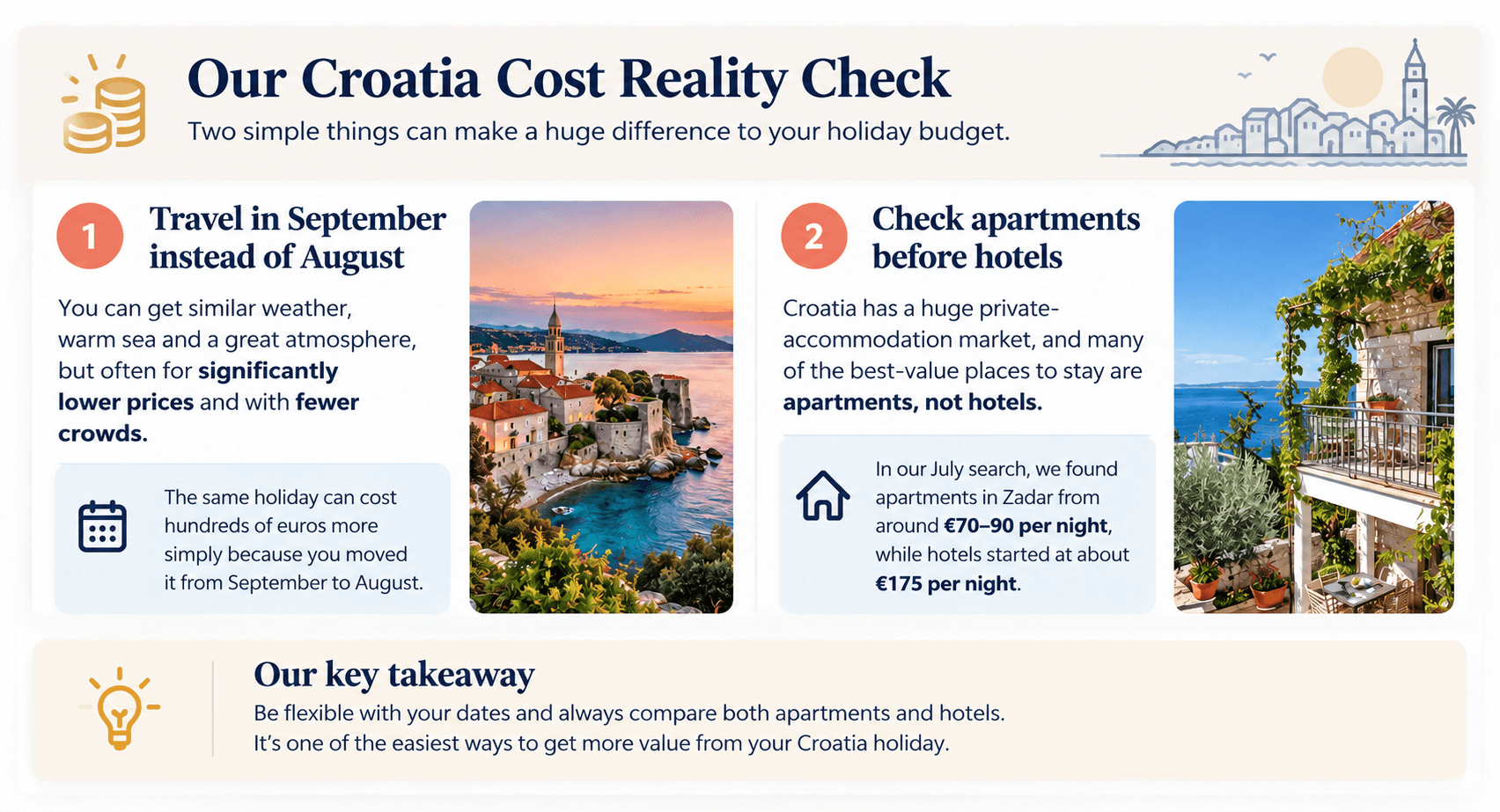
The same holiday can cost hundreds of euros more simply because you moved it from September to August, or booked a hotel instead of an apartment.
| Travel style | Daily budget for two |
|---|---|
| Budget, outside peak summer | €120–180 per day |
| Comfortable, outside peak summer | €150–220 per day |
| Comfortable, July and August | €220–350 per day |
| Popular places in peak summer | €300–450+ per day |
| Higher-end | €350–600+ per day |
| Luxury | €600+ per day |
July and August are the busiest and most expensive months, particularly on the Adriatic coast and islands. June and September can still bring beach weather, often with better value.
Good for sightseeing, national parks, road trips, cities and hiking. Accommodation is usually cheaper than in July and August, and Plitvice Lakes tickets are lower.
A useful beach-season balance: the sea is warming, most services are open and the atmosphere is lively before the busiest weeks.
Choose these months for the warm sea and full summer atmosphere, and budget for the highest prices. If dates are fixed, book early and compare apartments with hotels.
A strong compromise: the sea is still warm, the worst heat usually eases and crowds begin to thin. Accommodation can cost noticeably less than in August.
Better suited to cities, wine, food, national parks, hiking and road trips than a classic beach break. Weather and opening hours matter more.
In 2025, holiday and other short-stay accommodation accounted for 61% of available accommodation units in Croatia, compared with 18.8% for hotels and similar accommodation. Short-stay accommodation also represented almost 62% of permanent beds, while hotels accounted for 15%.
A well-reviewed apartment may give you more space, a kitchen, a balcony or terrace, parking and laundry facilities, sometimes with a pool. Private accommodation ranges from simple rooms to high-end properties with sea views, so compare the actual features and location.
In searches for two adults staying four nights in July 2027, examples included Zadar apartments around €68–90 per night and hotels around €175–290; Zagreb apartments around €45–60 and hotels around €96–120; Dubrovnik apartments around €94–107 and hotels around €220–250+. These are examples from specific searches, not 2026 price data or guaranteed rates.
| Dubrovnik Old Town | €100–150 June/September · €180–250 August |
|---|---|
| Split Old Town | €80–120 June/September · €120–180 August |
| Hvar Town and Rovinj | €120–200 June/September · €200–350 August |
| Zadar Old Town | €60–90 June/September · €90–130 August |
| Šibenik | €55–85 June/September · €80–120 August |
| Zagreb | €70–110 June/September · €80–120 August |
| Plitvice area | €70–110 June/September · €90–140 August |
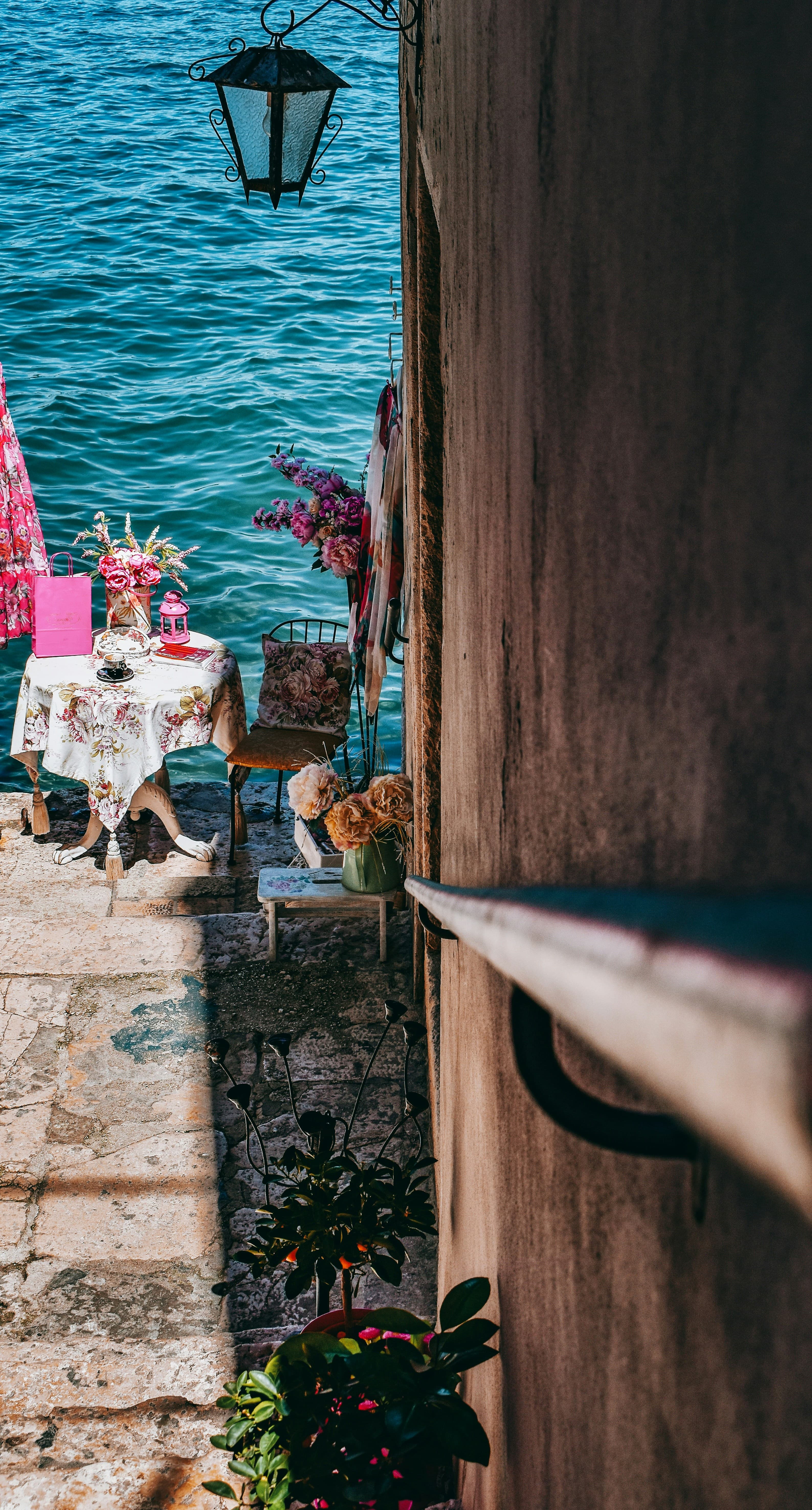
€50–90 a night, often an apartment, guesthouse or simpler property, especially outside peak season and the priciest coastal locations.
€80–160 a night can cover very good apartments and smaller hotels.
€150–300+ a night is common for better hotels, excellent apartments, sea views and prime summer locations.
€300–600+ a night, with no practical upper limit in places such as Dubrovnik, Hvar and Rovinj during peak season.
A bakery breakfast can be inexpensive; a seafood dinner overlooking the sea in Dubrovnik is not. As a rough 2026 guide:
Numbeo's June 2026 crowdsourced data puts an inexpensive restaurant meal at about €12 and a three-course meal for two at a mid-range restaurant at about €60, excluding drinks. Treat this as an indication, not official Croatian price data.
Walk a couple of streets away from the most obvious waterfront strip and prices can change. Bakeries, markets, local konobas, pizzerias and casual restaurants make it possible to eat well without spending €50 per person every night.
| Pastry or bakery breakfast | €2–5 |
|---|---|
| Coffee | €1.80–3.50 |
| Ice cream | €2–3.50 |
| Sandwich | €5–10 |
| Casual or local lunch | €10–18 |
| Pizza | €9–16 |
| Main course in a good restaurant | €15–30+ |
| Dinner for two | €50–90+ |
| Beer | €3–5 |
| Glass of wine | €4–7+ |
| Bottled water in tourist areas | €2–4+ |
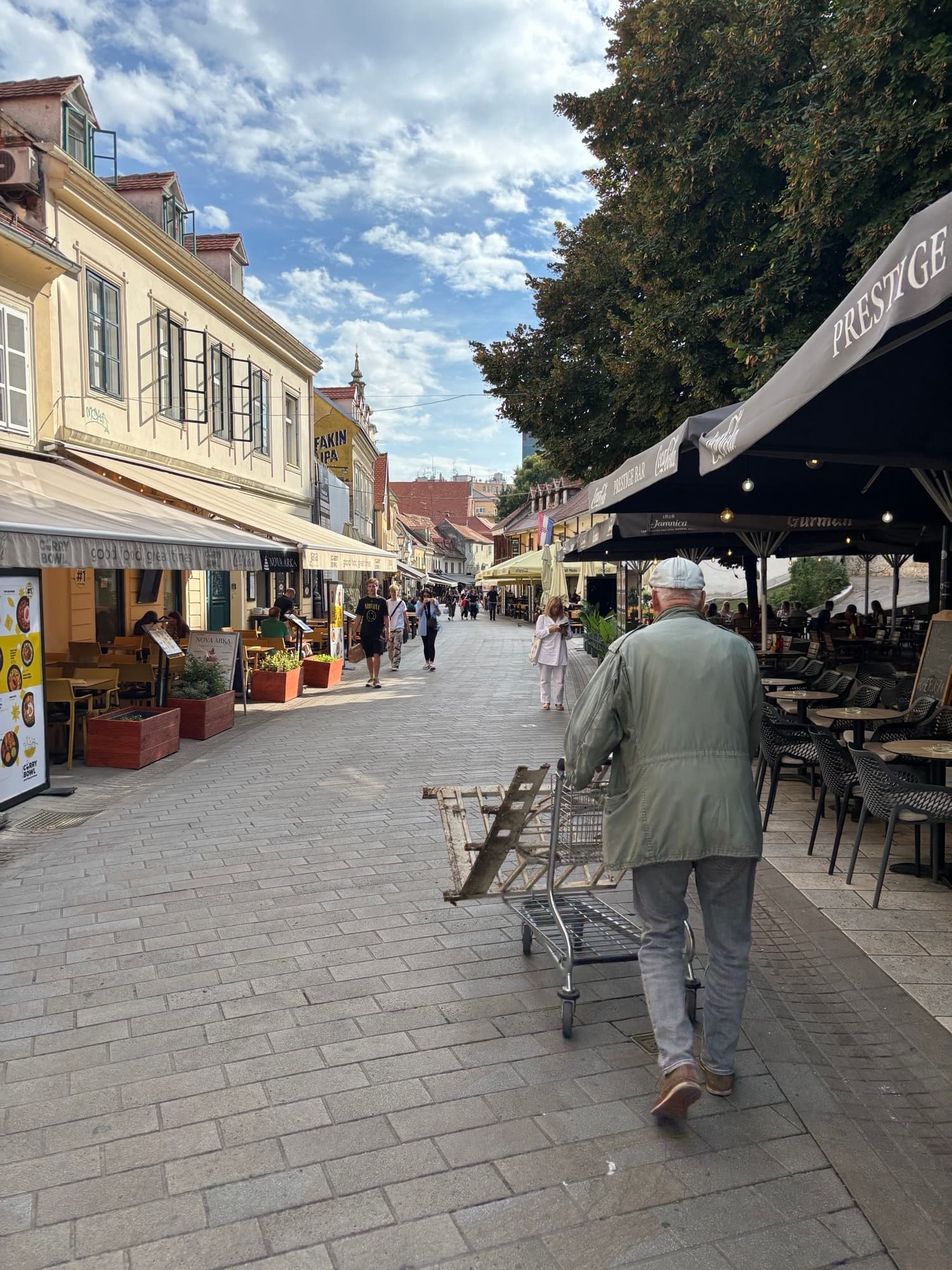
A car gives you flexibility for inland Croatia, Istria, national parks and smaller coastal towns. Add fuel, motorway tolls, parking, insurance or excess, and any car-ferry fares. The standard passenger-car toll from Zagreb to Split is €26.40 each way, so the return toll alone is more than €50 before fuel.
For 2026, the Split–Supetar ferry costs €6.50 per adult and €26.10 for a standard passenger car each way. Two adults with a car therefore pay €39.10 one way; travelling without the car costs much less.
Buses connect most popular cities, and a route built around Zagreb, Zadar, Split and Dubrovnik can work well without a car. Remote beaches, small villages, inland wineries and national parks are harder to reach by public transport.
Taxis and Uber can add up if used several times a day. Uber's Dubrovnik pricing page gives an average of about €14 for a 12-minute UberX ride, though route, demand and time change the fare. Airport transfers and evening rides can quietly add €50–100 to a trip.
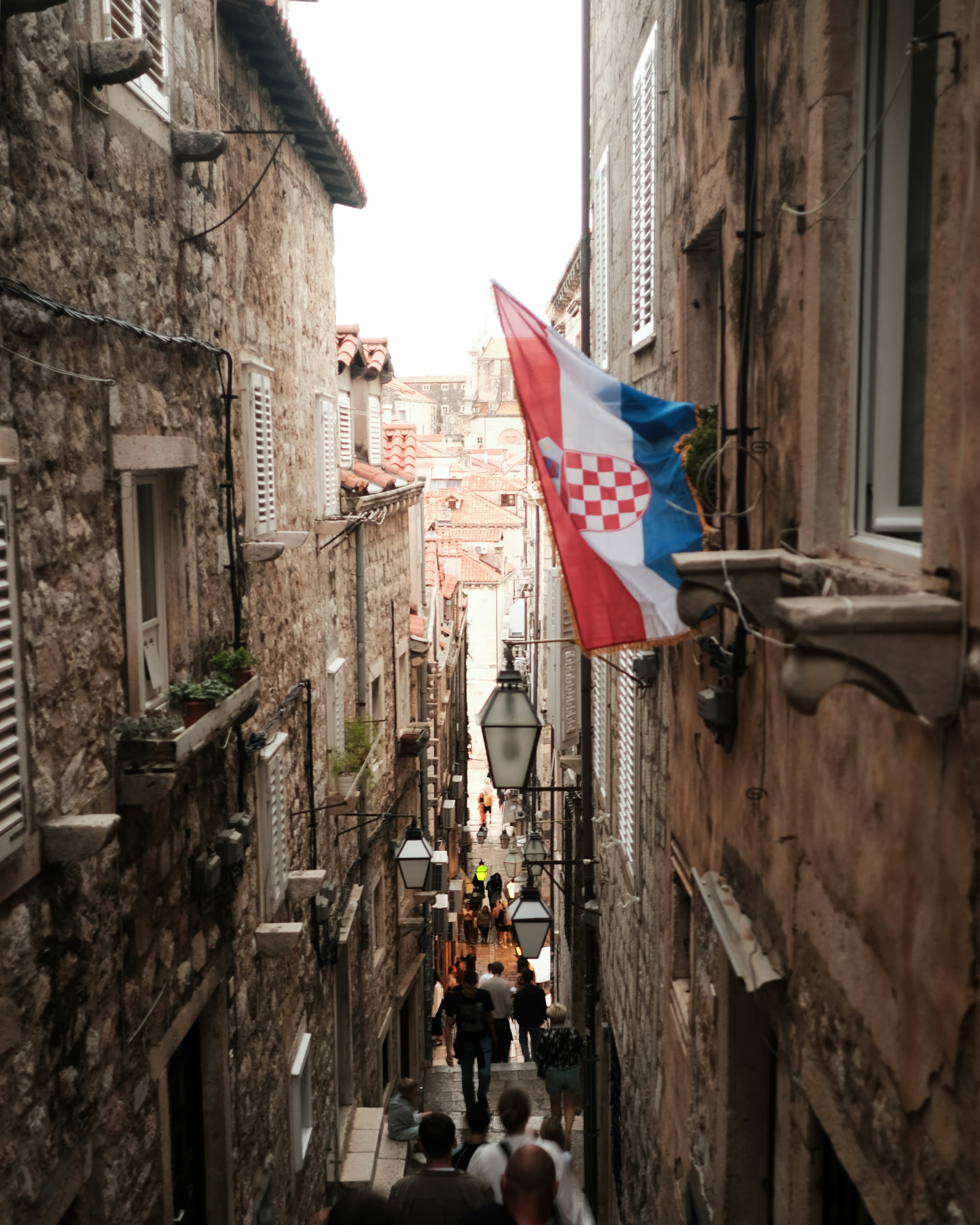
Your itinerary includes scattered inland stops, remote beaches or several national parks, and you have counted tolls, parking and ferry charges.
You are linking the larger cities by bus and want to avoid rental, fuel, tolls, parking and car-ferry charges.
Compare the passenger fare with the car fare before taking a vehicle on a ferry. A car is not always needed at your destination.
A beach day can be free, while a museum may cost a few euros and a boat excursion can be €50–100+ per person. National parks can take a significant share of a family budget.
In 2026, an adult Plitvice Lakes day ticket costs €40 from 1 June to 30 September, €23 in April, May and October, and €10 from January to March and November to December. Late-afternoon summer tickets and reduced child and student prices are also available. For a family of four, the season makes a substantial difference.
Tourist tax is charged per person per night in many places, with rates varying by destination and season; different rules apply to children. It is often included in accommodation, but check your booking. Accommodation, food and transport usually have a larger effect on the budget.
For two adults and seven nights, excluding flights, these ranges show the kind of trip each budget can support:
| Budget holiday | €1,000–1,500 |
|---|---|
| Comfortable holiday | €1,600–2,700 |
| Peak summer or popular places | €2,300–3,800+ |
| Higher-end holiday | €3,500–5,000+ |
Travel outside peak summer, stay in apartments or guesthouses, choose lower-cost areas, mix bakeries and casual meals with restaurants, use public transport and avoid expensive excursions every day.
A good standard of accommodation, regular restaurant meals, sightseeing and travel around the country without counting every euro.
July or August in Dubrovnik, Hvar, Rovinj or prime Split; a hotel, rental car, regular restaurant meals, boat trips and paid attractions.
Better hotels or luxury apartments, premium restaurants, private transfers and boat trips can push costs higher; there is no fixed ceiling.
For a family of four, two hotel rooms can become expensive in July and August. A two-bedroom apartment with a kitchen and terrace may cost less while giving everyone more space. As a planning range, allow about €180–300 a day outside peak season and €250–450+ a day in July or August for a comfortable trip, excluding flights.
The final total depends on the resort, meal choices and activities. A family that eats out three times a day in an expensive coastal destination can spend much more; apartment breakfasts and a few restaurant meals can bring the total down.
Hill towns, wineries, truffles and good food, away from the highest-priced seafront stays.
Rijeka, Crikvenica and parts of the hinterland can offer better value than the best-known Dalmatian stops.
Zagreb, Karlovac, Samobor and nearby countryside are often overlooked by international visitors.
Often among the lower-cost regions for food, accommodation and wine, with a very different feel from the Adriatic.
You can visit Dubrovnik or Split without staying in the historic centre. On Hvar Island, staying outside Hvar Town may also reduce costs.
It is easy to spend hours finding a bus ticket €5 cheaper while paying €100 more per night for a hotel. Start with the large costs, then look at the small savings.
Moving around constantly also adds transport, parking, ferry tickets, check-ins and meals on the go. Croatia rewards a slower itinerary: six destinations in seven days can cost more and leave less time to enjoy each place.
Compared with the Croatia many visitors remember from 10 or 15 years ago, yes. In August 2026, Croatian consumer prices for restaurants and accommodation services were 6.1% higher than in August 2025, and the government has spoken publicly about price competitiveness and value for money.
But “Croatia is expensive” is too simple. Dubrovnik in August, Hvar in July, Zagreb in October, an apartment in a small Dalmatian town in September, a family-run konoba inland and a free day swimming in the Adriatic all come with different price tags.
Budget for the trip you actually want: decide when you are going, where you will stay, whether you need a hotel or a car, how often you will eat out and which paid experiences matter to you. Flexible dates, a good apartment and time beyond the best-known coast can still make Croatia good value for a European holiday.
For two adults sharing accommodation and excluding flights, a budget week can be around €1,000–1,500, while a comfortable trip may be €1,600–2,700. Peak-summer stays in popular destinations can reach €2,300–3,800 or more, depending on accommodation, meals and activities.
Prices are higher than they were a decade ago, especially in popular coastal towns during July and August. Costs vary widely, and travelling in June or September, comparing apartments with hotels and limiting car use can bring the total down.
Often, but it depends on the destination, dates, quality and availability. Apartments are a major part of Croatian accommodation, and a kitchen can also reduce meal costs; compare total prices and features rather than assuming one type is always cheaper.
April, May and October can bring lower accommodation prices, though weather and opening hours matter more. June and September are popular shoulder-season choices for combining useful beach weather with better value than peak summer.
Yes, if you build your itinerary around major cities such as Zagreb, Zadar, Split and Dubrovnik, which are linked by buses. A car is more useful for remote beaches, small villages, inland wineries and some national parks.
As a broad 2026 planning range, a comfortable family holiday may cost about €180–300 per day outside peak season or €250–450+ in July and August, excluding flights. Accommodation choice and restaurant frequency make a large difference.
Discover more stories, hidden gems, and travel inspiration to help you plan your perfect Croatian adventure.