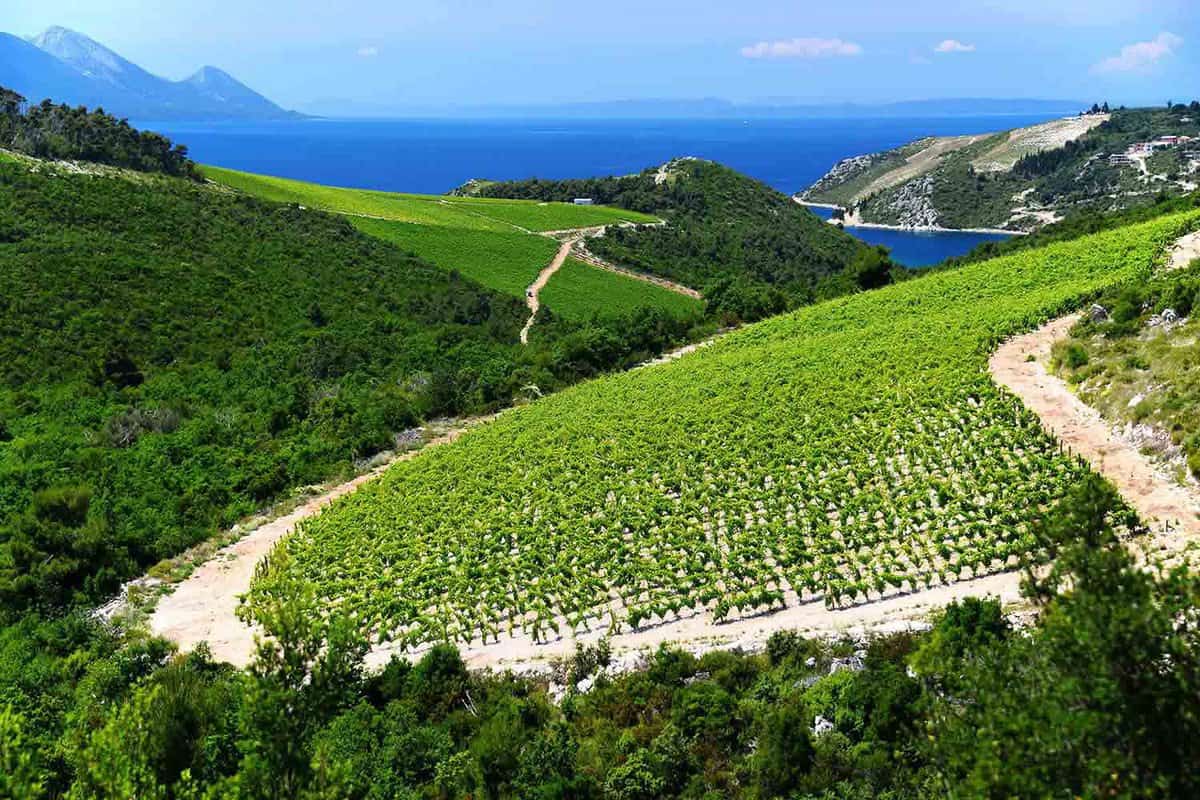
Dalmatia Wine Region
Ancient vineyards, heroic viticulture, and Croatia's most powerful wines
Croatia's Ancient Wine Heartland
Dalmatia is Croatia's most historically significant and internationally recognised wine region, stretching along the Adriatic coast from Split to the southernmost islands. Viticulture here dates back more than 2,400 years, introduced by ancient Greek settlers, and the region is the spiritual home of Plavac Mali — Croatia's most important red grape.
What makes Dalmatian wine extraordinary is the growing conditions. Vineyards cling to limestone slopes at dramatic angles of 30–45 degrees, directly overlooking the Adriatic. This is heroic viticulture in its strictest sense: every task is done by hand, machinery cannot reach the vines, and the result is wines of concentration, structure and serious ageing potential.
The region splits into two subregions: Central Dalmatia — built around Split, Kaštela, Brač and inland Hvar — and Southern Dalmatia, dominated by the Pelješac Peninsula and the islands beyond, including Korčula. Together they trace the arc of Croatian winemaking from rustic island tradition to refined, world-class expressions.
Heroic Viticulture
Many Dalmatian vineyards are formally classified as heroic, meaning they cannot be mechanised. Vines struggle in rocky limestone with minimal rainfall, producing small grapes with thick skins — the raw material behind great Plavac Mali.
Central Dalmatia Wine Region
Split, Kaštela, Brač and inland Hvar — the historical heart of Plavac Mali
Geography & Terroir
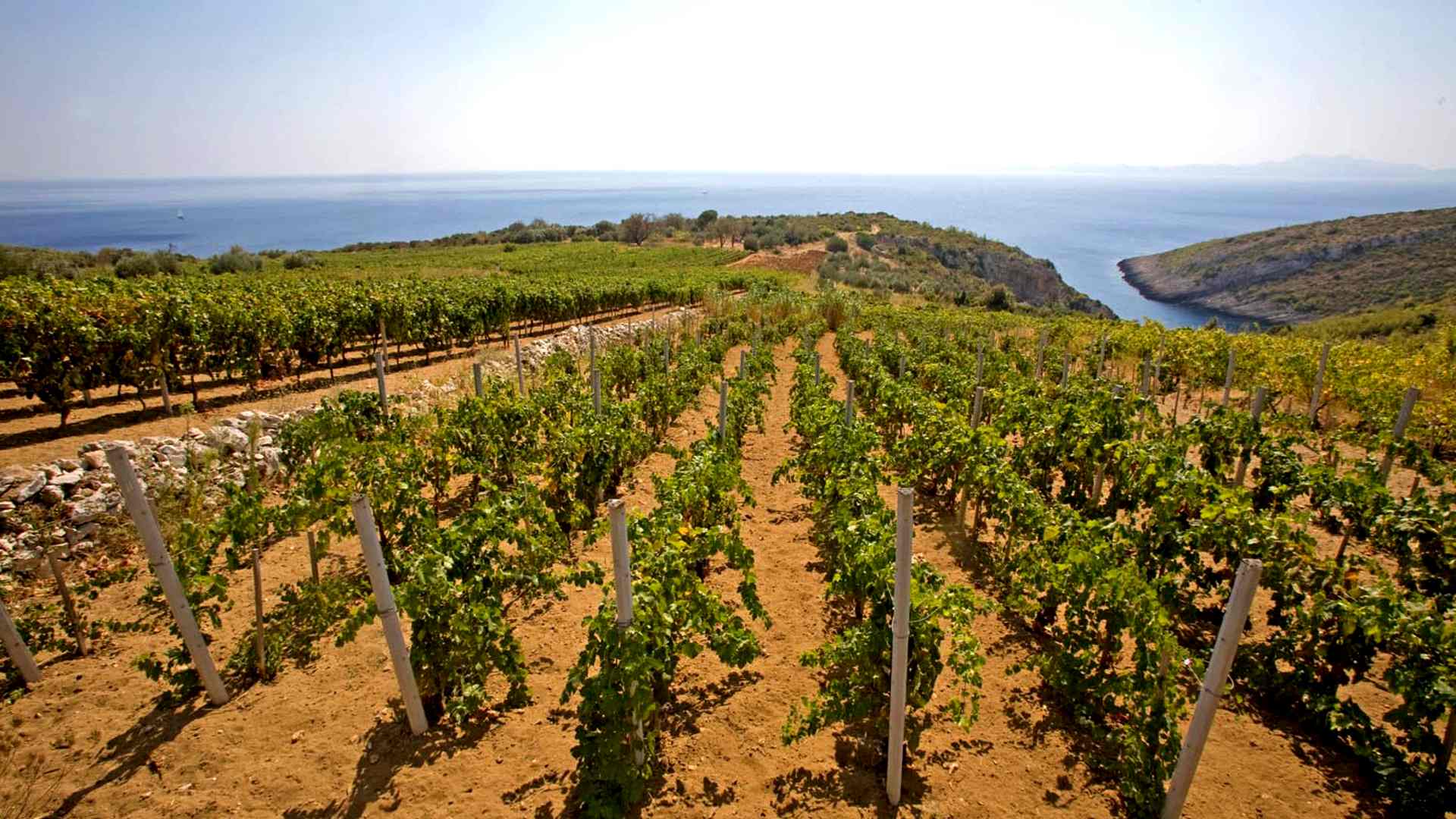
Central Dalmatia is shaped by coastal and island vineyards, often planted on slopes directly above the sea. The terroir is defined by limestone and karst soils with very low fertility, steep terraces that can only be worked by hand, intense sun on southern and south-western aspects, and a strong maritime influence from the Adriatic.
Climate
The region has a hot Mediterranean climate, among the warmest in Croatia, with long, dry summers, very high sunshine hours and limited rainfall during the growing season. Cooling sea breezes at night help preserve balance and acidity in the wines.
The Plavac Mali Story
Plavac Mali is the undisputed king of Central Dalmatia. This indigenous Croatian grape is a genetic descendant of Crljenak Kaštelanski (genetically identical to Zinfandel) and Dobričić. With thick skins, high sugar accumulation and firm tannins, Plavac Mali thrives in harsh, sun-exposed conditions.
The result is full-bodied wines with high alcohol (often 14–15% and above), dark fruit flavours of black cherry, fig and prune, aromatics of Mediterranean herbs and dried fruit, and a tannic structure that rewards ageing.
Kaštela
Located between Split and Trogir, Kaštela is the birthplace of Crljenak Kaštelanski. Vineyards here are flatter and slightly cooler, producing more restrained styles compared with island Plavac.
Brač (inland)
Inland Brač vineyards sit at higher elevation, producing structured but fresher Plavac Mali and increasingly Pošip and international whites.
Hvar (inland)
Hvar is best known for its southern slopes, but its inland areas contribute more balanced expressions with slightly lower alcohol.
Key Producers
Southern Dalmatia Wine Region
Pelješac, Korčula and the southern islands — Croatia's most intense reds
Extreme Viticulture
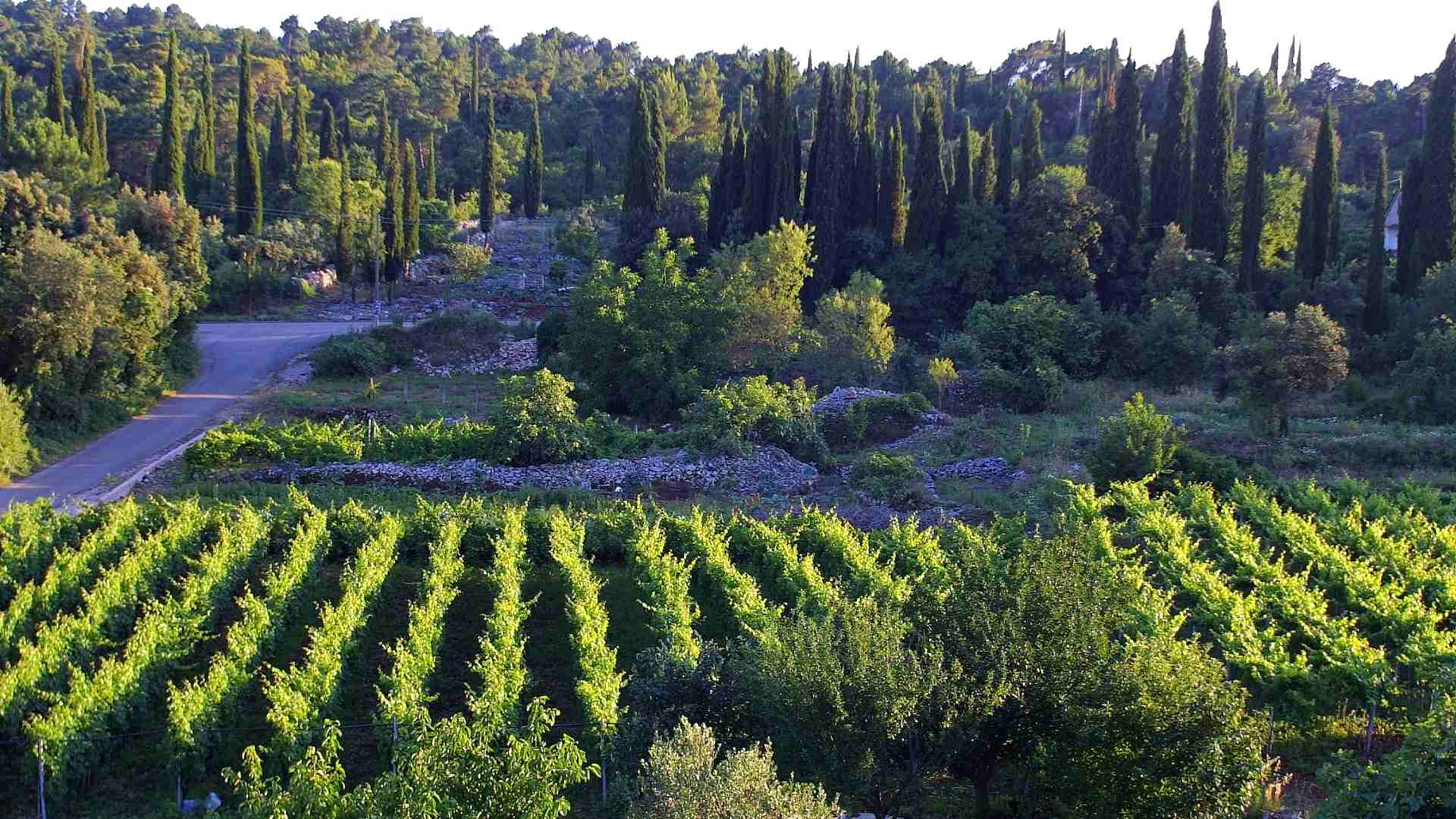
Southern Dalmatia is Croatia's most intense and prestigious red-wine zone. The region is dominated by coastal peninsulas and islands, with vineyards planted on extremely steep slopes (often 30–45°) directly above the sea. Limestone karst soils, some of the highest sun exposure in Europe and the unique double-sun effect from sunlight reflecting off the Adriatic combine to create some of the most extreme vineyard conditions anywhere.
The Climate Advantage
Southern Dalmatia has a hot Mediterranean climate, more extreme than Central Dalmatia. Very long, dry summers with minimal rainfall are tempered by cooling night breezes from the sea. Harvest often falls later than in Central Dalmatia despite higher temperatures, thanks to slow phenolic ripening on old vines.
Flagship Appellations
The Pelješac Peninsula is Croatia's most famous red-wine peninsula and home to two legendary appellations that produce the country's most age-worthy wines.
Dingač
Croatia's first protected wine appellation (established 1961), Dingač is the pinnacle of Croatian red wine. South-facing slopes up to 45 degrees, old vines (often 50–100 years) and extremely low yields produce monumental wines with high alcohol (often 15–16%), dense tannins, dark fruit and decades of ageing potential.
Postup
Slightly less extreme than Dingač but still powerful, Postup offers more balanced structure with greater finesse and drinkability, while keeping the intensity that defines Pelješac wines. These are wines that bridge power and elegance.
Korčula Island — White Wine Excellence
Korčula is the white-wine counterbalance to Pelješac. It is the birthplace of Pošip and home to the rare Grk grape, grown in sandy vineyards around Lumbarda. Korčula whites are among the most refined and structured in Croatia, with growing international recognition for their saline mineral notes and food-pairing range.
Top Producers
Pelješac & Dingač
- •Matuško — Benchmark Dingač producer
- •Grgić Vina — Historic Pelješac estate
- •Kiridžija — Traditional methods
- •Saints Hills — Modern approach
Korčula
- •Krajančić — Leading Pošip producer
- •Nerica — Rare Grk specialist
- •Zure — Island terroir focus
Planning Your Wine Journey
When to visit and what to expect in Dalmatia's wine regions
Late Spring
May – June
The best balance of weather and access. Vines are flowering, and conditions are ideal for touring vineyards without the full summer heat.
Summer
July – August
Harvest preparation season with dramatic vineyard scenery, but very hot. Plan early-morning or late-afternoon visits.
Early Autumn
September – October
Harvest itself — the most authentic time to visit. You can see picking and the start of winemaking. Most cellars expect appointments.
Off-Season
November – April
Quieter cellar visits and more time with the winemaker. New-vintage tastings begin in spring.
What to Expect
- ✓Small-scale production: Most Dalmatian wineries are family-owned, with limited production.
- ✓Appointments recommended: Many producers operate by appointment only, especially during harvest.
- ✓Dramatic settings: Plan for steep vineyard walks with stunning coastal views.
- ✓Local cuisine pairing: Wine tastings often include traditional Dalmatian food.
Tasting Tips
- •Book in advance: Contact wineries 1–2 weeks ahead, especially in high season.
- •Arrange transport: Wine tours often involve winding coastal roads — hire a driver.
- •Try older vintages: Plavac Mali ages beautifully — ask for library wines when available.
- •Explore whites too: Do not miss Pošip and Grk from Korčula.
- •Bring cash: Smaller producers may not accept cards.
Why Dalmatia Matters
Dalmatia is not just a wine region — it is a living testament to the relationship between people, land and tradition. For more than two millennia, winemakers have worked these steep, unforgiving slopes by hand, generation after generation, producing wines that could not exist anywhere else.
This is heroic viticulture at its most dramatic: vines clinging to 45-degree limestone cliffs, grapes ripening under the double reflection of the Adriatic sun, ancient terraces built stone by stone. The result is Plavac Mali and Pošip wines of exceptional power, structure and unmistakable character.
To understand Croatian wine — and to taste something truly unique on the global wine map — you have to spend time in Dalmatia. From the historic vineyards of Kaštela to the legendary slopes of Dingač and the white-wine craft of Korčula, this region is the pinnacle of Croatian winemaking.
Explore More of Croatia
Discover more stories, hidden gems, and travel inspiration to help you plan your perfect Croatian adventure.