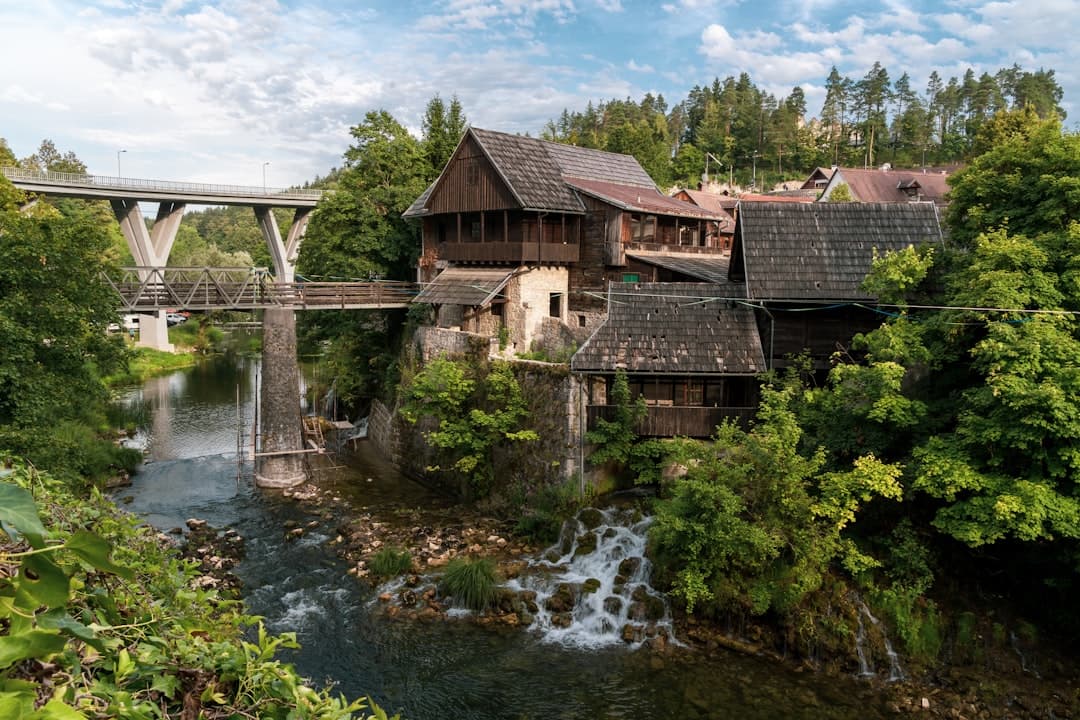
Wooden mill houses perched above the Slunjčica river in Rastoke, with the stone bridge of Slunj rising in the background.
Back to Get Inspired
NatureKordun

Rastoke Watermill Village: A Practical Guide to Slunj's River Hamlet

A 17th-century milling hamlet built directly onto travertine waterfalls, half an hour from Plitvice and easy to combine with the drive south.

Kordun, Croatia

What Rastoke Actually Is

Rastoke is a small milling settlement built where the Slunjčica river drops over a travertine ledge into the wider Korana. The same geology that produced Plitvice — mineral-rich water depositing tufa as it falls — is at work here, on a much tighter scale. Houses sit on top of the cascades, with channels and sluices running underneath them, because that is how the mills were powered for three hundred years.

The first written reference to a fortified Slunj with a bridge and a mill comes from the Carniolan polymath Johann Weikhard von Valvasor in 1689. The watermills, which ground grain and ran textile fulling stocks, made Slunj an economic centre for Kordun until electric milling and waves of post-war emigration ended that role. The village was designated a national cultural monument in 1969, which is why so much of the original building stock is intact.

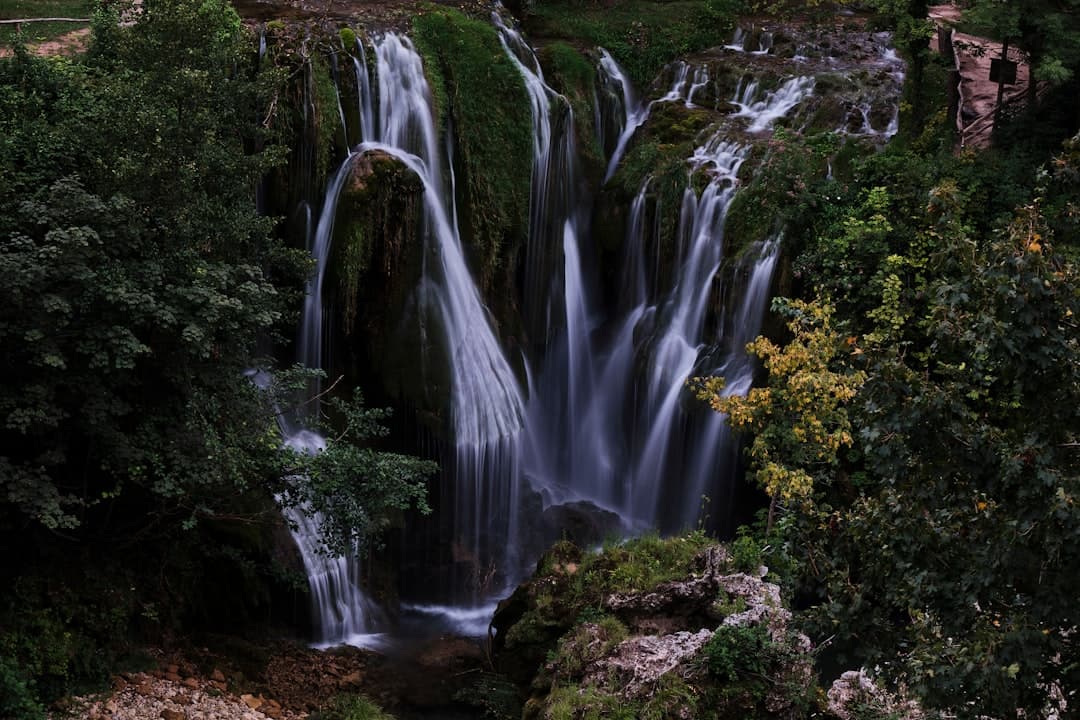
The headline waterfalls are Buk (the largest, at the meeting of the two rivers), Hrvoje, and Vilina kosa — "fairy's hair," which describes the shape of the curtain accurately enough. The whole protected area is compact: you can see most of it from a single bend in the river.

Quick Facts

Where

Slunj, in the Kordun region of central Croatia, at the confluence of the Slunjčica and Korana rivers.

Distance from Plitvice

About 30 km north — roughly 30 minutes by car.

Distance from Zagreb

About 130 km south — roughly 1 hour 45 minutes by bus.

Entry

The village is free to walk through; the Vodene Tajne canyon loop costs €5 per adult, card only.

Time needed

45–90 minutes for the paid loop, two to three hours with a meal.

Status

Protected cultural monument since 1969; 23 waterfalls in the lower section, falling 10–20 metres into the Korana.
Visiting

How to Visit, Honestly

The village itself is open and free. The walk along the upper street, past the old houses and over a couple of wooden bridges, costs nothing and gives you a perfectly good first look. The €5 ticket buys you the Vodene Tajne ("Water Secrets") loop, which crosses a newer footbridge and descends along the Korana canyon close to the bases of the falls. Tickets are sold at on-site kiosks by card only — there is no cash payment — or in advance through the tourist board's web shop, which is the same price either way.

Allow 45 to 75 minutes for the loop at a normal pace. Add another hour if you stop at the Jareb mill, one of the few in Rastoke still running. The Jareb family open it for visitors and sell bread baked on site, which is a more useful souvenir than the magnets on offer along the path.

Avoid the middle of the day in July and August. The site is small, and a single tour bus from Zagreb fills the upper path quickly. Early morning, late afternoon, or the shoulder months — May, June, September, October — work better. Rastoke is open year-round; in winter the mills and ticketed loop run on shorter hours, but the falls run harder and the village photographs well under low light.

Long-exposure photograph of Buk waterfall in Rastoke — the largest cascade where the Slunjčica meets the Korana.
Itinerary

How to Combine It With a Bigger Trip

Rastoke is on the main D1 road between Zagreb and Plitvice. If you are driving south to the lakes, you do not need to plan around it — you pass through Slunj either way, and signed parking sits a few minutes' walk from the falls. Two hours is enough to stop, see the canyon loop, eat lunch, and continue.

Without a car, the same logic holds on the bus. Slunj sits on the Zagreb–Plitvice line, with multiple daily services from Zagreb's main bus station; the journey takes about 1 hour 45 minutes. The bus stops in Slunj, roughly a five-minute downhill walk from Rastoke, and you can pick up a later bus to Plitvice or back to Zagreb the same day. Check return times before you walk down — frequencies thin out outside summer and on Sundays.

Rastoke does not warrant a dedicated trip from the coast or from Istria. It works as a stop, not a destination. If you already have a Zagreb–Plitvice day in your itinerary, it is a clear addition; if not, building one around Rastoke alone is overkill.

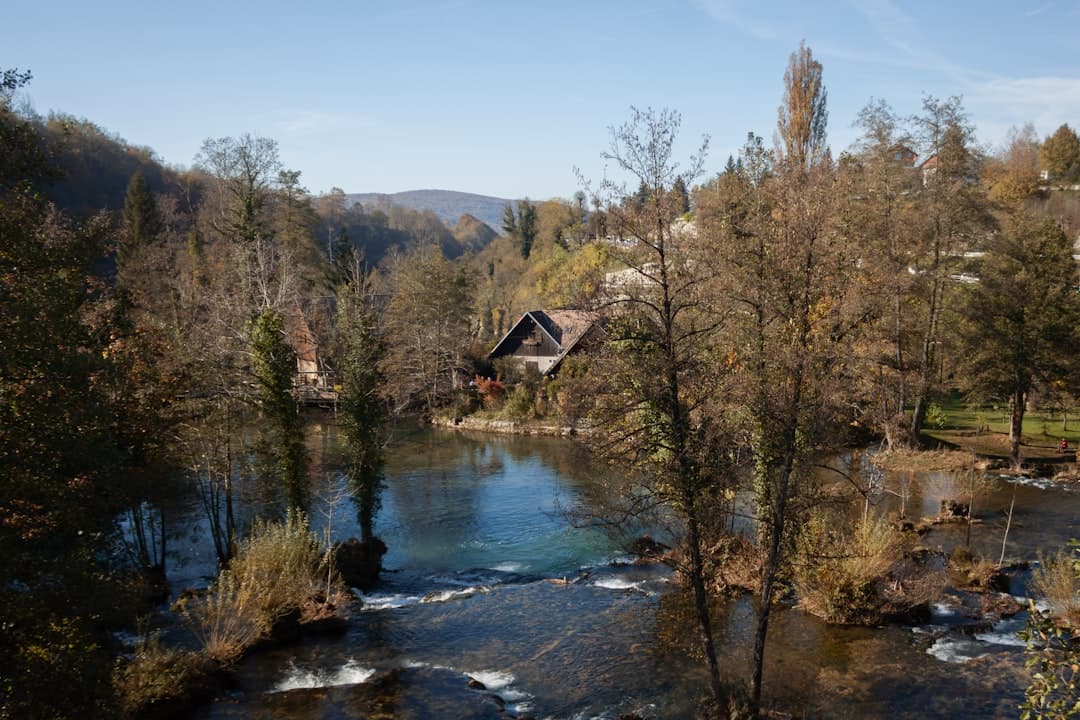
Late-winter view of the Korana river curving past bare trees and a single mill house, illustrating the Zagreb–Plitvice approach to Slunj.
Eating & Sleeping

Where to Eat and Sleep

Many of the old mill houses have been converted into guesthouses and small restaurants, which is the village's main concession to tourism. The river trout is local and the obvious order — both the Korana and the Slunjčica are cold, clean rivers and the fish is farmed in pools you can see from the path. Slow-roasted lamb and the under-the-bell peka dishes you find across inland Croatia also appear on most menus.

Staying a night is a real option if you want Rastoke at dawn before the day-trippers arrive, or if you want a Plitvice early start without sleeping in the park's car-park hotels. A handful of family-run rooms sit directly above the falls. The trade-off is the sound of the water, which is constant and louder than you might expect; some people find this restful and others do not.

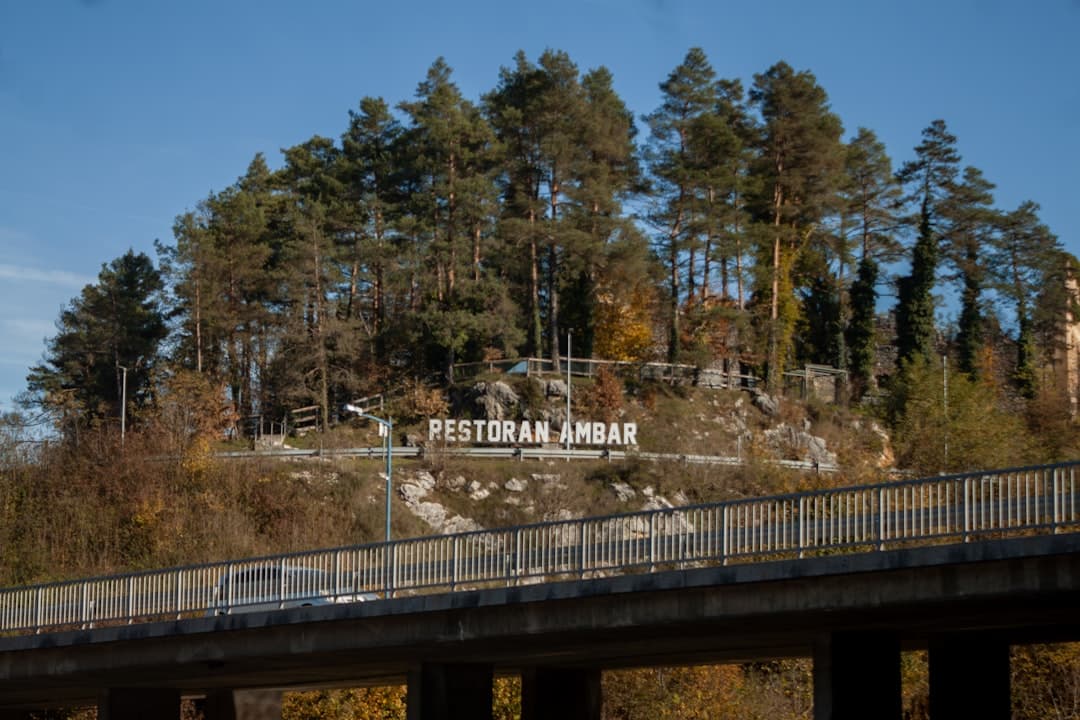
The approach bridge into Rastoke from the main D1 road, with the village name marked on the wooded ledge above.
FAQ

Frequently Asked Questions

If you are driving the Zagreb–Plitvice route, yes — you pass directly through Slunj and the stop costs you a couple of hours. As a standalone trip from the coast, no. It is a small site that rewards a short, focused visit rather than a long journey.

You can see much of Rastoke and several of the falls from the free upper paths and bridges. The €5 Vodene Tajne loop, which crosses to the canyon side of the Korana and brings you close to the cascades, is the only ticketed walk and is worth the fee if you are already there.

Swimming in the protected pools directly under the falls is not permitted. Further downstream on the Korana, outside the protected zone, locals do swim in summer; ask at your guesthouse or the tourist office for the current rules and a sensible access point.

The same travertine geology produces both, but Rastoke is a single working village built on top of the falls — a few hectares, not a national park. Plitvice is the larger, busier, more photographed site; Rastoke is more intimate and gives you a sense of how people actually lived with this water. They complement each other; they do not substitute.

Yes, with caveats. The village is open year-round, the falls run strongly in winter, and there are very few visitors. The wooden walkways can be slippery, some of the smaller mills and museums close or shorten hours, and bus frequencies are reduced. Dress for cold spray and bring grippy shoes.

Plan on two to three hours including a meal. Doing the free upper walk and the paid canyon loop takes around 90 minutes; you only need longer if you want to eat or visit the Jareb working mill in detail.

Explore More of Croatia

Discover more stories, hidden gems, and travel inspiration to help you plan your perfect Croatian adventure.