Rastoke
Tufa waterfalls, old mill houses, and one of the most unusual river villages in Croatia — the essential stop between Zagreb and Plitvice
About Rastoke
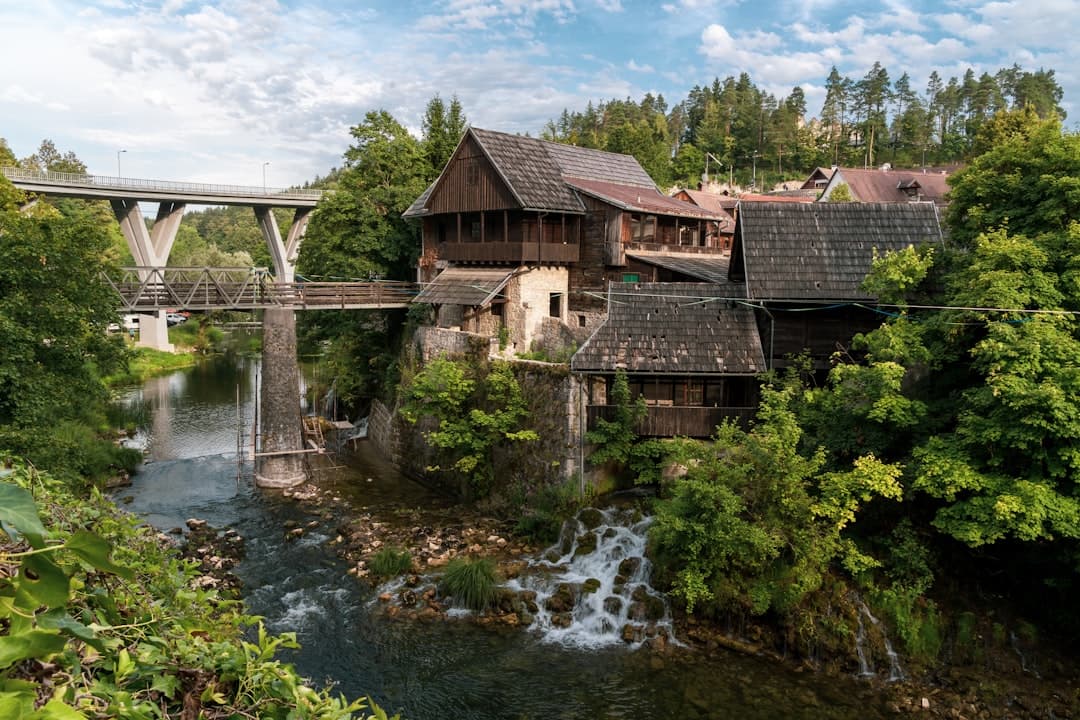
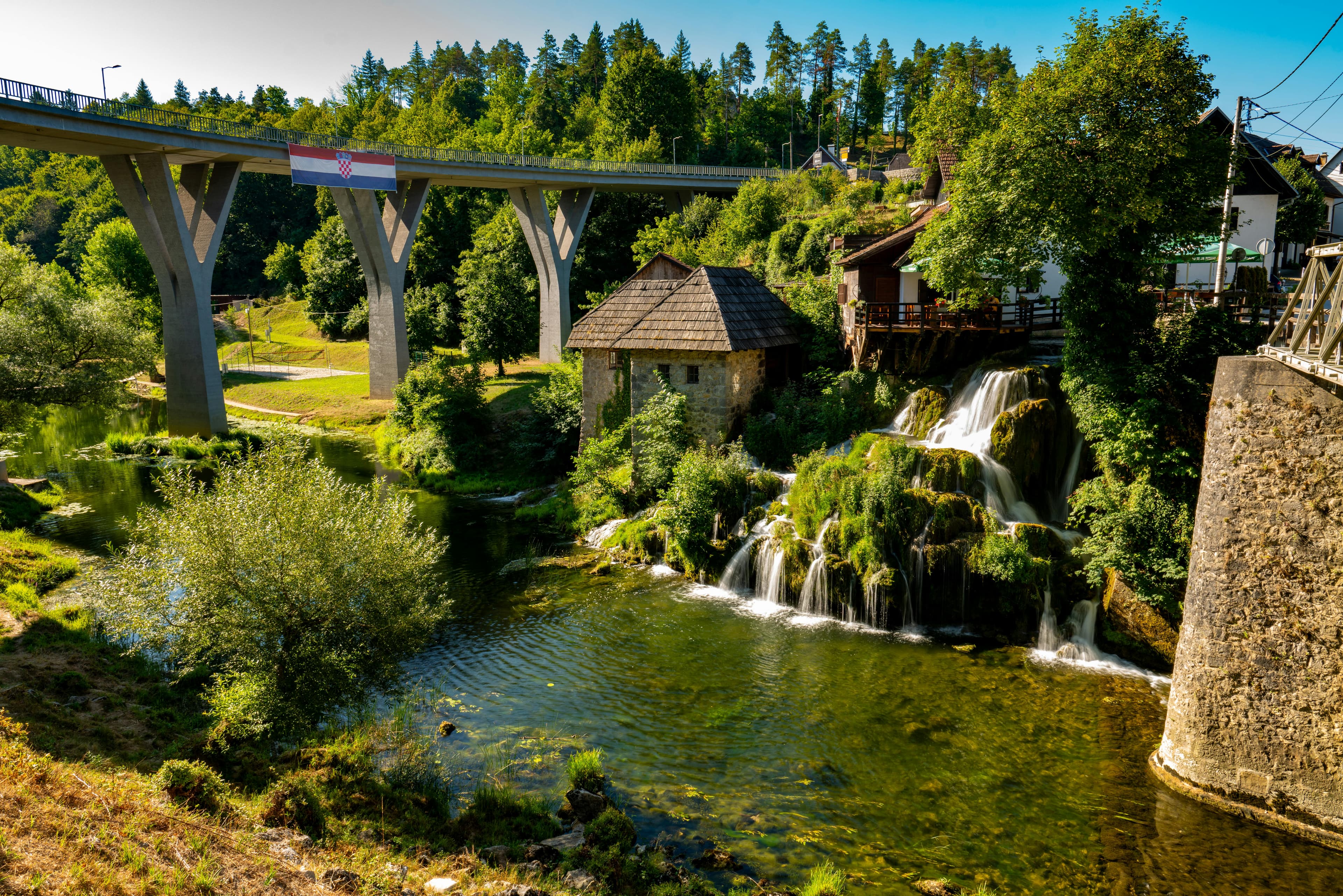
Rastoke sits at the confluence of the Slunjčica and Korana rivers, technically attached to the town of Slunj in Karlovac County, about 85 kilometres south of Zagreb. The Slunjčica drops here through a dramatic series of tufa, or travertine, cascades — falling between, under, and around old wooden mill houses that have stood along the banks for several centuries. It looks extraordinary, and it is. The waterfalls are not a constructed attraction; they are what happened when people built their lives alongside this particular stretch of river.
Most visitors come as a half-day stop on the route between Zagreb and Plitvice Lakes. The A1 motorway passes close to Slunj, making Rastoke one of the most accessible natural sites in inland Croatia. It takes about an hour and a half to drive from Zagreb, and around 40 minutes to continue south to Plitvice from here. For most people visiting Plitvice, Rastoke makes a logical morning stop: spend an hour or two, eat at one of the riverside konobe, then continue south.
The site is compact — you can walk the full circuit in about an hour, including the pathways that go behind and underneath some of the waterfalls. There is a small visitor centre, a handful of restaurants and guesthouses built into or beside the old mills, and a marked walking route along the river. The scale is human. Rastoke never feels overwhelmed by its own popularity, even in summer, because the site is open-air and people spread out naturally along the water.
What to See & Do
The Waterfalls and Mill Houses
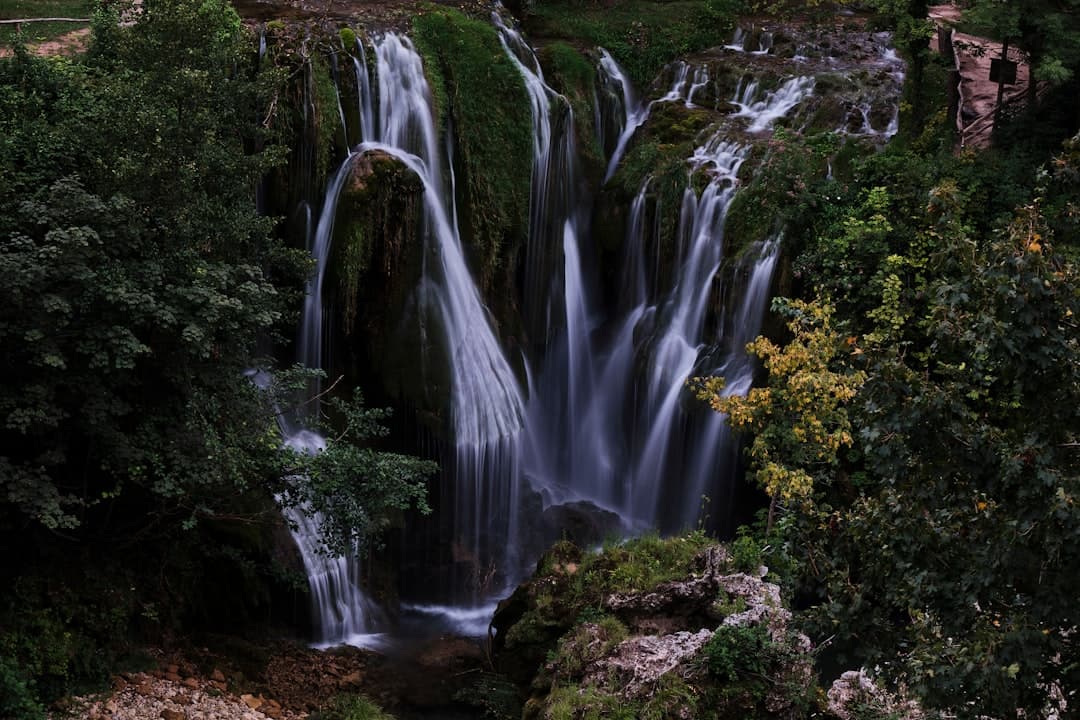
The core of Rastoke is a network of raised wooden walkways and natural paths along the Slunjčica as it cascades downward. Several of the traditional wooden mills, known locally as mlinice, are still standing, and some have been converted into guesthouses and restaurants. The waterfalls vary in height — some are gentle cascades, others drop several metres directly beside the buildings. Walking behind the main falls is the highlight for most visitors.
Slunj Old Town
The old quarter of Slunj sits on a rocky promontory directly above Rastoke, with views down over the confluence of the two rivers. It is small — a church, a few streets, a fortress remnant — but worth a short walk if you have the time. The view from above back down to Rastoke is excellent.
Korana River Canyon and Swimming
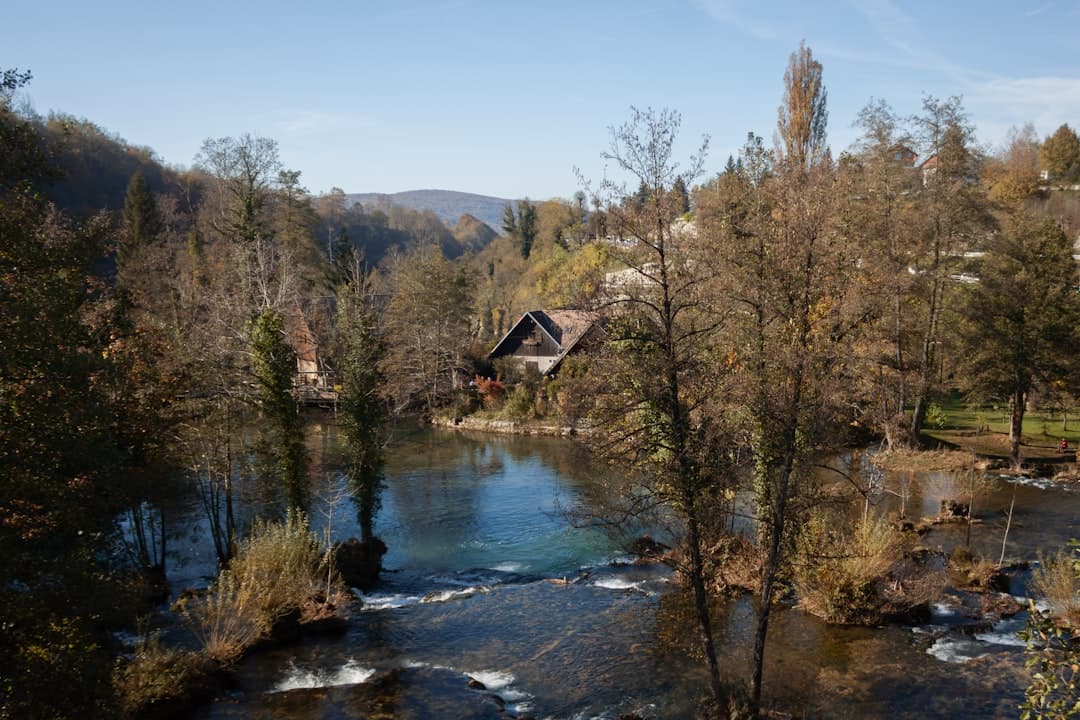
Below Rastoke, the Korana cuts a dramatic canyon through the karst terrain. In summer, the river is used for swimming and kayaking. The combination of clear turquoise water and limestone canyon walls is typical of this part of Croatia, but the Korana here is particularly good. Several operators offer kayak and canoe trips along the river.
Mrežnica and Karlovac Connection
If you are building a longer central Croatia itinerary, the Mrežnica river — known for swimming holes, watermills, and tufa falls — flows into the Korana near Karlovac. Combining Rastoke, a stretch of the Mrežnica, and Karlovac makes a solid inland day-trip route from Zagreb.
Food & Drink
The restaurants in Rastoke are built directly into or beside the old mills, and most have terrace seating over the river. Food is traditional Croatian inland cooking: lamb and veal under the peka, freshwater fish from the Korana and Mrežnica, local cheeses, and good simple house wine. The setting elevates a straightforward meal considerably.
There are a handful of options — this is not a restaurant town, so do not arrive expecting variety. Come for the atmosphere rather than a specific cuisine. Reservations in summer are worth making.
Why Visit Rastoke?
A genuinely unusual landscape
Croatia has waterfalls in many places, but few where the water runs directly through a working village of this age. The combination of tufa formations, wooden mills, and river paths is specific to Rastoke.
The perfect pairing for Plitvice
Plitvice is rightly famous, but a full day there is intense. Rastoke makes a natural first stop — it adjusts your eyes to the karst landscape, takes the edge off the drive, and works as a different kind of experience to what Plitvice offers.
Short but not slight
An hour to ninety minutes is enough to see Rastoke properly. It does not overstay its welcome, and it does not disappoint when approached at the right scale. It is a stop that earns its place in a trip rather than padding one.
Key Highlights
- Tufa waterfall system running through and past centuries-old wooden mill houses
- Walkway routes behind the main cascades
- Clear swimming and kayaking on the Korana river below
- Riverside restaurants in converted mill buildings
- Slunj old town viewpoint above the confluence
- 85km from Zagreb, 40km from Plitvice Lakes National Park
How to Get There
By car, Rastoke is straightforward from Zagreb via the A1 toward Karlovac/Slunj, then local roads into Slunj. Parking is available in Slunj and around Rastoke, but spaces closest to the waterfalls can fill quickly in summer. By bus, use intercity services that stop in Slunj, then walk 10–15 minutes to Rastoke. A car remains the better option if you are combining Rastoke with Plitvice.
Parking in Rastoke and Slunj is organised in paid zones. Zone 1, closest to Rastoke, is currently €2 per hour. Zones 2 and 3 are cheaper at €0.40 per hour. Parking is charged daily in Zones 1 and 3 from 8:00 to 18:00, and Monday to Saturday in Zone 2 from 8:00 to 18:00. In summer, arrive early rather than circling the narrow streets around Rastoke.
When to Visit
Spring, especially April and May, brings strong waterfalls due to snowmelt and rainfall. Summer is popular but manageable because the site is open-air, and Korana swimming is at its best. Autumn is often the best overall season, with fewer visitors and good colour along the river. Winter can be beautiful when frost and ice form around the waterfalls, but some facilities may reduce hours or close.
Frequently Asked Questions about Rastoke
One to two hours is enough for most visitors. That covers the main waterfall circuit, the mill houses, a look down to the Korana, and time for a drink or meal. If you combine it with Slunj old town above, add another 30 minutes.
Part of the Rastoke promenade is free to walk year-round. The paid circular section, including the Vodene tajne route, currently costs €5. Tickets can be bought online or at ticket kiosks on site; kiosk payments are by card only. Private estates and individual mills may have separate entry rules.
Yes. There are guesthouses and apartments inside or directly beside the mill complex. Staying overnight gives you the site in the evening and early morning — a different experience to the daytime crowds. Numbers are limited; book ahead in summer.
Yes, but the routing logic makes more sense as part of a Plitvice trip. If you are driving the A1 toward the Dalmatian coast or Karlovac, Rastoke is worth the short detour regardless. It is not a destination that justifies a special trip from Zagreb and back — but as a stop in a broader route, it earns its place.