Krapina
Home to one of the world's most significant Neanderthal fossil sites — and a science museum that is among the best in Croatia
About Krapina
Krapina is a small town in Krapina-Zagorje County, about 60 kilometres north of Zagreb in the hilly landscape of the Zagorje region. It has a pleasant pedestrian centre and a local market, but the main reason to come is specific: the Krapina Neanderthal Site, where the largest collection of Neanderthal remains in the world was discovered in 1899 by the Croatian paleontologist Dragutin Gorjanović-Kramberger. Over 800 bone fragments representing dozens of individuals were found at Hušnjakovo Hill, making this one of the most significant paleoanthropological finds of the 20th century.
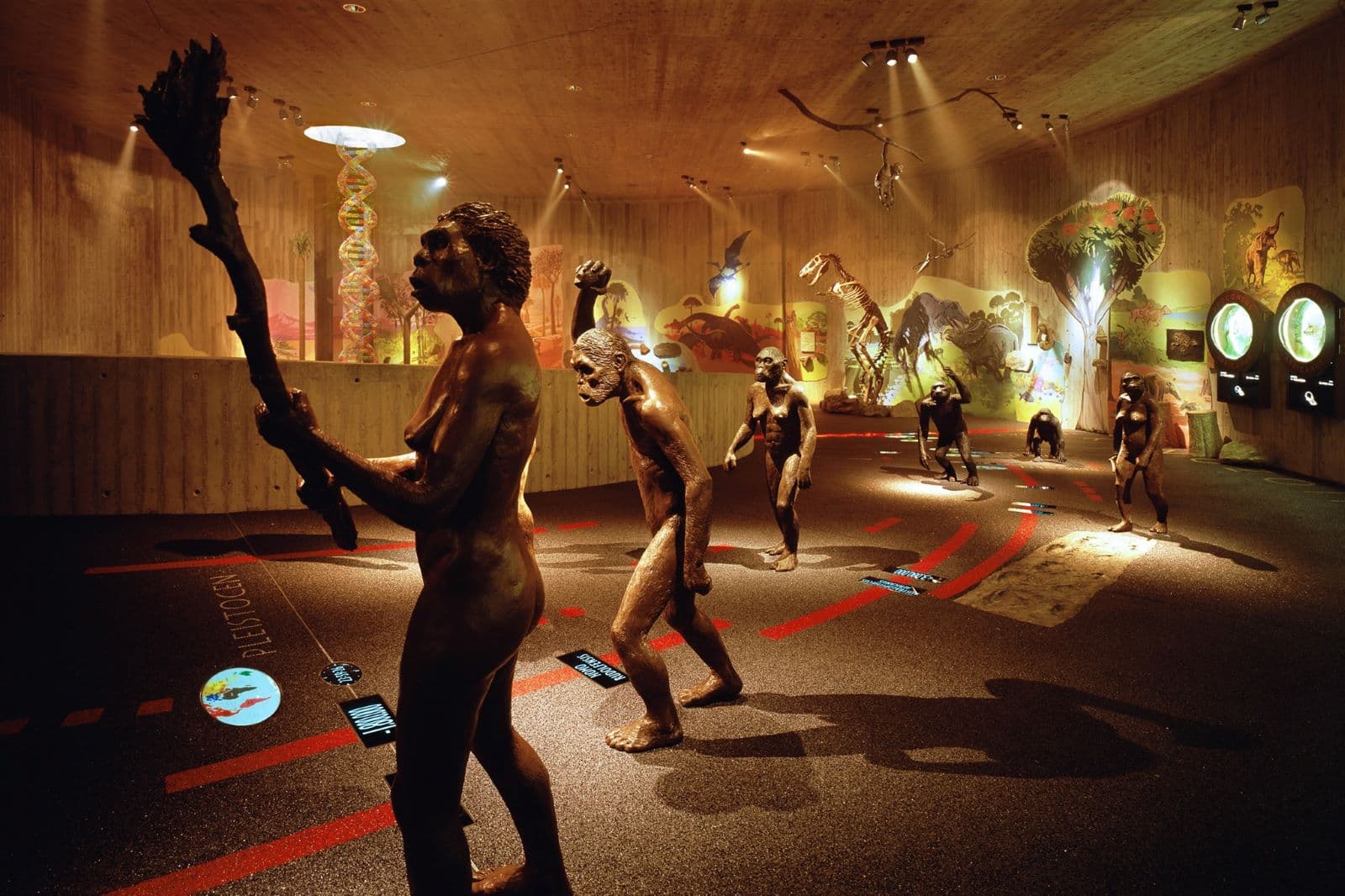
The Krapina Neanderthal Museum opened in 2010 and is a genuinely excellent museum — modern in design, intelligent in presentation, and informative beyond a specialist audience. It uses full-scale reconstructions, interactive exhibits, and fossil casts to put the Hušnjakovo find in broader context. The museum is built into the hillside beside the original excavation site, which can be viewed as part of the visit. Krapina is a half-day from Zagreb or fits naturally into a Zagorje route combining Kumrovec, Trakošćan, and Varaždin.
What to See & Do
Krapina Neanderthal Museum
The museum is the main reason to visit Krapina, and it lives up to the expectation. The permanent exhibition covers the Hušnjakovo excavation, the fossils found there, Neanderthal life and society, and the broader story of human evolution. The reconstruction of Neanderthal figures is remarkably humanising. The building is well-designed — integrated into the hillside with outdoor pathways connecting to the fossil site above. Allow 1.5 to 2 hours. Closed Mondays. April–October: Tue–Fri 9:00–17:00, Sat–Sun 10:00–18:00; November–March: Tue–Sun 9:00–17:00; last entry 30 minutes before closing. Adults €13, children/students/pensioners €7, family ticket €25. Note that the path to the outdoor Hušnjakovo site is steep and not suitable for wheelchair users; the museum building itself is accessible with assistance.
Krapina Old Town
The pedestrian centre of Krapina has a market square, the Church of St Catherine, and a few good local restaurants and cafés. It is modest but pleasant, and worth a short walk before or after the museum. The covered market in town is a good place to find local Zagorje products — honey, spirits, and preserved foods.
Nearby pilgrimage town
Marija Bistrica
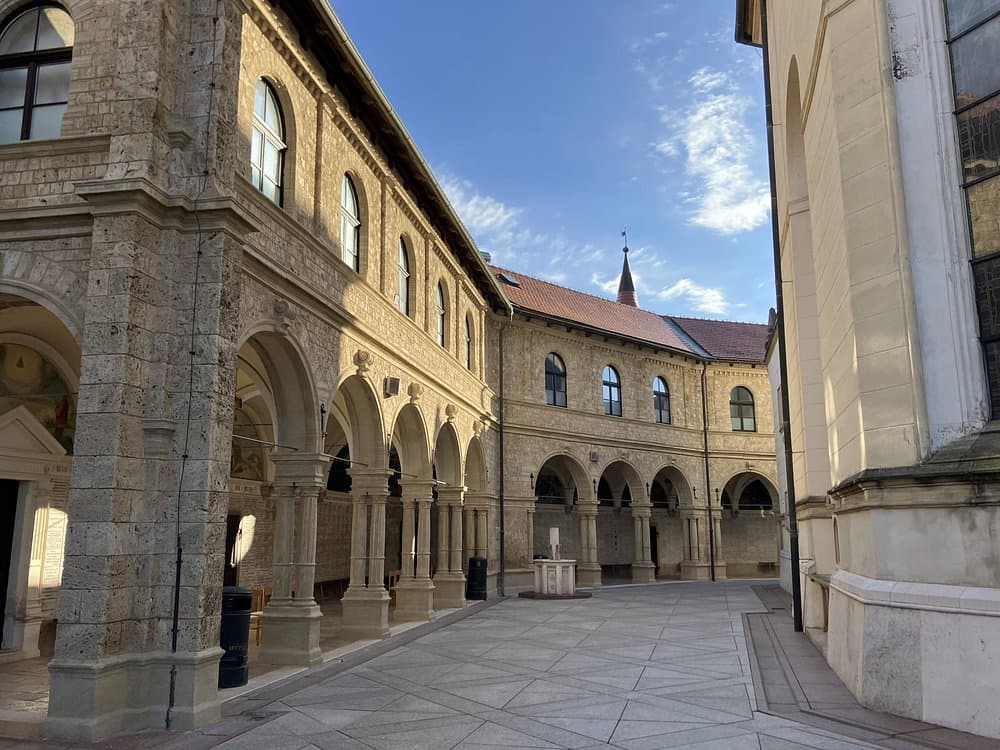
Marija Bistrica is Croatia's best-known Marian pilgrimage site and one of the most meaningful religious stops in Zagorje. Its basilica and hilltop Calvary draw pilgrims throughout the year, especially around major feast days. For travellers based in Krapina, it works best as a short detour by car — a quiet cultural and spiritual stop that pairs naturally with a wider Zagorje route.
Around 30 km from Krapina
Key Highlights
- Krapina Neanderthal Museum — one of the best science museums in Croatia
- Original Hušnjakovo Hill fossil site
- Pleasant pedestrian town centre
- 60km from Zagreb
- Practical half-day by car or train
How to Get There
By car: From Zagreb, take the A2 motorway toward Maribor/Varaždin, exit at Krapina. The drive takes approximately 55 minutes.
By train: There is train service from Zagreb Glavni Kolodvor to Krapina. The journey takes approximately 1 hour 20 minutes. The train is a genuinely good option here; the station is close to the museum.
When to Visit
Krapina works year-round because the museum is indoors. Spring and autumn are pleasant for the surrounding Zagorje landscape. Summer is fine but warm; the hillside site is exposed.
Frequently Asked Questions about Krapina
Yes. The museum is well-designed for a general audience and uses the Neanderthal find as a way into broader questions about human evolution, behaviour, and society. It is not a dry display of bones — it is an engaging science museum.
Yes, and this is the recommended approach. Krapina works well with Kumrovec, Trakošćan, or Varaždin as part of a Zagorje day loop or overnight trip.
Yes. The train from Zagreb is one of the more practical options. The journey is about 80 minutes and the station in Krapina is close to the museum.
Explore More Destinations in Croatia
Kumrovec
Tito's birthplace and home to Staro Selo — one of Croatia's best open-air ethnographic museums.
Trakošćan
Croatia's most photographed castle — a white Romanticist fortress above a lake in the Zagorje hills.
Varaždin
Croatia's Baroque jewel with elegant palaces, manicured parks, and world-class music festivals.