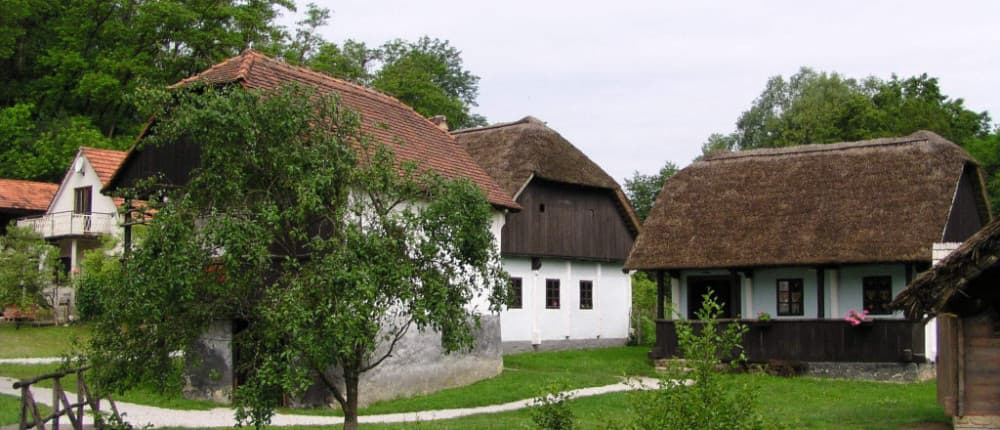
Kumrovec
The birthplace of Tito and home to Staro Selo — one of Croatia's best open-air ethnographic museums and a genuine Zagorje village worth visiting on its own terms
About Kumrovec
Kumrovec is a small village in the Zagorje region of Croatia, about 55 kilometres north of Zagreb in the Sutla valley near the Slovenian border. It is best known internationally as the birthplace of Josip Broz Tito, the Yugoslav president who shaped the country's history from 1945 until his death in 1980. The village has become a museum destination, but the open-air museum — Staro Selo, meaning 'Old Village' — is genuinely interesting regardless of your interest in Yugoslav history.
Staro Selo preserves around forty original Zagorje farmhouses, workshops, and domestic buildings from the 19th and early 20th century, set in the actual landscape of the village. The interiors are furnished and equipped as they were in the period of use — blacksmiths' workshops, weavers' houses, wine cellars, and traditional Zagorje peasant homes. Tito's birth house is included within the complex. The Sutla valley around the village is beautiful Zagorje countryside, and the combination of the open-air museum and the rural setting makes Kumrovec one of the more rewarding inland day trips from Zagreb. Half a day is enough.
What to See & Do
Staro Selo Open-Air Museum
The museum preserves the historic village of Kumrovec with its original buildings furnished to reflect rural Zagorje life from around 1880 to 1910. Workshops include a blacksmith, a basket weaver, a potter's house, and a traditional inn. Tito's birth house is part of the complex. The museum is outdoors and benefits from good weather; spring and summer are the best seasons to visit. Closed Mondays. November–February: Tue–Sun 9:00–16:00; March: Tue–Sun 9:00–17:00; April–October: Tue–Fri 9:00–17:00, Sat–Sun 10:00–18:00. Last entry 30 minutes before closing. Adults €7, children/students/pensioners €5, family ticket €15. Children up to age 3 enter free. Public parking near the museum.
Sutla Valley and Village Setting
The village sits in the Sutla valley directly on the Croatian-Slovenian border. The surroundings are quiet Zagorje countryside — vineyards, orchards, and wooded hills. There is a riverside path along the Sutla worth a short walk, and the landscape itself is part of the reason to come.
Key Highlights
- Staro Selo — preserved 19th-century Zagorje village and one of Croatia's best open-air ethnographic museums
- Tito birth house
- Authentic Zagorje rural buildings: blacksmith, weaver, wine cellar, farmhouses
- Sutla valley and Slovenian border setting
- 55km from Zagreb
How to Get There
Kumrovec is easiest by car from Zagreb or the Zagorje towns. Public transport is limited and not ideal for a flexible day trip. Treat it as a car-based inland stop.
When to Visit
April to October is best. The museum is outdoors and works best in dry weather; parts of it may be closed in winter. Spring and summer are ideal, while late September and October offer golden light and fewer visitors.
Frequently Asked Questions about Kumrovec
No. The Staro Selo open-air museum stands on its own as one of the best preserved ethnographic village museums in Croatia. The Tito connection adds context, but the visit is worthwhile for anyone interested in Croatian rural life, architecture, or craft traditions.
Two to three hours including the full open-air village walk. Add time for the Sutla riverside path if the weather is good.
Explore More Destinations in Croatia
Krapina
Home to one of the world's most significant Neanderthal fossil sites and an excellent science museum.
Trakošćan
Croatia's most photographed castle — a white Romanticist fortress above a lake in the Zagorje hills.
Varaždin
Croatia's Baroque jewel with elegant palaces, manicured parks, and world-class music festivals.