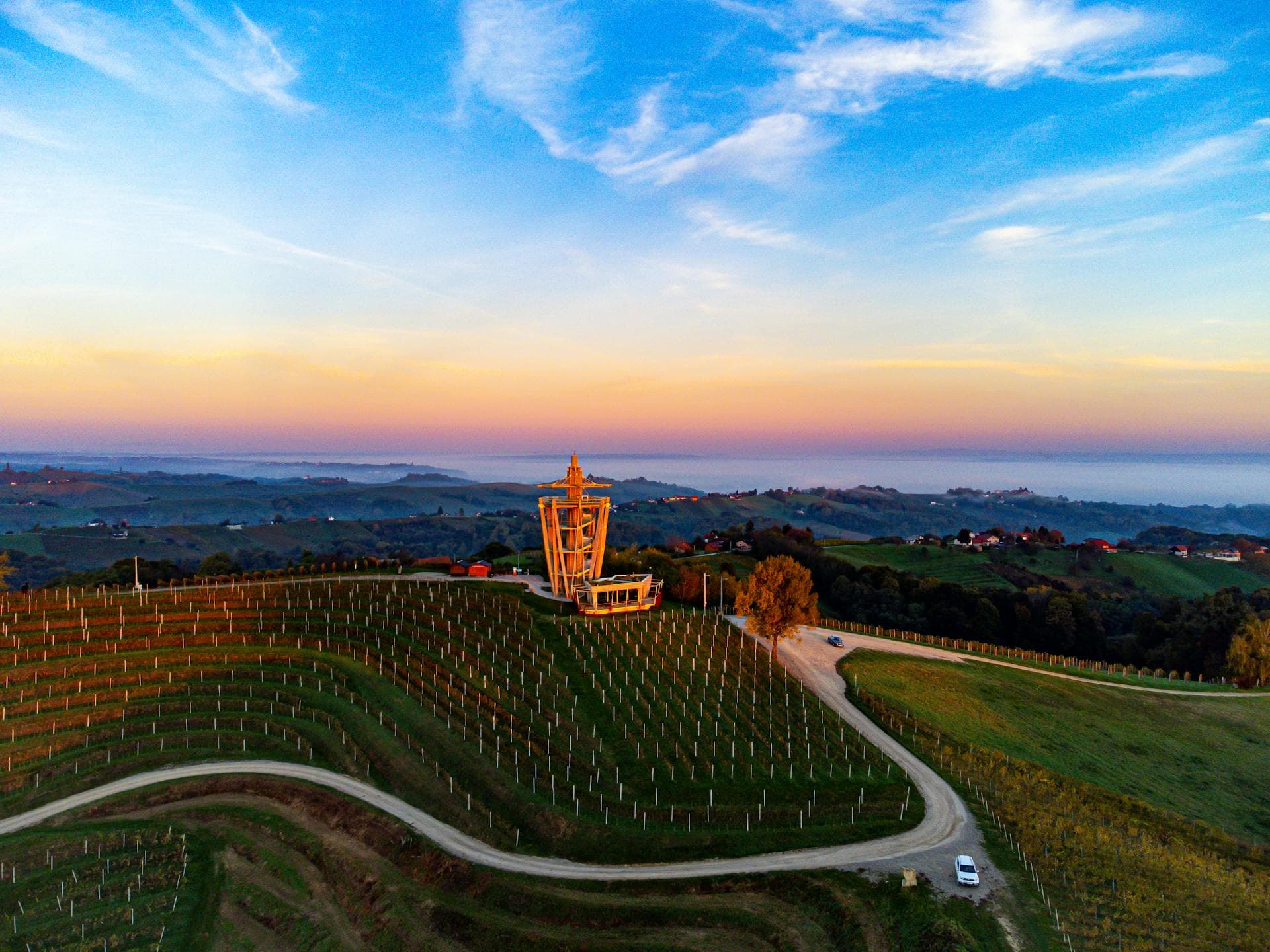
Croatia's Wine Regions
A guide to the four main wine regions: Dalmatia, Istria and Kvarner, Slavonia and the Croatian Danube, and Croatian Uplands — key grapes, wine styles, and where to go.
Croatia's Four Main Wine Regions
Croatia may be a small country, but its wine landscape is remarkably diverse. In just a few hours of travel, you can move from cool continental hills and sparkling wine country to sun-baked islands, limestone slopes, and Mediterranean vineyards overlooking the Adriatic.
The clearest way to understand Croatian wine today is through four main regions: Dalmatia, Istria and Kvarner, Slavonia and the Croatian Danube, and Croatian Uplands. This structure is used by Vina Croatia and the Croatian Chamber of Economy, and is the most practical framework for travelers planning a wine trip.
Beneath the four main regions are 16 sub-regions and 66 wine-growing areas, known in Croatian as vinogorja.
Why Croatian Wine Is So Diverse
Croatian wine is shaped by contrast. The country sits between Central Europe, the Mediterranean, the Alps, the Pannonian Plain, and the Adriatic Sea. That geography creates very different growing conditions within a compact area. Inland regions produce fresher, more aromatic wines with higher acidity. Coastal and island regions produce fuller, warmer, more Mediterranean styles.
Croatia is also home to a large number of indigenous grape varieties, many still closely tied to specific regions, islands, and local food traditions. That makes Croatian wine especially interesting for travelers who want to taste something connected to place rather than only internationally familiar varieties.
The Four Regions
1. Dalmatia
Bold reds, island wines, Mediterranean coast and stone terraces
2. Istria and Kvarner
Malvazija Istarska, Teran, food and wine travel, hill towns
3. Slavonia and the Croatian Danube
Graševina, continental whites, historic cellars, inland Croatia
4. Croatian Uplands
Sparkling wine, cool-climate whites, Zagreb day trips
Classification
4 main regions -> 16 sub-regions -> 66 wine-growing areas
Dalmatia
Best for: bold reds, island wines, Mediterranean landscapes, historic vineyards
Key Grapes
Plavac Mali, Pošip, Grk, Debit, Maraština, Crljenak Kaštelanski
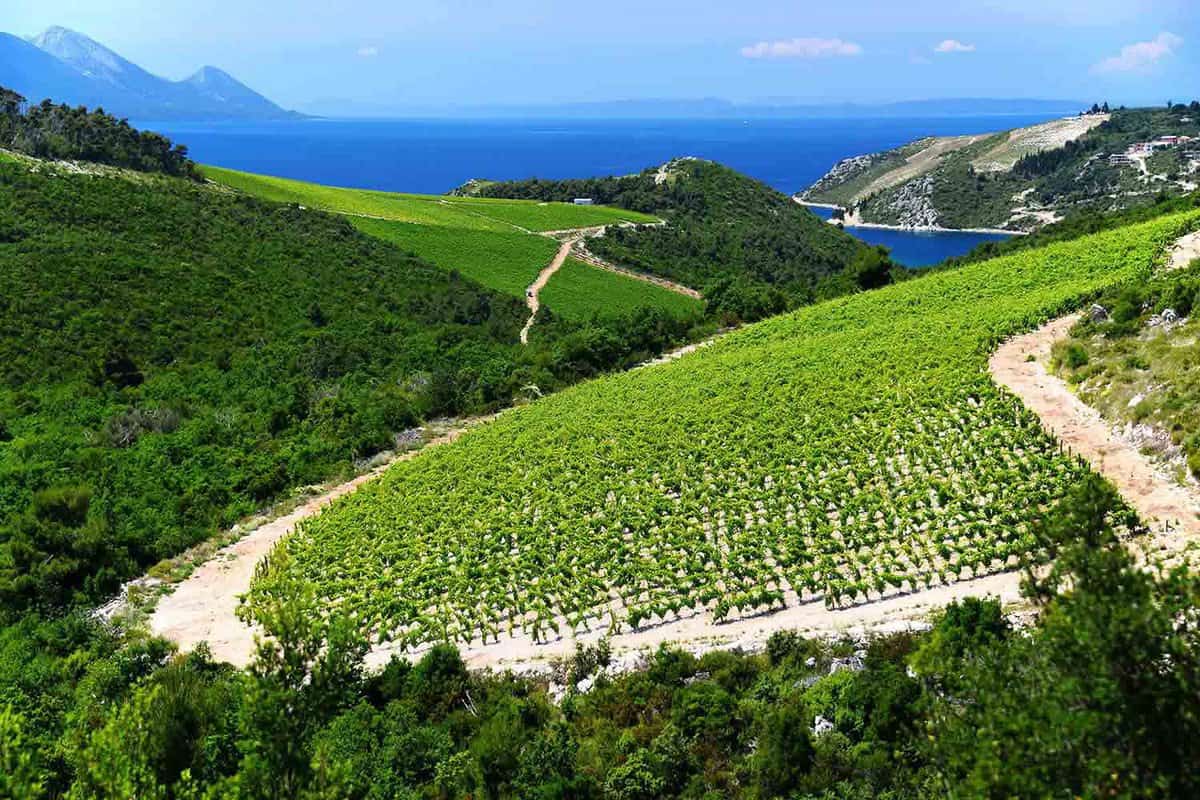
Dalmatia is Croatia's most dramatic wine region. It stretches along the southern Adriatic coast and includes famous islands, peninsulas, coastal hills, and inland karst valleys. This is the region most visitors imagine when they think of Croatian wine: stone terraces, dry summers, sea views, old vines, and intensely Mediterranean character.
The region is especially known for Plavac Mali, Croatia's most important red grape. On the steep slopes of Pelješac and parts of the islands, Plavac Mali produces powerful, concentrated reds with dark fruit, firm tannins, herbal notes, and high alcohol. Dalmatia is also important for white wines, especially Pošip from Korčula, along with local varieties such as Grk, Debit, and Maraština.
Dalmatia is not one single wine style. Northern Dalmatia, the Dalmatian Hinterland, Central Dalmatia, Southern Dalmatia, and the islands all have different conditions. For travelers, Dalmatia is the best region if you want wine combined with islands, historic towns, seafood, coastal drives, and dramatic vineyard scenery.
Perfect for: Travelers who want the most dramatic vineyard landscapes, powerful reds, island wines, and a strong connection between wine, sea, stone, and history.
Istria and Kvarner
Best for: food and wine travel, elegant whites, truffles, coastal hill towns
Key Grapes
Malvazija Istarska, Teran, Žlahtina, Muscat varieties
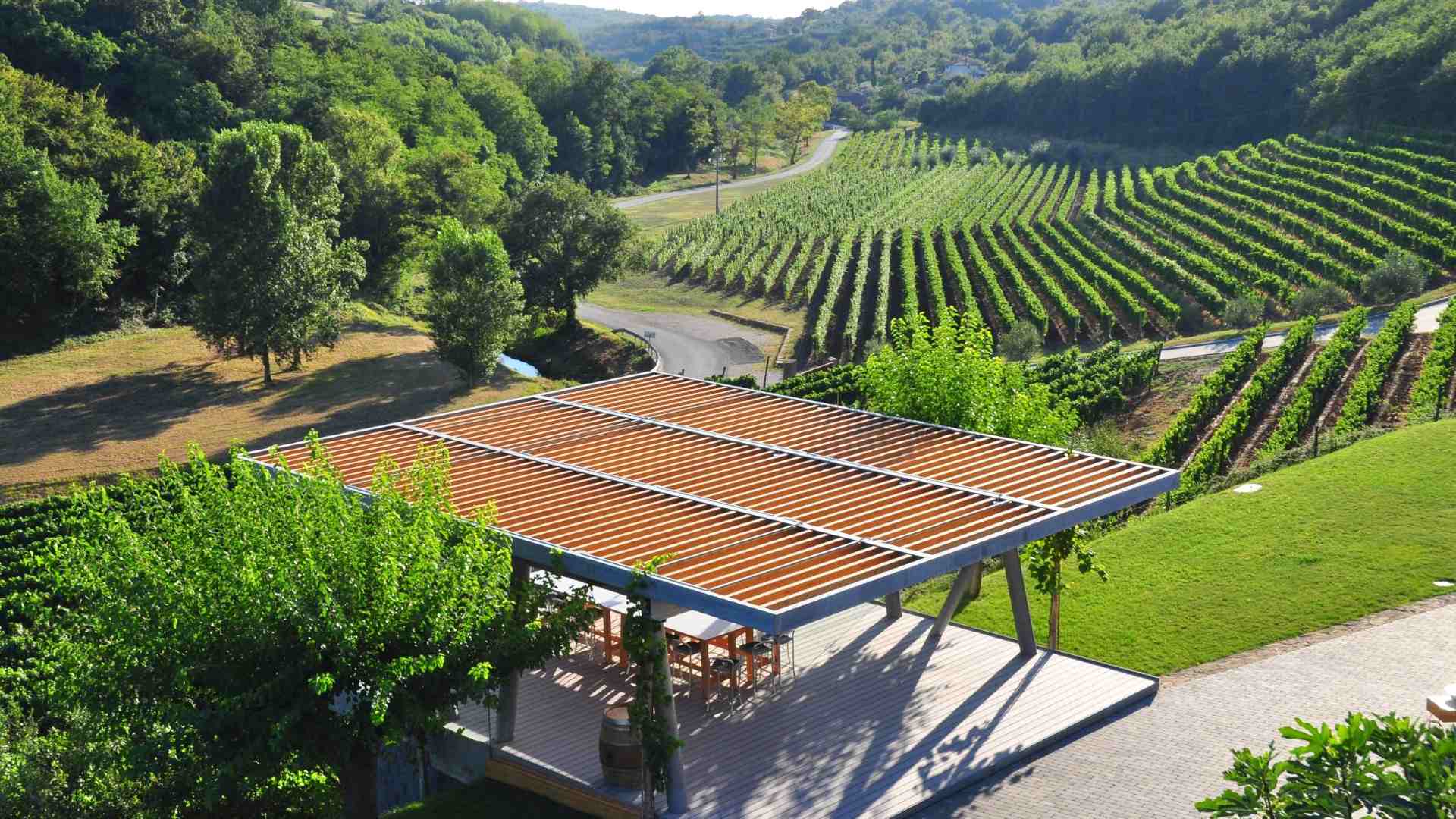
Istria and Kvarner form Croatia's northwestern coastal wine region. Istria is one of the country's most developed wine tourism areas, known for rolling hills, medieval towns, olive oil, truffles, and polished cellar-door experiences. Kvarner adds islands, coastal slopes, and distinctive local varieties.
The signature grape of Istria is Malvazija Istarska, a dry white wine that can range from fresh and citrusy to textured, mineral, and age-worthy. Istria is also known for Teran, a red grape that often produces lively, structured wines with bright acidity and earthy, dark-fruited character. Kvarner is especially associated with Žlahtina, most famously grown on the island of Krk.
For visitors, Istria and Kvarner are among the easiest Croatian wine regions to explore. The distances are manageable, the food culture is strong, and wine fits naturally into a broader itinerary that includes Rovinj, Motovun, Opatija, and the northern Adriatic coast.
Perfect for: Travelers who want an all-round wine and food experience, with polished wine roads, excellent gastronomy, hill towns, olive oil, truffles, and coastal scenery.
Slavonia and the Croatian Danube
Best for: Graševina, continental whites, generous food culture, historic cellars
Key Grapes
Graševina, Chardonnay, Riesling, Pinot Gris, Frankovka, Cabernet Sauvignon
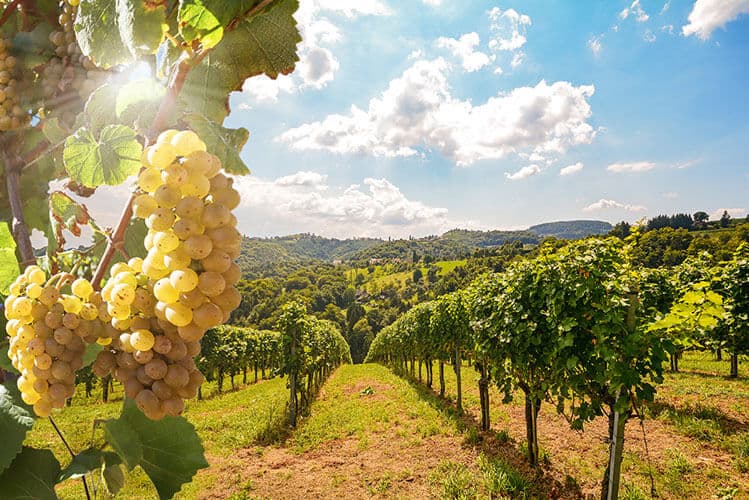
Slavonia and the Croatian Danube form Croatia's major eastern continental wine region and one of the country's most important areas for white wine. The landscape is very different from the coast: broad plains, river valleys, gentle hills, forests, castles, historic towns, and large vineyard areas. The climate is continental, with warm summers and cold winters.
Graševina is the star — Croatia's most widely planted and most recognisable white grape. The region also produces strong examples of Chardonnay, Riesling, Pinot Gris, Sauvignon Blanc, and Frankovka. The Croatian Danube area, including Baranja, Erdut, and Srijem, adds a distinctive river-influenced identity and a long winemaking tradition.
For travelers, this region is ideal if you want a less crowded, more inland side of Croatia. It pairs well with Osijek, Kopački rit Nature Park, Vukovar, Ilok, Đakovo, Kutjevo, and traditional Slavonian cuisine.
Perfect for: Travelers who want to understand Croatia's continental wine culture, especially Graševina, traditional hospitality, river landscapes, and inland cuisine.
Croatian Uplands
Best for: sparkling wine, cool-climate whites, Zagreb day trips, boutique wine experiences
Key Grapes
Riesling, Sauvignon Blanc, Chardonnay, Pinot Noir, Škrlet, Pušipel
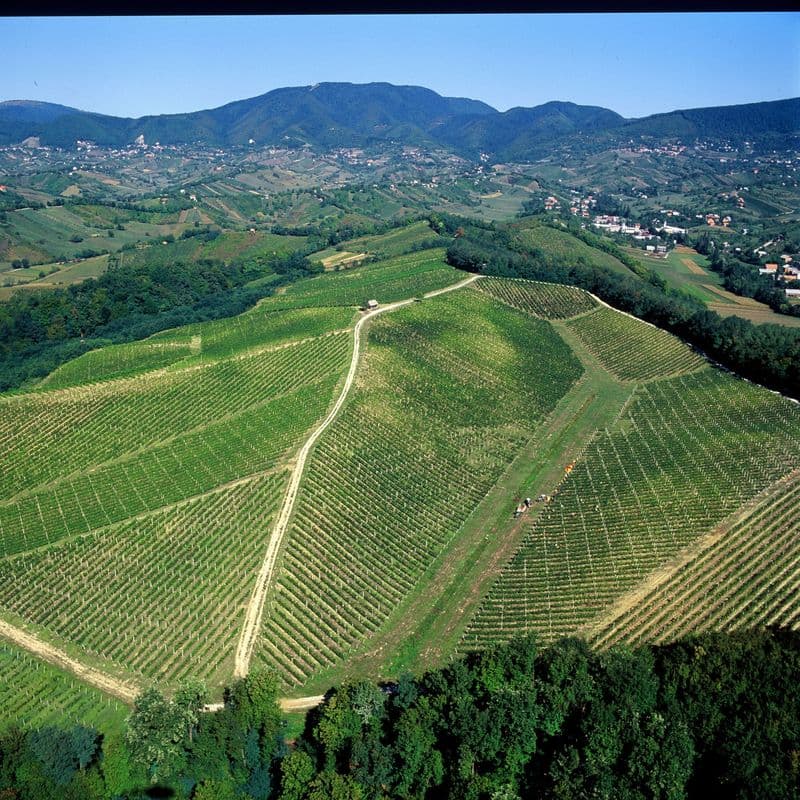
The Croatian Uplands cover the hilly wine areas of northern and central Croatia, including regions around Zagreb, Plešivica, Moslavina, Prigorje, Zagorje, Međimurje, and Pokuplje. This is Croatia's cool-climate wine zone and one of the best regions for visitors staying in or near the capital.
The region is especially known for fresh whites, sparkling wines, aromatic varieties, and increasingly serious Pinot Noir and Chardonnay. Plešivica, near Zagreb, is often associated with some of Croatia's strongest sparkling wines and cool-climate styles. Moslavina is known for Škrlet, while Međimurje is associated with Pušipel, the local name for Furmint.
The Croatian Uplands are useful for travelers because they combine easily with Zagreb, Samobor, Varaždin, and Zagorje castle visits. The wines are lighter, fresher, and more acidity-driven than those from the coast — a strong contrast to Dalmatia.
Perfect for: Travelers staying in Zagreb or northern Croatia who want sparkling wines, fresh whites, boutique tastings, and cool-climate styles without traveling far.
Croatia's Wine Regions at a Glance
| Wine region | Best known for | General wine style | Good for travelers who want |
|---|---|---|---|
| Dalmatia | Plavac Mali, Pošip, island wines | Powerful, Mediterranean, sun-rich | Islands, coast, bold reds, historic vineyards |
| Istria and Kvarner | Malvazija Istarska, Teran, Žlahtina | Fresh, mineral, food-friendly | Wine roads, gastronomy, hill towns, coastal trips |
| Slavonia and the Croatian Danube | Graševina, continental whites | Structured, fresh, aromatic | Inland Croatia, traditional food, historic cellars |
| Croatian Uplands | Sparkling wine, cool-climate whites | Elegant, high-acid, aromatic | Zagreb day trips, boutique wineries, cooler styles |
How to Choose the Right Croatian Wine Region
Dalmatia
Choose Dalmatia if you want the most dramatic vineyard landscapes, powerful reds, island wines, and a strong connection between wine, sea, stone, and history.
Istria and Kvarner
Choose Istria and Kvarner if you want the easiest all-round wine and food experience, with polished wine roads, excellent gastronomy, hill towns, olive oil, truffles, and coastal scenery.
Slavonia and the Croatian Danube
Choose Slavonia and the Croatian Danube if you want to understand Croatia's continental wine culture, especially Graševina, traditional hospitality, river landscapes, and inland cuisine.
Croatian Uplands
Choose Croatian Uplands if you are staying in Zagreb or northern Croatia and want sparkling wines, fresh whites, boutique tastings, and cool-climate styles without traveling far.
Planning a Visit to a Croatian Winery
Contact small cellars before you go
Most Croatian producers are small family operations where the winemaker pours the tasting themselves. Larger estates in Istria generally take walk-ins through the summer, but on Pelješac, Korčula and across the continental regions a call or email a day or two ahead is expected — and it is often the difference between a tasting and a locked gate.
Harvest timing moves from year to year
The berba, or harvest, usually runs from early September into October, starting earlier on the Dalmatian coast and later inland. It shifts by several weeks depending on the season, and dry years pull it forward. Harvest is a rewarding time to visit, but it is also when producers are least able to stop and host, so confirm directly rather than relying on published dates.
Sort out transport before you plan the tastings
Croatian drink-driving limits are strict and enforced, and most wine roads are rural. Decide how you will travel first: a private driver or small-group tour on Pelješac, the short ferry from Korčula to Orebić, the train from Zagreb to Jastrebarsko for Plešivica, or a base in an Istrian hill town you can walk out from.
What Makes Croatian Wine Different
Croatian wine is not defined by one grape, one region, or one style. Its strength is variety.
The coast gives Croatia Mediterranean reds, island whites, limestone vineyards, and ancient wine traditions. The inland regions bring freshness, acidity, aromatic whites, sparkling wines, and Central European influence. Istria connects wine closely with gastronomy, while Slavonia and the Danube show the scale and depth of continental winemaking.
This diversity is why Croatia is increasingly interesting for wine travelers. You can taste bold Plavac Mali in Dalmatia, mineral Malvazija in Istria, crisp Graševina in Slavonia, and sparkling wine in the Croatian Uplands — all within one country.
A Note on Wine-Region Terminology
Croatian wine-region terminology can be confusing in English. Some sources use the word appellation, while Croatian materials often use vinogorje, meaning a wine-growing hill or wine-growing area. Depending on the source, you may also see older references to three broad wine zones or newer references to four main regions.
For a practical travel guide, the clearest structure is: Croatia has 4 main wine regions, divided into 16 sub-regions and 66 wine-growing areas. That gives travelers a simple framework without overwhelming them with technical detail.
Final Takeaway
Croatia's wine regions are best understood through the modern four-region model: Dalmatia, Istria and Kvarner, Slavonia and the Croatian Danube, and Croatian Uplands.
Together, these four regions show why Croatian wine is so distinctive: ancient, local, varied, and still surprisingly under-discovered.
Wine regions are not always easy to combine with a standard Croatia route. If you want help choosing between Plešivica, Istria, Dalmatia, Pelješac, and Slavonia, you can request a custom Croatia itinerary.
Learn about custom itinerary planningExplore More of Croatia
Discover more stories, hidden gems, and travel inspiration to help you plan your perfect Croatian adventure.