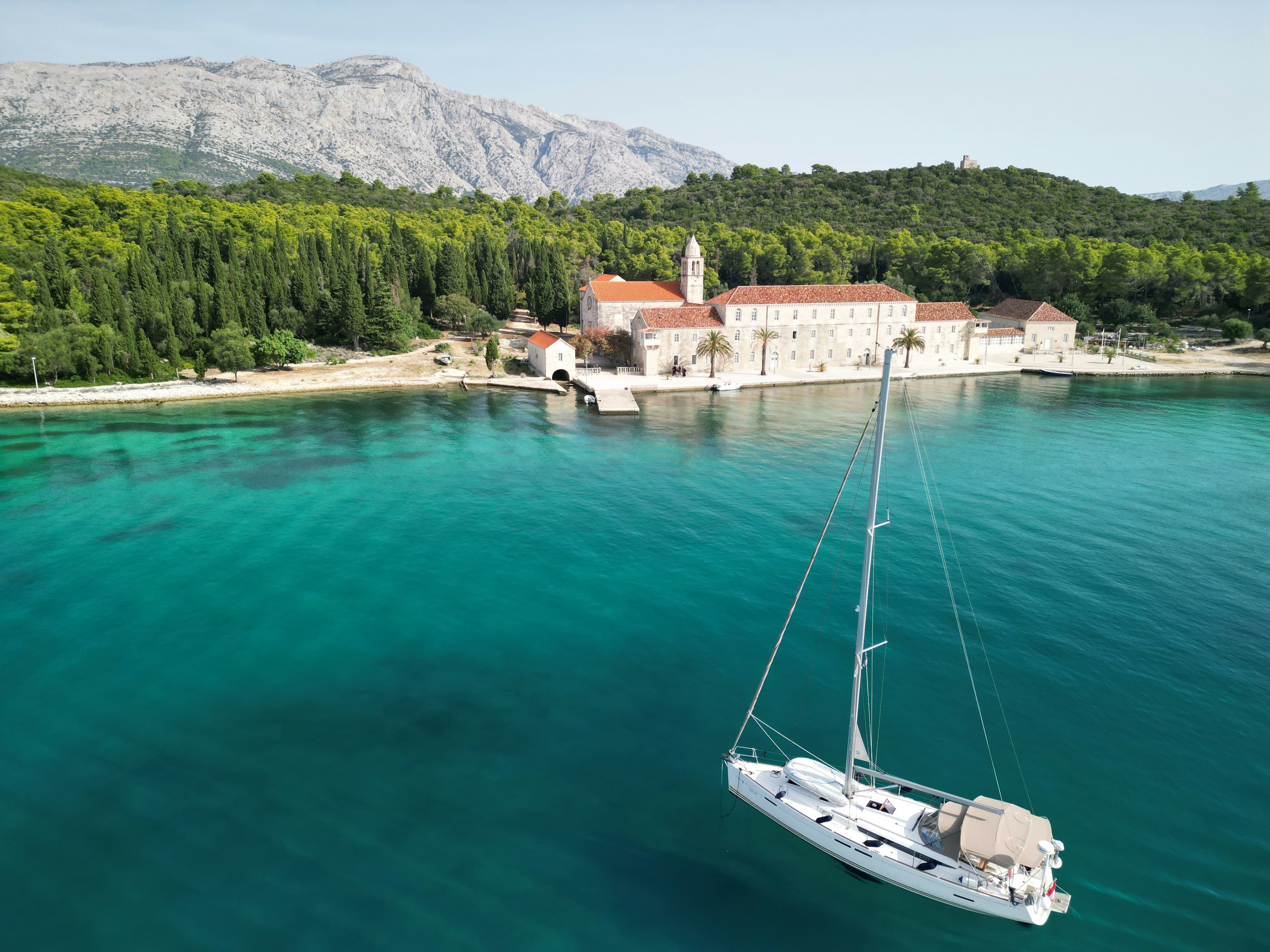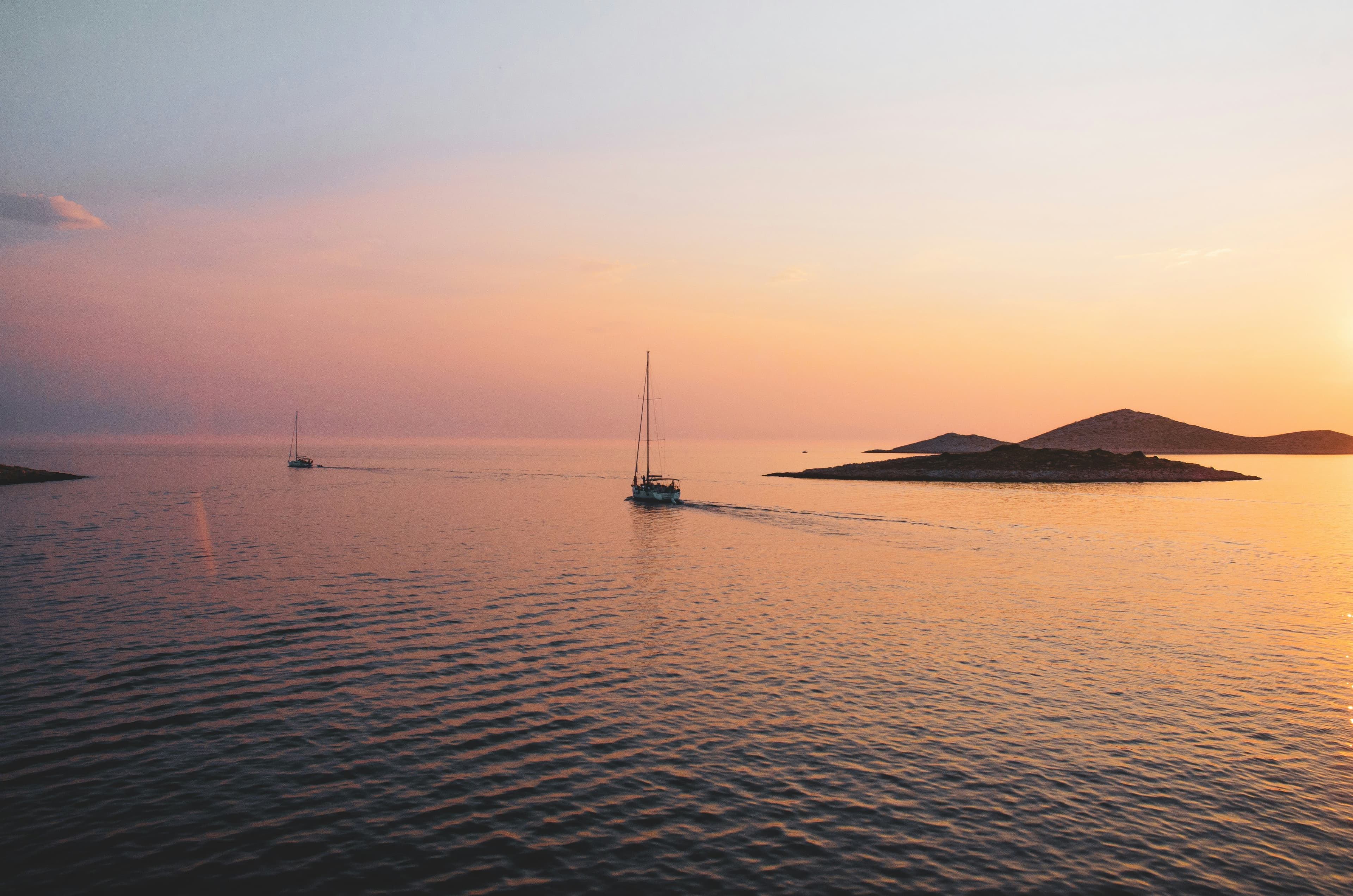
Sailing in Croatia — yacht on the turquoise Adriatic with Dalmatian islands in the background
Sailing & Charters

Sailing in Croatia: A Complete Guide

Charter tips, sailing routes, costs, and practical advice for first-time and experienced sailors on the Adriatic

Dalmatia, Istria & Kvarner, Croatia

Why Croatia Works So Well for Sailing

Sailing in Croatia has become one of the most popular ways to experience the Adriatic coast, and it is not difficult to understand why. More than a thousand islands, clear water, reliable summer winds, and a string of historic port towns create the kind of sailing environment that suits everyone from seasoned skippers to first-time charter guests who have never handled a boat before.

The appeal goes beyond the scenery. Distances between islands are short and manageable, meaning a one-week charter can take in four or five different destinations without anyone feeling rushed. You can anchor in a sheltered bay in the morning, visit a medieval town for lunch, and find a quiet cove to swim in before the evening. The rhythm of sailing in Croatia is genuinely hard to match on land.

This guide covers the main sailing regions, charter options, seasonal advice, costs, and practical tips to help you plan a Croatia sailing holiday that works for your group and your experience level. Whether you are comparing bareboat and island-hopping routes, or simply trying to understand what a week on the Adriatic actually looks like, you will find everything you need here.

Why Sailing in Croatia is so Popular

Part of the answer is geographic. Croatia's coastline is unusually well-suited to sailing. Islands are close together but varied enough to feel distinct. The Adriatic is generally calmer than the open Atlantic, and the summer sailing season is long and largely predictable. Marinas are well-equipped, provisioning is straightforward, and the combination of old stone towns, pine forests, vineyards, and translucent water makes every day on the water visually rewarding.

There is also a strong infrastructure for charter sailing that has developed over decades. A large number of reputable charter companies operate along the coast, with fleets departing from Split, Trogir, Zadar, Dubrovnik, and other bases. That availability means competitive pricing, a good range of boat types, and enough experience in the industry to make the process of booking and managing a charter relatively straightforward.

Quick Facts

Sailing season

Late April through October, with peak season in July and August.

Best charter bases

Split, Trogir, Zadar, Dubrovnik, and Rovinj.

Typical trip length

One week is the standard unit; some groups book two weeks for a more relaxed pace.

Charter types

Bareboat, skippered, crewed, catamaran, and monohull.

Good for beginners?

Yes, particularly with a skipper. Croatia is one of Europe's most beginner-friendly sailing destinations.
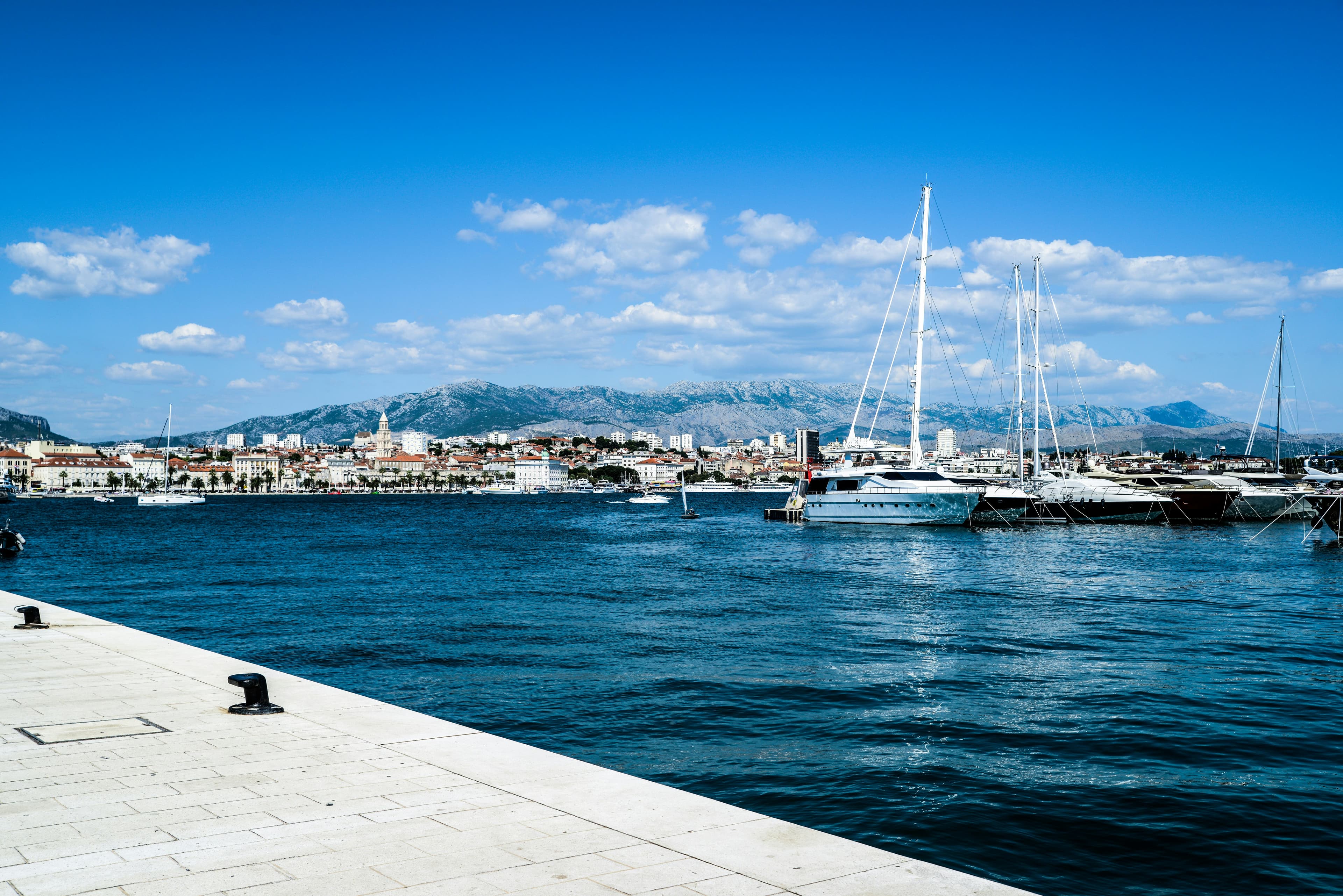
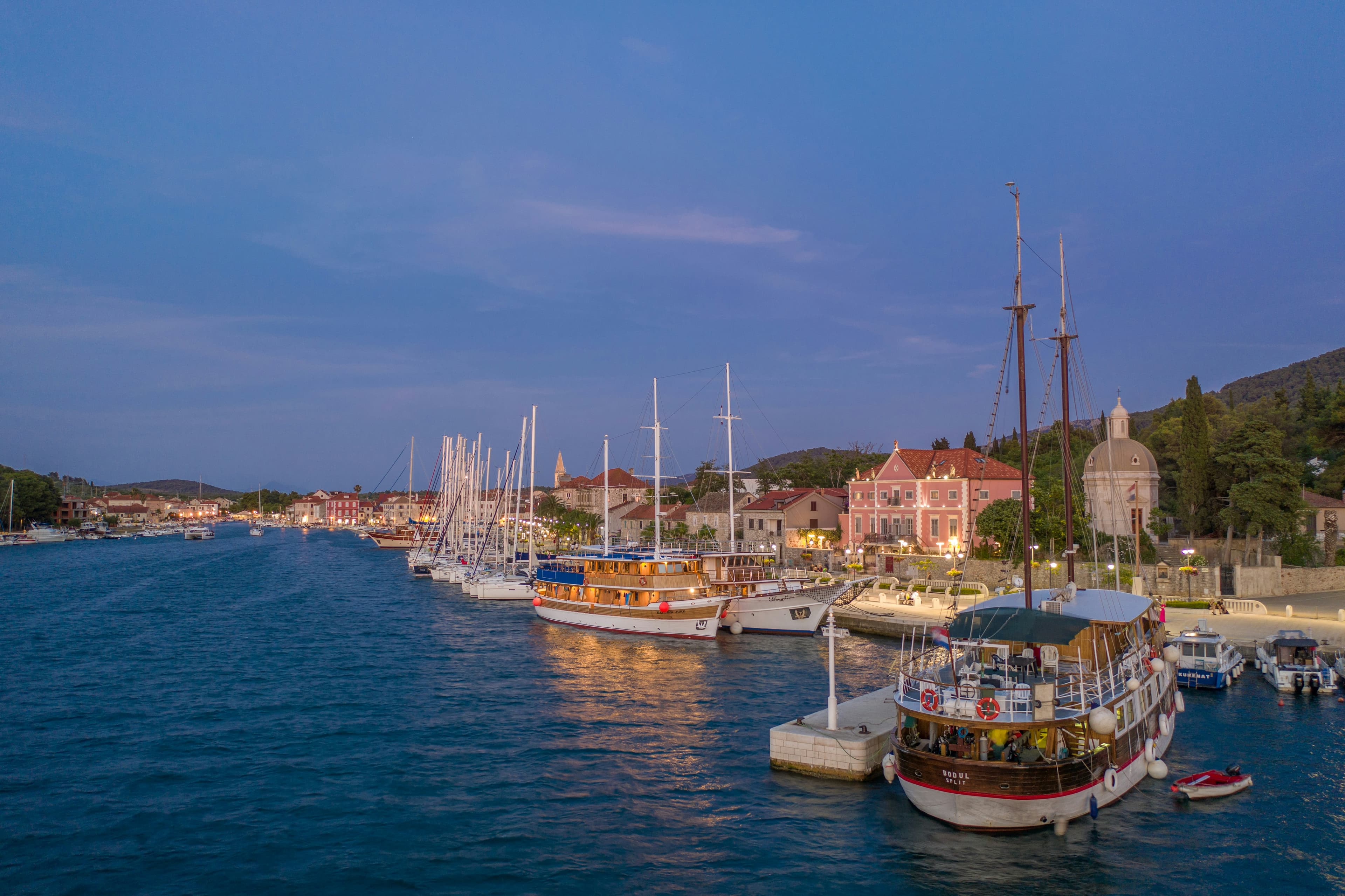
Split harbor with sailing boats and the city of Split in the background, Dalmatia
Sailing Regions

Where to Sail in Croatia

Croatia's coastline divides naturally into four main sailing regions, each with its own character. The right choice depends on your group's interests, experience level, and how far you want to be from the largest towns and marinas.

Split and Central Dalmatia

The Split region is the most popular departure point for sailing in Croatia, and for good reason. It combines an excellent charter infrastructure with some of the most rewarding sailing waters in the Adriatic. Hvar is the headline destination — lively, historic, and scenic in equal measure — but the surrounding islands offer real variety.

Brač is ideal for beach days and outdoor activity. Šolta is quieter and often overlooked, making it a welcome contrast to the busier harbors. Vis sits further offshore and carries a slightly wilder, more remote energy. This route suits first-time charter guests who want a mix of sociable harbor towns, good swimming spots, and manageable sailing distances.

Sailing boats at sunset in Stari Grad harbour on the island of Hvar, Croatia

Zadar and the Kornati Islands

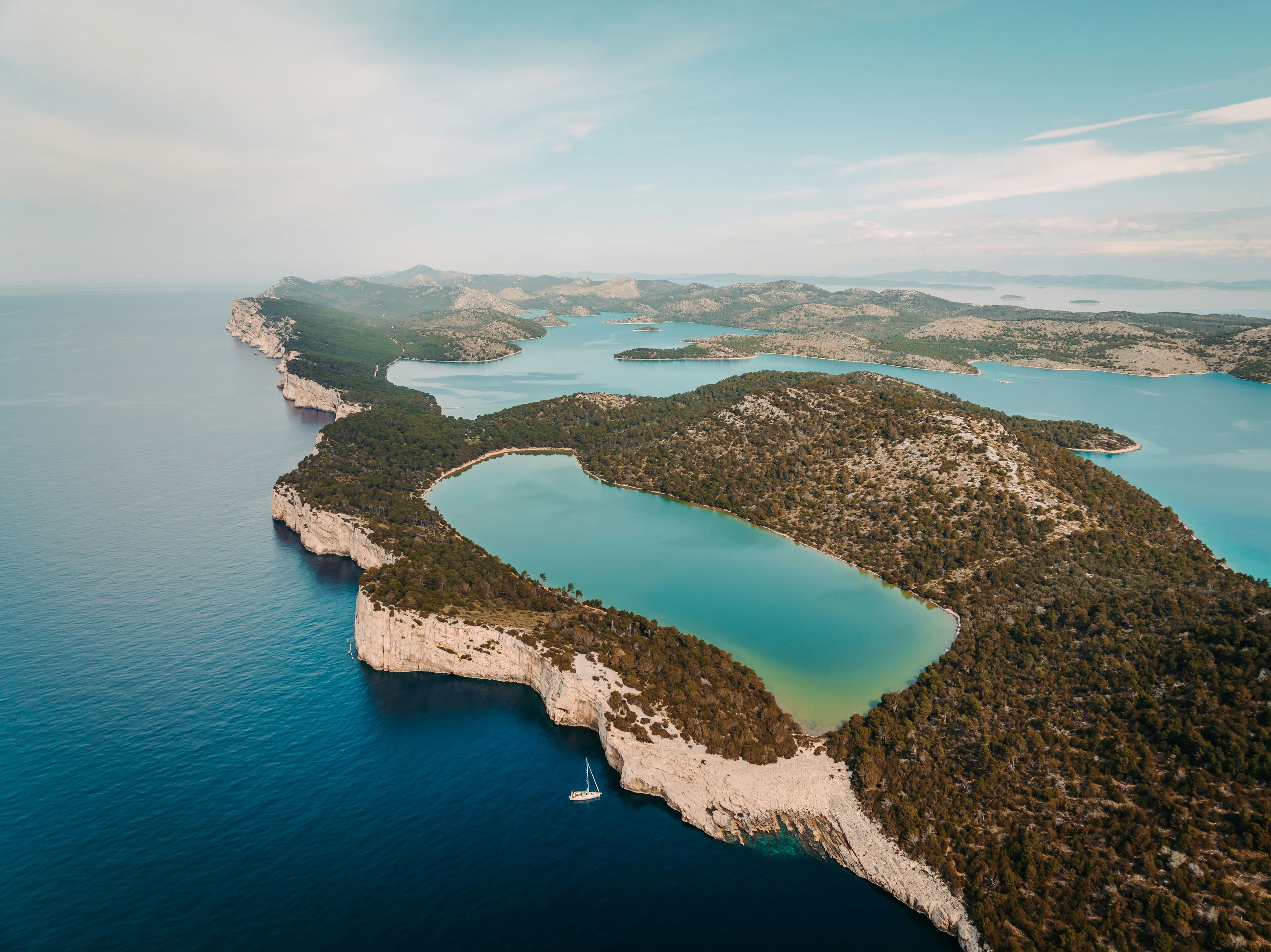
Sailors who want a quieter, more nature-focused experience often head for the Zadar region and the Kornati archipelago. Kornati National Park is one of the most dramatic sailing landscapes in the Mediterranean: a dense scatter of bare limestone islands with little development and extraordinary clarity in the water.

Zadar itself is an excellent base, combining good facilities with a genuinely interesting old town and a functioning local life. This part of Croatia suits those who prefer anchoring in natural bays over busy marina towns, and who are happy to be more self-sufficient during the day.

Aerial view of the Kornati archipelago — bare limestone islands in the crystal-clear Adriatic

Dubrovnik and South Dalmatia

Southern Dalmatia combines some of Croatia's most refined destinations with a slightly slower pace of sailing. Dubrovnik is an obvious anchor point — even a brief stop in the old harbor at dawn or dusk is genuinely memorable. The Elafiti Islands sit just offshore and offer a quieter counterpoint to the city.

Further west, Mljet's national park and saltwater lakes make for an unusual and beautiful anchorage. Korčula is one of the Adriatic's most elegant island towns, and the Pelješac peninsula's vineyards are a strong reason to sail slowly past rather than rush. This route is well suited to those who want scenic beauty and cultural depth alongside the sailing.

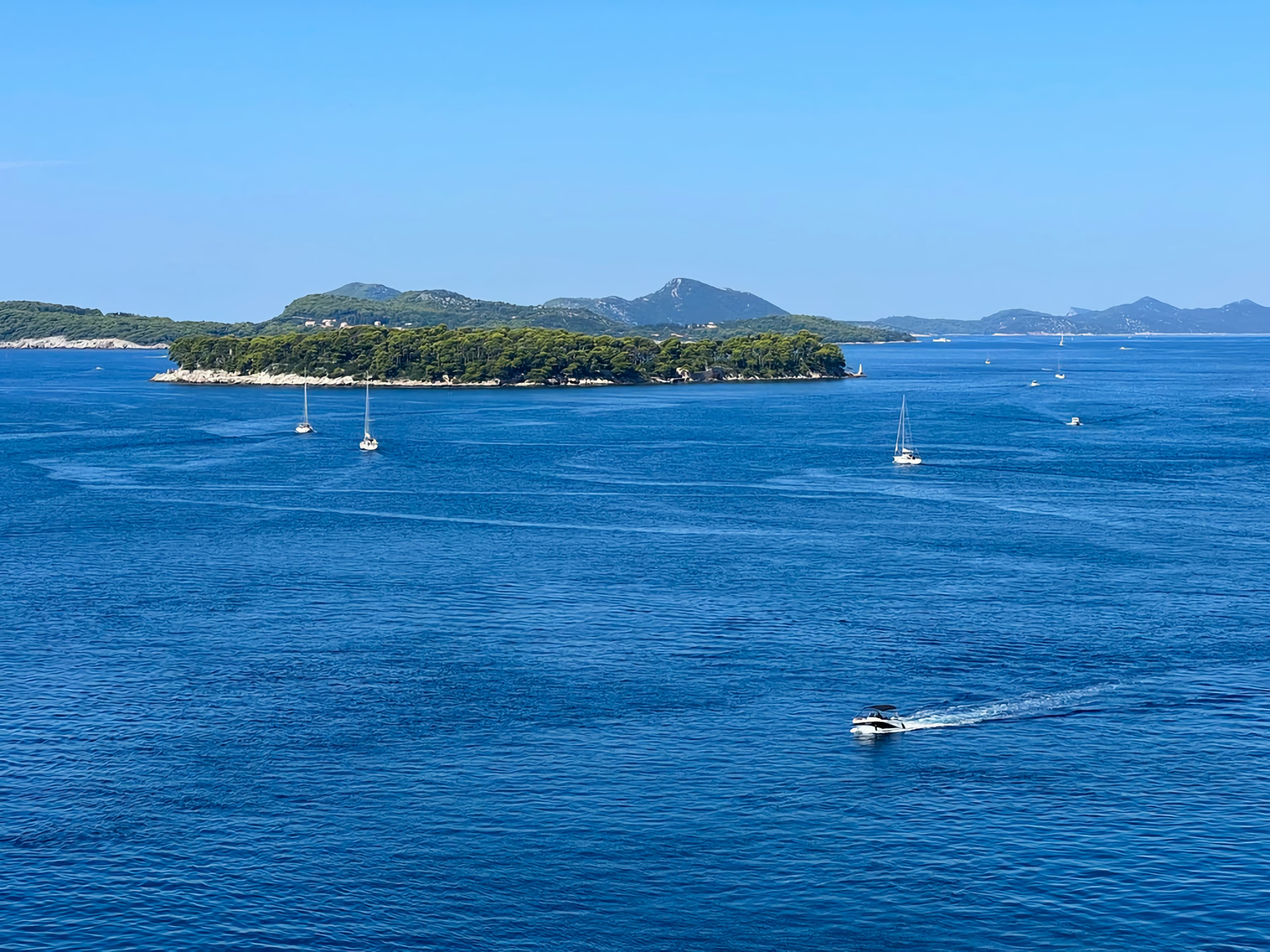
Sailing boat on the open sea near Lokrum island with Dubrovnik in the distance

Istria and Kvarner

Istria and the Kvarner Gulf offer a different kind of sailing experience. The atmosphere here is quieter than central Dalmatia, the coastal towns are more Venetian in character, and the food and wine culture — truffle hunting country, Malvasia vineyards, excellent konobas — adds a distinct flavour to the trip.

The Kvarner islands range from the large and accessible Krk, connected to the mainland by bridge, to the wilder Cres and the pine-scented refinement of Lošinj. This is a good region for those who want to combine sailing with a more food and culture-focused itinerary, or who prefer a slightly cooler and less crowded alternative to peak-season Dalmatia.

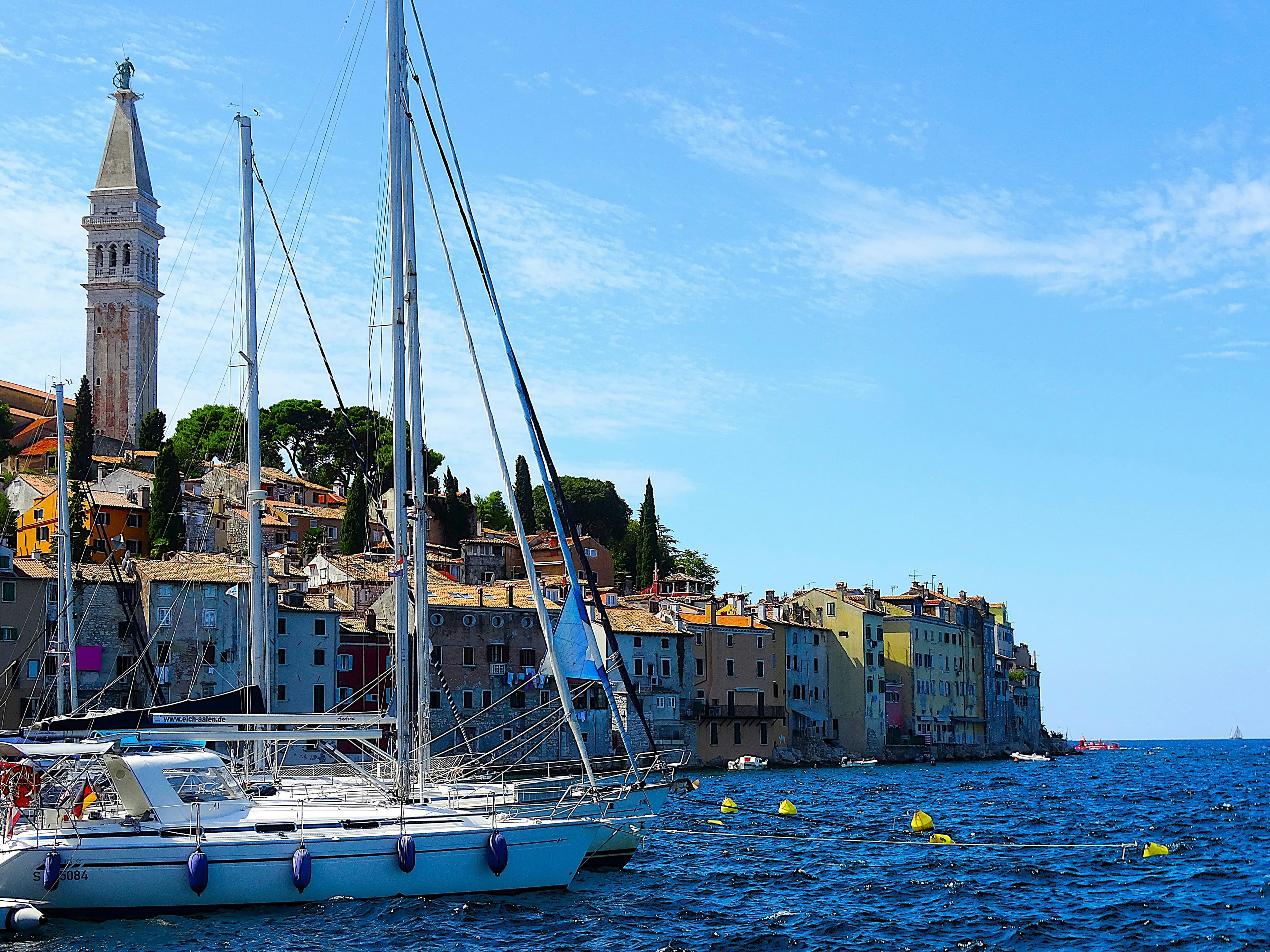
Sailing boat on the Adriatic with the old town of Rovinj in the background, Istria
When to Go

Best Time for a Sailing Holiday in Croatia

The sailing season in Croatia runs from late April through October. The sea is warmest and the weather most settled between June and September, but each part of the season has its own character.

July and August are peak months. The weather is reliably hot, the sea is at its warmest, and the harbors are lively and sociable. The trade-off is higher prices, more competition for marina berths, and busier anchorages. If you are comfortable with a livelier atmosphere and want the full Adriatic summer experience, peak season delivers.

June and September are often the most rewarding months for sailing in Croatia. Temperatures are still warm, the sea is swimmable, and the number of boats on the water drops significantly compared to the peak weeks. Marinas are easier to navigate, prices are lower, and the pace of the holiday is gentler. For most groups, especially those new to sailing, shoulder season is the better choice.

April, May, and October are quieter still and suit those who prefer cooler conditions and a more exploratory pace, though some facilities may operate on reduced schedules in the early and late part of the season.

June

Shoulder Season

Warm, quieter, better value. Ideal for first-timers.

July

Peak Season

Hot and lively. Book well in advance.

August

Peak Season

Busiest month. Most sociable harbor atmosphere.

September

Shoulder Season

Warm sea, fewer crowds. One of the best months.

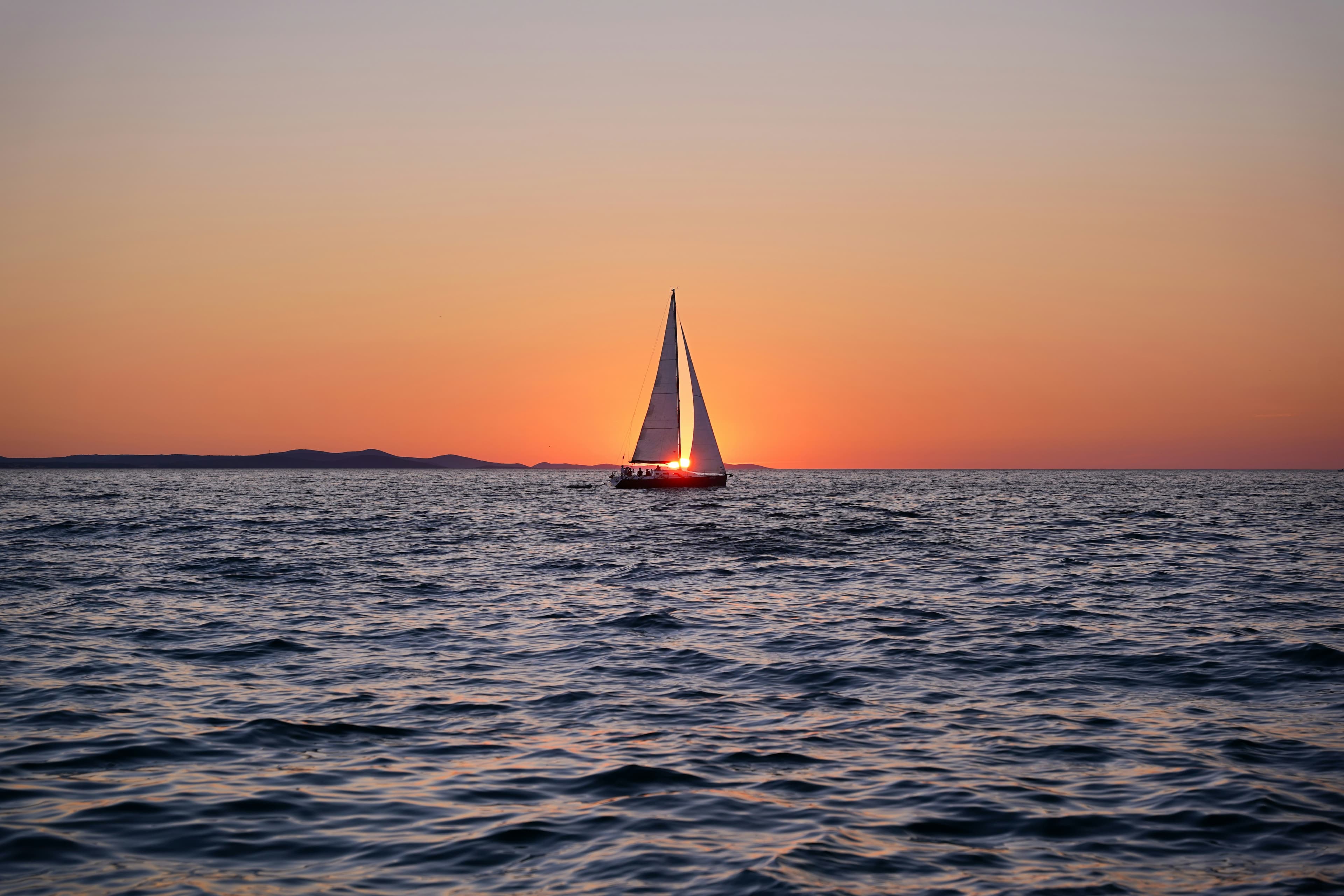
Sailing boat on the Adriatic at sunset near Zadar, Croatia
Charter Options

Chartering in Croatia: What Are Your Options?

The right charter type depends on your sailing experience, your group size, and how involved you want to be in running the boat.

Bareboat Charter

Experienced sailors with a valid licence

You take the boat without a skipper or crew and sail it yourselves. This requires at least one person on board to hold a recognised sailing licence and to have sufficient experience for the planned route. Bareboat is the most cost-effective option and gives you complete flexibility.

Skippered Charter

First-timers and mixed-ability groups

A professional skipper is included with the boat. They handle navigation, docking, and any tricky sailing conditions, leaving your group free to enjoy the experience. This is the most popular choice for first-timers and for groups where only some members have sailing experience.

Crewed Charter

Those who want a fully relaxed, premium experience

A full crew, typically a skipper and a hostess or chef, comes with the boat. Meals are provided on board, the boat is managed for you, and the level of comfort is considerably higher. Crewed charters are more expensive but remove all logistical responsibility from the guests.

Catamaran or Monohull?

Depends on group size, budget, and sailing preference

Catamarans offer more space, stability, and comfort — particularly appealing for families or groups who prioritise living space over sailing dynamics. Monohulls are more traditional, generally more affordable, and easier to manoeuvre in tight marina spaces. Both work well in Croatian waters.

Planning Advice

Tips for Chartering in Croatia

A well-planned charter week is far more enjoyable than one put together at the last minute. These practical points will help you get the most from your time on the water.

Book early

Popular charter bases and well-maintained boats in the right size category book up quickly, especially for July and August. Booking four to six months ahead gives you a much better choice.

Choose the right departure base

Split and Trogir offer the widest choice of boats and the easiest access to central Dalmatia. Dubrovnik suits those who want to focus on the south. Zadar is a strong choice for the Kornati area.

Be realistic about the itinerary

It is tempting to plan many stops, but long passages in peak-season heat with a full group on board can be tiring. A slower pace with more time at anchor usually makes for a better trip.

Check what is included

Charter prices typically cover the boat and basic equipment. End cleaning, fuel, marina fees, tourist tax, and provisions are usually paid separately. Clarify this before booking so you understand the true cost.

Understand marina and mooring costs

Marina fees vary considerably by location and season. Some of the most popular harbors in central Dalmatia can be expensive in peak summer. Anchoring in bays when conditions allow keeps costs down.

Pack soft luggage only

Hard-sided suitcases are awkward on a boat. A soft bag or duffel that fits in a forward cabin locker is far more practical. Most people find they need considerably less than they think.

Plan provisioning carefully

Large supermarkets near the main charter bases are the best place to stock up on provisions. Many smaller island ports have limited supplies. Plan what you need for the first few days before setting off.

What Does It Cost?

Charter costs vary considerably depending on the time of year, the size and type of boat, and whether you opt for bareboat, skippered, or crewed. Shoulder season bookings are typically noticeably cheaper than peak summer weeks on the same boat.

The headline charter price is rarely the full cost. Budget additionally for fuel, marina fees, the skipper's expenses if applicable, end cleaning, tourist tax, and provisioning. For a group splitting costs across several people, sailing in Croatia can represent excellent value compared with a land-based holiday at a similar level of comfort.

Catamarans are generally more expensive than monohulls of comparable size. Crewed charters carry a significant premium but remove the need to provision, cook, or manage the boat.

A Typical Week's Rhythm

Most one-week Croatia sailing itineraries follow a pattern rather than a fixed schedule. You might start from the charter base, spend the first night in a lively harbor town, then move on to a quieter island the following day. Mid-week often involves a mix of anchored swimming stops, a smaller island port for lunch, and a larger town for dinner.

The last day or two typically loops back towards the base, often passing through a highlight of the route that you want to revisit. The best itineraries leave room for spontaneity — a weather window that makes a longer passage comfortable, a bay that looks too good to pass, a local market worth stopping for.

First-Time Sailors

Is Sailing in Croatia Good for Beginners?

Croatia is one of the most beginner-friendly sailing destinations in Europe, particularly when you book a skippered charter. With a professional skipper on board, no sailing experience is required from anyone in the group. The skipper handles all navigation, docking, and weather decisions, and can teach basics along the way if guests are interested.

That said, even with a skipper, there are aspects of a Croatia sailing holiday that beginners should be aware of. Peak-season marina traffic requires patience and some awareness on deck. Docking in a busy harbor with a stern-to mooring can be stressful for first-timers. The sun and heat on a boat are more intense than on land, and sea legs take a day or two to develop.

None of these are reasons not to go. They are simply worth knowing about so that expectations are realistic. The vast majority of first-time sailors come away from a Croatia charter wanting to come back.

Extra Advice

The most important thing is to match the route to your group's travel style. A group that wants lively evenings and sociable harbors will enjoy a different itinerary from one that prefers remote anchorages and quiet days. Talk through expectations before you leave and leave the schedule loose enough to follow the wind and the mood. The best Croatia sailing holidays are the ones that feel unplanned, even when they are not.

What to Bring

Packing for a sailing trip is different from packing for a land-based holiday. Space is limited and soft bags are essential. Here is what you actually need:

  • Lightweight summer clothes and swimwear
  • Quick-dry towel
  • Soft luggage only — no hard-sided cases
  • Sun hat and sunglasses
  • Reef-safe sunscreen
  • Non-slip shoes or sandals for the deck
  • Light layer for evenings and passages
  • Power bank for devices
  • Personal medication and a basic first aid kit
  • Dry bag for valuables on deck
  • Reusable water bottle

Final Thoughts on Sailing in Croatia

Sailing boat passing Badija island near Korčula in southern Dalmatia, Croatia

A sailing holiday in Croatia offers something that is genuinely difficult to replicate on land. Moving between islands at your own pace, anchoring in places that ferries and tour buses cannot reach, and experiencing the Adriatic from the water rather than from a beach or a hotel terrace all add up to a very different kind of trip.

Whether you are an experienced sailor looking for a well-equipped charter in a reliable sailing destination, or a first-timer ready to try something new with a good skipper, Croatia delivers. The coast is built for this. Take the time to compare routes, boat types, and departure bases before you book, and you will find an option that fits your group perfectly.

Common Questions

Frequently Asked Questions

Compare Croatia Yacht Charters

Browse bareboat, skippered, and crewed charter options across all major Croatian sailing bases.

Find a Charter

Looking for Island Tours Instead?

Explore day trips and guided island-hopping experiences from Dubrovnik, Split, and Zadar.

Browse Island Tours

Need a Rental Car Before or After Your Charter?

Compare car rental options at Croatia's main airports and ports for your arrival or departure days.

Plan Your Trip